Most people who try to shop sustainably for the first time give up within a month. Not because they stop caring, but because the rules feel exhausting. Read every label. Avoid every plastic wrapper. Memorise the carbon cost of asparagus in February. After a few weeks of that, most of us quietly slide back into an ordinary supermarket run and feel faintly guilty about it.
The version that actually works is much smaller. It is two or three habits, repeated, that slowly shift what ends up in your trolley. The recipes do not need to change. The budget does not need to grow. You just start asking slightly better questions in the aisle, and the rest takes care of itself. This guide walks through what those habits look like for a real household, with no food shaming and no influencer pantries.
Start with a shopping list that forgives you
The single biggest predictor of a wasteful weekly shop is turning up without a list. Hunger and phone screens do the rest. A sustainable list is not a strict meal plan that punishes you on a tired Wednesday. It is a loose week-shape: three dinners you actually want to cook, two leftover or pantry nights, and one flexible evening for whatever the week throws at you.
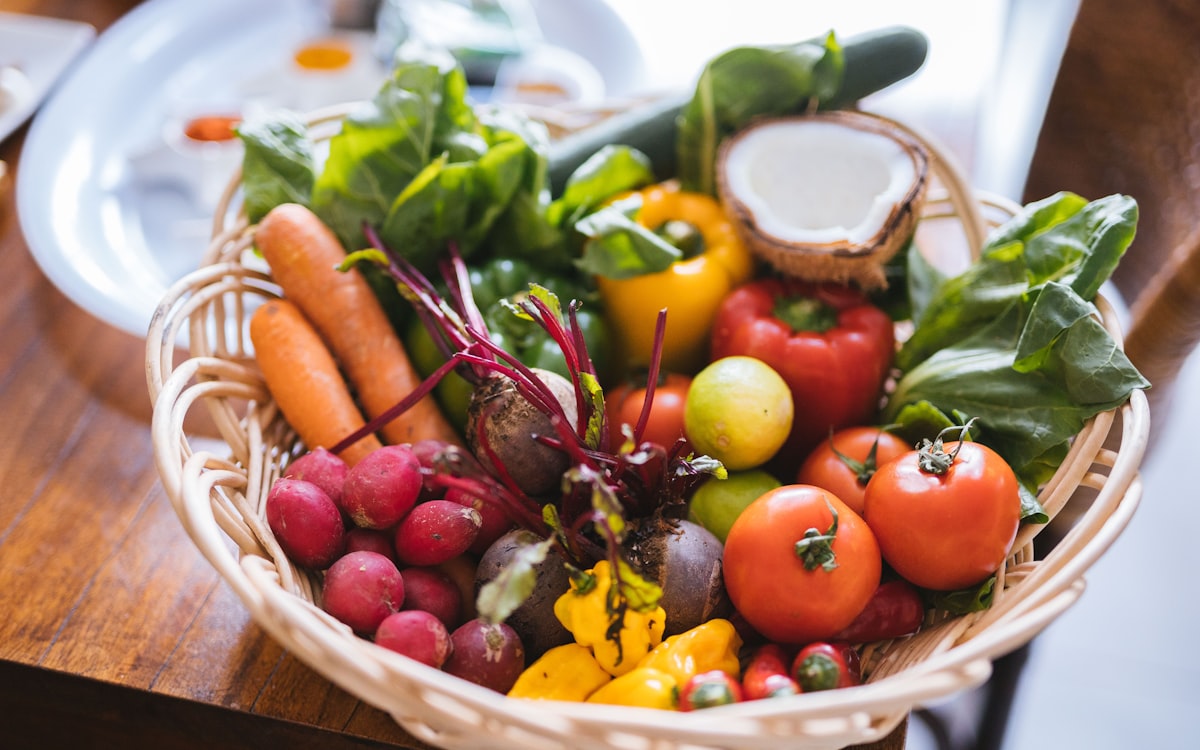
Write the list against your fridge, not against a recipe blog. Open the door first, look at what you already have, and build around it. Half-used onions, a head of cabbage holding strong, that container of rice from Sunday: these are the starting point. Anything you buy is meant to bridge those existing ingredients into actual meals. This matters more than almost any single brand choice, because most food is wasted in the home rather than on the farm or in the shop. Households throw away around 79 kilograms of food per person each year, and on the global reckoning they are responsible for 60 percent of all food wasted, roughly 631 million tonnes in 2022. Seen at the scale of a single day, that is close to 1 billion meals binned across the world. A few minutes of fridge attention before you leave trims a genuine share of it.
A worked version makes the week-shape concrete. Say the fridge already holds half a cabbage, a bag of carrots and a box of eggs on their last legs. The list more or less writes itself: a stir-fry that clears the cabbage and carrots, a frittata for the eggs and any tired veg, and a lentil pot that leans on the store cupboard. That is three dinners planned from ingredients that would otherwise wilt. Keep the list by the door and add to it as things run out, and you arrive at the shop carrying a plan rather than an appetite.
Walk the edges of the store first
This is an old food-writer trick, and it still works. Whole, less-packaged foods tend to live around the perimeter of a supermarket: produce, bulk grains, eggs, dairy, fresh bread. Heavily packaged, ultra-processed items sit in the middle aisles under brand colours and marketing claims.
You do not have to avoid the middle. You just start your trolley on the edges, fill the basics there, and let the centre be where you pick up the specific things you actually planned for. The result is a trolley that is mostly recognisable food, with packaging serving the food rather than the other way round. It also tends to be cheaper, because whole ingredients priced by weight nearly always cost less than the same food dressed up in a box.
In practice a perimeter run is a series of small swaps: loose apples instead of a shrink-wrapped tray, a block of cheese instead of the pre-grated bag, a loaf from the bakery counter rather than a heavily sleeved sandwich loaf. None feels like a sacrifice, and the packaging you skip adds up: containers and packaging are the largest single category of municipal solid waste, about 28 percent of everything thrown out. Choosing the less-wrapped version of the same food, on the items you buy most weeks, is one of the more direct changes a household can make.
Buy the fruit that is loud this week
Seasonal produce is the cheapest, freshest part of the whole shop, and the most overlooked. The fruit and veg piled at the entrance in big stacks, on offer, in their own promotional bin are usually the things at peak season, the ones the buyer overordered because supply was strong. That is exactly what you want.
When you build your dinners around what is already abundant, you quietly do several sensible things at once: lower food miles on average, lower storage and energy costs, less plastic per kilo, better flavour, and a lower bill. None of it requires reading a label. The store has already done the sums for you, and the prices tell you what is in season more honestly than any chart on a wall.
The trick is to let the loud item set the menu rather than fight it. When there is more of something than you can eat fresh, cook a batch and freeze it before the bargain goes to waste.
Repeat the same six dinners, and be proud of it
Glossy food media trains people to think every week needs novelty. Real, well-run kitchens almost always turn on a small rotation of weeknight dinners, nudged along by whatever produce happens to be in season. This is how most food-aware households quietly operate, whatever their cookbooks might suggest.
The benefit is large. You stop buying half-bottles of niche sauces that then sit in the cupboard for two years. You learn exactly how much rice your family eats on a Tuesday. You stop overbuying greens you forget about. The trolley becomes predictable, the bin shrinks, and cooking gets easier rather than harder. Pick six dinners you already know how to cook, and treat that as your weekday core. The weekend is where novelty belongs, when you have the time and the appetite for it.
The most useful six are formats rather than fixed recipes, because a format absorbs whatever is cheap that week. A traybake takes almost any root vegetable and a protein, a stir-fry takes whatever greens are loud, and a dal turns store-cupboard lentils into a full meal. Formats like these give the comfort of a routine while changing their contents with the season. Write the six inside a cupboard door so the decision is already made on a tired evening.
Choose bulk for the boring stuff
Bulk shopping intimidates beginners because they picture cavernous pantries and rows of mason jars. Skip that image. The realistic version is this: there are about ten ingredients you buy almost every month: oats, rice, pasta, lentils, beans, flour, sugar, oil, coffee, nuts. Move those, slowly, to bulk bins or larger pack sizes, and leave everything else exactly as it is.
You will usually spend less per kilo and generate far less packaging along the way. Bulk is not a personality or a lifestyle. It is a quiet shift on the items you already buy without thinking, and it frees up a little attention for the parts of cooking that actually matter.
A few practical points keep bulk from going wrong. Only buy the largest size you will genuinely finish, because a sack of flour that turns rancid or attracts pantry moths is not a saving. Decant staples into airtight jars as soon as you get home, both to keep them fresh and to show at a glance when something is running low. If a shop has no bulk bins, the same logic applies to pack size: the larger box of a thing you eat constantly is usually cheaper per kilo and lighter on packaging.
Treat the freezer as the kindest tool you own
Sustainable shopping falls apart when produce dies in the fridge mid-week. The freezer is the best tool you have for forgiving an overambitious shop. Half a loaf of bread, leftover herbs blitzed with oil into cubes, over-ripe bananas, last night’s portion of soup are all freezer candidates. Set to around minus 18 degrees Celsius, a freezer essentially pauses food, while cooked leftovers keep only three to four days in the fridge. Anything you will not get to inside that window is better off frozen than quietly forgotten. Once your freezer is a place you actively use, your weekly shop can be a little smaller, because you stop buying “just in case” food. The freezer is the just-in-case.
Getting real value from it comes down to a few habits. Portion things before they go in, lay bags flat so they freeze thin, and label each one with what it is and the date, because an unlabelled tub of orange sauce is a mystery you will never actually eat. The same chart that sets the freezer temperature keeps the fridge at 40 degrees Fahrenheit, which is 4 degrees Celsius, or below, and it is worth cooling leftovers quickly rather than leaving them out: perishable food should not sit at room temperature for more than two hours, or more than one hour when the kitchen is above 90 degrees Fahrenheit. Chill or freeze within that window and the food you rescued stays food.
Read one label per week, not every label
Trying to read every label is how new sustainable shoppers burn out within a fortnight. Pick one product per shop and actually study it. Compare brands. Check the ingredient list, where it was grown, the kind of packaging it uses. Next week, pick a different product. Over a year you will have built genuine literacy on dozens of pantry items without ever feeling overwhelmed at the shelf. One week you might learn which coffee brand ships in recyclable packaging, another whether a certification on the tin means anything or is simply a nice-looking badge.
One label worth understanding early is the date printed on the packet, because a misread date sends a surprising amount of good food to the bin. In the United States, apart from infant formula, date labels are not required by law and are not safety indicators. A “best if used by” date speaks to quality rather than safety, and food showing no signs of spoilage is generally fine past it. Reading that correctly, instead of treating every printed date as a hard deadline, keeps a lot of edible food out of your rubbish.
Sustainable shopping is a long, gentle conversation with yourself. None of it has to be done this week. Change one habit at a time, and the trolley starts to look different within a season, the bin starts to feel lighter, and the bill holds steady or drops. That is the only scoreboard that matters.
Frequently Asked Questions
Do I need to switch to a specific store to shop sustainably?
No. Almost every supermarket has a sustainable trolley hiding inside it. The store matters far less than what you put in the trolley. Build around seasonal produce, simpler ingredients and a list that respects what is already in your fridge, and any major retailer can work.
Is sustainable grocery shopping more expensive?
On average, no. Households that meal plan, buy seasonal produce and shop bulk staples typically spend less, because they waste less. The illusion of higher cost comes from premium organic brands. Skip the premium aisle and the math usually flips in your favour.
How do I avoid plastic when so much produce is packaged?
You will not avoid all plastic, and chasing that goal is what burns most people out. Aim for "less" rather than "none". Loose produce, longer-life pantry staples in bulk or paper, and one or two refill habits will quietly cut your household plastic in half.
What is the single most impactful change?
Reducing food waste at home. It outperforms almost every packaging or labelling decision by a wide margin. A small list, weekly fridge audit, and using the freezer well saves more emissions and more money than any single brand swap.
How long until shopping feels easier?
Around four to six weeks. Habits stabilise faster than people expect. By the second month, most readers report that the new shop genuinely feels lighter rather than harder.