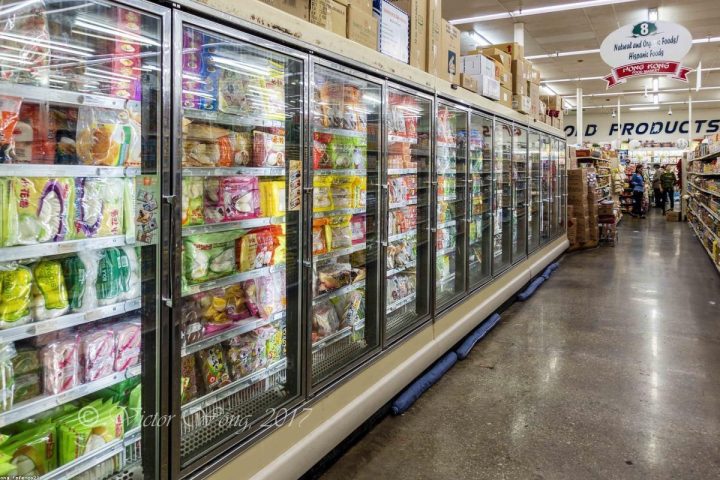
Most households use the freezer like a storage shed: peas, ice cubes, and a box of chicken nuggets that has survived three Christmases. Used as a working tool instead, it becomes one of the largest waste-reduction levers in the whole kitchen. That matters, because the scale of the problem is enormous. The UN Environment Programme’s Food Waste Index Report 2024 puts household food waste at around 79 kilograms per person a year, and finds that households alone account for 60 percent of all the food wasted worldwide, roughly 631 million tonnes in a single year. Put another way, about 1 billion meals are thrown away every day. A working freezer will not fix that on its own, but it is one of the simplest ways to bring your own share of it down, and it does so without any special equipment or expense.
The freezer saves what the fridge cannot
The fridge buys you days; the freezer buys you weeks. Bread you would otherwise stale, leftover sauce, ripening bananas, a half-portion of dinner, herbs you cannot finish, all of these are freezer candidates the fridge would lose within the week. The fridge slows decay but does not stop it, which is why a tub of soup pushed to the back still turns after a few days. The freezer’s real job is different: it takes food that is about to be wasted and pauses it, holding it more or less in the state it went in until you actually want it. Think of the two appliances as short-term and long-term parking. The fridge is for what you will eat this week; the freezer is for everything else you would otherwise bin.
Set it to the right temperature
Freezing only works properly at the right temperature. US food-safety guidance is to keep the freezer at 0°F (-18°C) and the fridge at 40°F (4°C) or below. Held steadily at that freezer temperature, frozen food stays safe more or less indefinitely; the recommended storage times you see on charts are about quality, not safety. In practice that means a forgotten bag of stew from two months ago is a quality question, not a danger, as long as the freezer has stayed cold throughout. It is worth checking your setting rather than assuming, because a freezer that has crept up to a warmer point is quietly degrading everything inside it.
The same logic runs through a lot of kitchen anxiety about dates. The USDA’s guidance on food product dating notes that, apart from infant formula, date labels are not required by federal law and are not safety indicators at all. A “best if used by” date signals quality rather than safety, and food showing no signs of spoilage is generally fine past it. That is the mindset a working freezer rewards: judge food by how it looks and smells, not by a printed date, and use the cold to extend its useful life rather than treating the calendar as a countdown to the bin.
Keep a one-month flow
A working freezer has a rhythm: food goes in and comes back out within roughly thirty days. The rule is not strict, and safety-wise food lasts far longer than a month, but treating it as a rough flow stops the freezer becoming a place where food goes to be forgotten. The enemy of a freezer is not spoilage, it is invisibility. A monthly cadence keeps things moving through and keeps you honest about what is actually in there, so the freezer stays a working store rather than an archive.
Label everything
A piece of masking tape and a marker, twenty seconds: date, contents, portion size. Without labels, a freezer is full of anonymous frosty bricks that nobody reaches for, and a bag of orange sauce could be tomato, could be curry, could be soup from a season you no longer remember. With them, it is a working inventory you actually shop from. Write the portion count too (“bolognese, x2”) so you know at a glance whether a bag feeds one or a family. This single habit does more than any gadget, and it costs almost nothing.
What freezes brilliantly
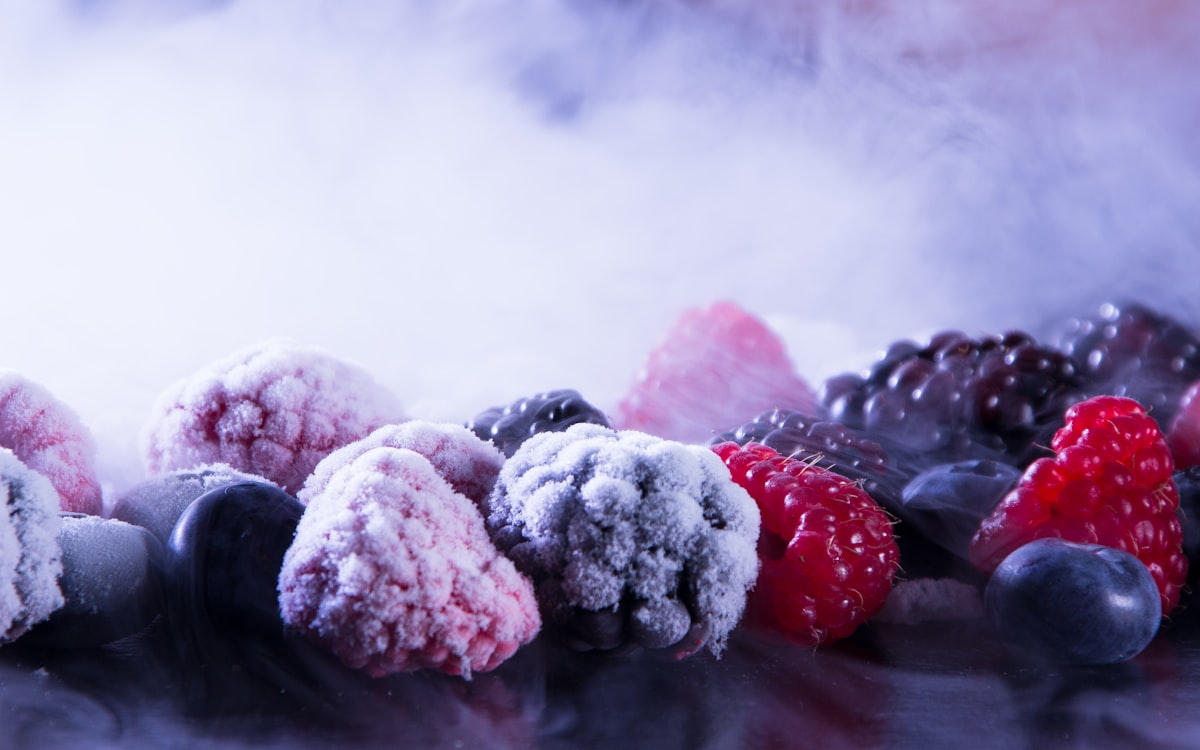
Bread, soups, stews, cooked beans, cooked rice, blanched greens, ripe bananas, fresh herbs blitzed into oil, grated ginger, homemade stock, and raw meat and fish. These are the workhorses. They go in raw or cooked and come out genuinely usable, and they are where the money is saved. A few techniques make them work better. Freeze berries and chopped fruit spread flat on a tray first, then bag them once solid, so they stay loose instead of fusing into one lump. Do the same with meatballs or sausages. Blitz soft herbs such as basil, coriander or parsley with a little oil and freeze them in an ice-cube tray, then pop the cubes into a bag: each one drops straight into a pan. Grated ginger and lemongrass freeze the same way. Vegetable trimmings, onion skins, carrot ends and celery tops can be collected in a bag over time and simmered into stock the day the bag is full, which turns scraps into the base of your next soup.
Frozen vegetables deserve a mention of their own, because there is a lingering idea that they are somehow lesser. Greens blanched and frozen at their peak keep most of their nutrition, and having a bag of spinach, peas or beans in the freezer makes it far easier to hit the World Health Organization’s advice to eat at least 400 grams, or five portions, of fruit and vegetables a day. A handful goes straight into a curry, a stir-fry or a pasta sauce with no washing, chopping or waste, and none of it wilts unused at the bottom of the fridge.
What freezes poorly
Cream-based sauces tend to split, delicate raw greens like lettuce collapse, raw eggs in the shell crack, fried food goes soggy, and high-water items such as cucumber, melon and raw potato turn to mush. The reason is the same in each case: water expands as it freezes and ruptures the cell walls, so anything that depends on crispness or a stable emulsion comes out changed. Most of these are fine if cooked into something first. Potato is disappointing raw but perfectly good frozen inside a finished stew or soup; eggs cannot go in whole but can be beaten and frozen; a split cream sauce can often be rescued by whisking as it reheats. It is the raw, whole, high-water versions that do not survive the cold.
Portion before you freeze
Freeze in the portion you will actually use. One giant block of curry sits untouched because thawing it takes planning; the same curry in four small containers becomes a quick weeknight meal. Portion at the freezer door, not at the table, and label each one. Flat, thin packages in freezer bags are worth the effort here, because they freeze and thaw faster than a dense block and stack far better, so you can see everything at a glance rather than excavating. The same logic applies to leftovers: cooked food keeps 3 to 4 days in the fridge, so anything you will not eat in that window is better frozen the day you make it, at its best, than left to slowly die at the back of a shelf. Freezing at the point of peak quality, rather than as a last resort once something is already turning, is the difference between a meal you look forward to and one you tolerate.
Keep an inventory on the door
A small whiteboard or sticky note on the freezer door, listing what is inside, transforms the appliance. Items get used because they are remembered. Cross them off as they leave, add new bags as they go in, and the list becomes a menu you shop from before you shop from the supermarket. Without a list, a freezer fails through forgetfulness rather than any fault of the food, and forgetfulness is exactly how those 79 kilograms a head quietly accumulate.
Thaw it safely
How you thaw matters as much as how you freeze. The safest default is to move food from the freezer to the fridge the night before, so it defrosts slowly at a safe temperature. If you are in a hurry, a sealed bag under cold running water works, or the microwave if you are going to cook it immediately afterwards. The one method to avoid is leaving frozen food out on the counter for hours. Food safety guidance is clear that perishable food should not sit at room temperature for more than two hours, and no more than one hour if the room is above 90°F (32°C), because the outside of the food warms into the range where bacteria multiply long before the middle has thawed. Counter-thawing a large joint can leave the surface sitting in that danger zone for far longer than is wise. Many things, soups, stews, sauces and cooked rice among them, sidestep the whole question because they can go straight from freezer to pan with no thawing at all.
Cook once for the freezer on purpose
The freezer rewards a little forward planning. When you already have the pot out for a stew, a curry or a batch of bolognese, doubling the quantity costs almost no extra effort or energy but banks several future meals. The heat is already on, the pans are already dirty, and the second portion is close to free. Cool the extra quickly, spread it thin to speed things up, portion it, label it, and you have turned one evening’s cooking into a small stockpile of weeknight dinners. This is the habit that turns the freezer from a passive store into an active part of how the kitchen runs, and it is where the real savings, in both money and waste, quietly accumulate. A freezer stocked with a few home-cooked portions also removes the tired-Wednesday temptation to order in or to let fresh ingredients spoil while you reach for something easier.
A full freezer runs cheaper
A full freezer is more energy-efficient than a half-empty one, because the frozen mass helps hold the temperature when the door opens and the machine has less warm air to chill back down. If yours is regularly half-empty, fill the gaps with bottles of water; they freeze solid and act as thermal ballast, and double as ice for a cool box or an emergency supply of drinking water if the power ever goes out. It is a small trick that lowers running costs and makes the appliance steadier at the same time.
What the freezer quietly enables
A working freezer means you can buy slightly less each week, cook slightly bigger when you have the time, and waste almost nothing. It takes the urgency out of “use it or lose it” produce, absorbs the unexpected leftover, and rescues a tired Wednesday. None of this is dramatic. The freezer is not a sustainability technology in the way solar panels are; it is smaller and, in daily terms, more useful, because it keeps food on its journey from shop to plate without falling off along the way. Given that households are responsible for the largest single share of all the food wasted on the planet, the humble box in the corner of the kitchen turns out to be one of the most practical tools you already own.
Frequently Asked Questions
How long does food really last in the freezer?
Most things stay safe almost indefinitely if kept frozen, but quality drops over time. Aim to use most items within two to three months for best flavour and texture.
Can I refreeze defrosted food?
Cooked food yes, raw protein only once. The texture suffers slightly with each freeze cycle. Avoid repeated cycles where possible.
Do I need a separate chest freezer?
Only if your current freezer is genuinely full every week. For most households, a well-rotated standard freezer compartment is enough.
What is the cheapest way to start using the freezer better?
A roll of masking tape and a marker. Labelling alone transforms the use of the freezer more than any equipment upgrade.
How do I defrost safely?
Overnight in the fridge for most things. Same-day defrosting can be done in cool water for small portions, or in the microwave for short cycles. Avoid leaving food out at room temperature for long stretches.