One of the hardest parts of caring about sustainable food is talking about it with people who do not. The urge to lecture is real, and the result is almost always the opposite of what you wanted. People move towards more sustainable food when they feel respected, not when they feel judged. Being told you are doing something wrong tends to make anyone dig in, so the tone of a conversation matters as much as its content. The reassuring part is that the moves which actually change minds are quieter and less effortful than lecturing, and they tend to leave the relationship in better shape than when you started rather than worse.
Lead with curiosity, not conclusions
“Did you know how cocoa is usually sourced?” lands very differently from “you should not buy that brand.” Curiosity invites a conversation; a conclusion invites defensiveness. The same information can feel like an open door or a closed one depending only on how it is framed. A genuine question also leaves room for the other person to know something you do not, which keeps the exchange honest rather than one-sided and stops it turning into a quiz you have already scored.

The difference is easier to feel with a worked example. Compare “you really should not buy so much bagged salad, it all goes off” with “I keep buying bagged salad and half of it turns slimy before I get to it, do you find that?” The first is an accusation dressed as advice. The second is an admission that opens a shared problem, and it almost always draws a reply about the other person’s own kitchen rather than a defence of it. Curiosity works because it hands the other person a role other than defendant. If you catch yourself about to deliver a fact, try turning it into a question first and see whether the fact still needs saying at all.
Share your own experience, not their failings
“I have been trying Fair Trade coffee and I think it tastes better” is interesting. “You should drink Fair Trade coffee” is preachy. A personal story creates space for the other person to consider the choice at their own pace. An instruction closes that space and puts them on the back foot. Talk about what you changed and why it stuck, and let them draw their own line from your experience to theirs. Nobody argues with a story about your own kitchen the way they argue with a rule aimed at theirs.
Stories also carry the awkward parts, which makes them more persuasive than a tidy recommendation. If you mention that you cooked three bland meat-free dinners before landing on the two you now make on repeat, you signal that the change is survivable rather than saintly. Perfection is off-putting: it implies the listener would have to become a different sort of person to follow you. A real account of trial and error is an invitation, because it shows the door is wide enough for an ordinary busy person to walk through.
Skip the moral vocabulary
“Ethical” and “sustainable” are loaded words in many conversations. Specific, practical language travels further. “Lower-impact,” “from a smaller producer,” or “where you can actually see the supply chain” gives the other person a concrete handle without asking them to defend their character. Where a label does real work, name it plainly rather than reaching for adjectives.
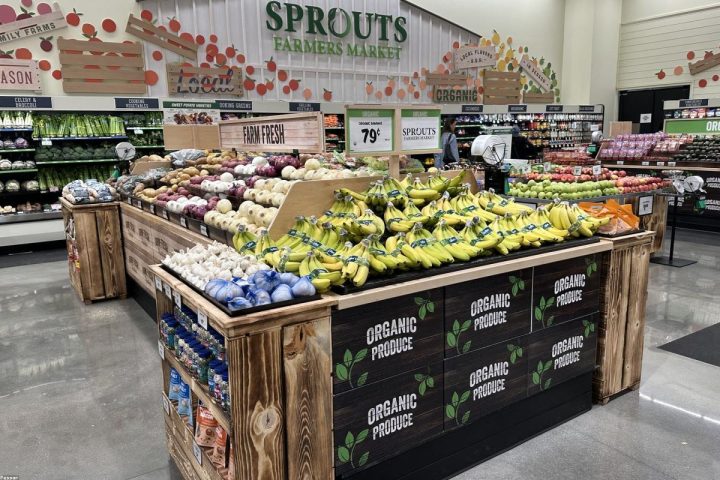
The USDA organic seal is a useful case, because it lets you swap a moral adjective for a checkable standard. It is federally regulated by the National Organic Program, so it is not a marketing flourish a producer can simply print on a box. Under the standard, organic land must have had no prohibited substances applied for at least three years before harvest, and genetic engineering, irradiation and sewage sludge are all prohibited. Organic operations are inspected every year. Pointing to the USDA organic requirements and saying “that seal means the land was inspected and free of prohibited substances for three years” is a factual statement about a standard rather than a verdict on who is a good person. Concrete beats moral almost every time, and it hands a sceptic something to verify rather than something to resent.
Start with the common ground
If you want an opening that rarely provokes anyone, start with food waste. Almost everybody dislikes throwing away food and money, which makes it the least contested corner of the whole subject and a good place to build a little trust before anything harder comes up. It is also far from trivial. According to the UN Environment Programme, households account for 60 percent of all food wasted worldwide, roughly 631 million tonnes in 2022, and each person throws away about 79 kilograms of food a year on average. Put another way, something in the region of 1 billion meals are wasted around the world every single day. Because so much of that happens in ordinary kitchens rather than in far-off factories, small changes at home genuinely add up, and that is a hopeful thing to be able to say rather than a scolding one.
It helps to have a reason beyond money ready, in case the person you are talking to shrugs off the cost. Food that goes to landfill does not simply vanish: as it breaks down it releases methane, a potent greenhouse gas. The US Environmental Protection Agency attributes about 58 percent of fugitive methane emissions from municipal landfills to landfilled food waste, and food waste makes up around 24 percent of everything sent to landfill in the US. You do not need to recite figures at a dinner table, but knowing them lets you answer a genuine question calmly instead of reaching for a moral appeal.
A useful, low-friction thing to share is how date labels actually work, because a lot of edible food is binned out of caution rather than necessity. The USDA points out that, apart from infant formula, these dates are not required by federal law and are not safety indicators at all. “Best if Used By” refers to quality rather than safety, and food that shows no signs of spoilage is generally fine past it. In practice that means trusting your eyes and nose over the printed date for most items, and treating the label as the manufacturer’s guess at peak quality rather than a deadline. Passing that on is practical, saves money, and carries no moralising whatsoever, which is exactly why it opens doors that a lecture would close.
Choose the right moment
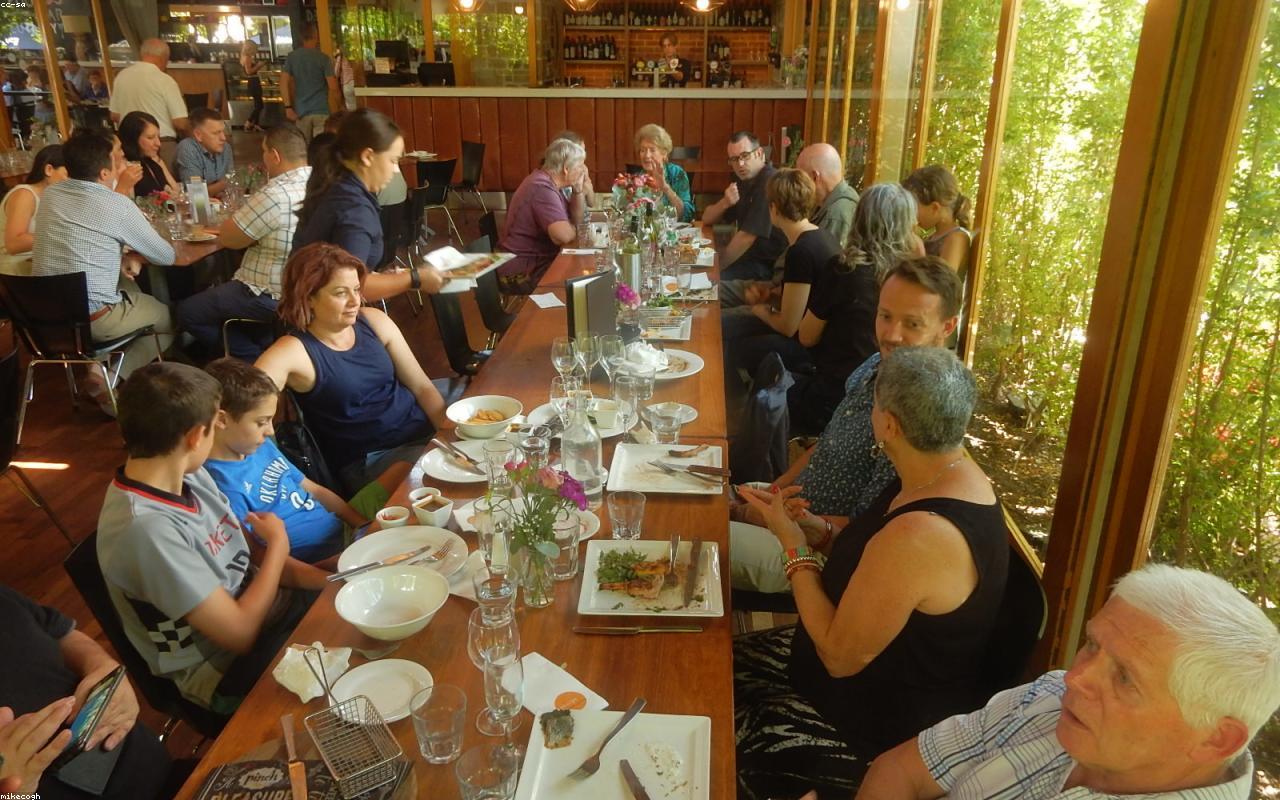
The supermarket aisle is rarely the right moment; nobody wants their trolley audited. A shared meal that happens to feature a good choice can be the right moment, if the subject comes up on its own. A relaxed conversation about a related topic often is too. Forcing ethics into an unrelated moment almost never lands, and it quietly teaches the other person to steer clear of the whole topic with you in future.
Timing is partly about the setting and partly about who raised it. A remark you volunteer unprompted is a lecture in waiting; the same remark offered because someone asked “why do you buy that one?” is welcome. The discipline is to have your thoughts ready but to wait for the opening rather than to manufacture one. If the moment does not come, let it go. There will be another meal.
Honour their constraints
Family and friends with tight budgets, complicated schedules, fussy eaters or simply different priorities are not failing at ethics. They are managing real constraints, and often managing them well. Recognising those constraints out loud, “I know the organic stuff is dearer”, builds the trust that lets a future conversation land. People who feel understood are far more willing to move than people who feel accused, and the acknowledgement costs you nothing.
Honouring constraints also means matching your suggestion to the person in front of you. Someone counting every pound is better served by the food waste angle, which saves money rather than spending it, than by a nudge towards a pricier label. Someone short on time needs the version of a change that fits a chaotic weeknight, not the version that assumes a free Saturday. Meeting people where they actually are is not a compromise of your principles; it is the only way those principles ever reach anyone else.
Drop the win/lose frame
Some conversations are approached as if you must win the other person over to your exact way of eating. This rarely works and usually costs you something in the relationship. Most successful conversations about food ethics end with neither person fully converting the other; both shift a little. That is the realistic outcome, and a perfectly good one. Aiming for total agreement mostly guarantees a stalemate and a sour evening.
Let the cooking do the talking
Cooking sustainable food well for family and friends does more than any lecture could. A genuinely delicious vegetarian meal wins over more sceptics than years of argument, because it quietly removes the fear that eating this way means eating worse. The food itself carries the message, and it asks nothing of the other person except that they enjoy their dinner. If you only change one habit in how you talk about this, make it this one: show, and let them ask.
The practical version is to build a short repertoire of dishes you can cook confidently and that happen to be lower-impact, rather than trying to impress with something ambitious and unfamiliar. Reliability matters more than novelty. A meal that lands well is remembered, sometimes asked after, and occasionally requested again, and each of those is a far stronger prompt to change than anything you could have argued for over the plates.
When disagreement persists, and when it runs the other way
Some people will not shift, and that is fine. Eating differently from your family or friends is not a moral war. Eat your version, let them eat theirs, and keep the relationship in better repair than any argument would leave it. The same discipline applies when you are the one being lectured, which happens just as often from more strictly-minded friends. Meet it with curiosity, your own experience and no moralising in return, and recognise their reasoning as you would want yours recognised. The principles work in both directions, and applying them when you are on the receiving end is the surest test of whether you actually believe them.
Children learn by watching
Children pick up food habits from observation far more than from instruction. A household that cooks seasonally, reduces meat without fuss and talks calmly about where food comes from shapes a child’s adult eating more surely than one that lectures. What they see treated as ordinary becomes their ordinary, long after any particular explanation is forgotten. Checking the fridge together before a shop, or smelling something rather than binning it on the date, teaches more about waste than any instruction could, precisely because it is never framed as a lesson.
The calmest long-term approach
Live your food ethics quietly. Share when invited, cook well, and resist the urge to score points. Over years, this is how families, friendship groups and whole communities drift towards more sustainable eating. The loud version produces backlash and entrenchment; the quiet version produces change that lasts, because people arrive at it themselves rather than being pushed there. Patience is not a soft option here. It is the approach that actually works.
Frequently Asked Questions
How do I handle a family member who actively defends harmful practices?
Engage the topic once with curiosity, then change the subject. Repeating the argument rarely shifts anyone. Demonstration over time tends to do more than confrontation.
Should I refuse food I find ethically objectionable at someone's house?
Usually no. Hosting is a generous act. Eating what is offered with grace, even with small omissions, preserves the relationship and the chance to influence later.
What if my partner does not share my food ethics?
Find the overlap. Reducing waste appeals to almost everyone. Cooking more from scratch appeals to most. Start with what you can agree on rather than the most contested elements.
How do I respond to "what difference does one person make"?
A simple answer: many people making small choices add up to large shifts, and most progress in food systems has involved a critical mass of individuals acting consistently. Then drop it.
When is it appropriate to share information unprompted?
Rarely. Wait for an opening, an invitation, or a directly related topic. Unprompted ethics is almost always perceived as lecturing.