Supermarket sales are not a trick. They lower the price on items the shop wants to move, and your task as a shopper is to work out which of those items actually belong in your kitchen. Done well, weekly sales save a household real money across the year. Done badly, they fill the trolley with things you would never have chosen at full price and quietly might not eat. The difference between the two outcomes is not willpower or luck, but a handful of small habits applied at the shelf edge.
The one-minute test
Before any sale item goes in the trolley, ask a single question: would I have bought this today at full price? If the honest answer is no, put it back. The discount is irrelevant. You are still spending money you had not planned to spend, on food you may not need. This one habit does more to keep a shop under control than any amount of comparing headline savings, and it works on every aisle without exception.
Try it against a real example. A jar of pesto is reduced and it looks tempting. If your household eats pesto most weeks and you are simply topping up, the answer is yes and the saving is genuine. If you are reaching for it only because the yellow label caught your eye and there is no meal in mind, the answer is no, and the reduction has done its job on you rather than for you.
Check the price that actually matters
The saving printed large on the shelf edge is designed to catch your eye, not to help you compare. Look instead at the price per 100g or per litre, usually set in small type on the same label. Some sale prices work out dearer per gram than the ordinary value brand sitting a few centimetres away. The arithmetic catches almost every fake sale, and it takes seconds.
Get into the habit of reading only that small unit-price figure and ignoring the big number entirely. A branded cereal on offer might still cost more per 100g than the shop’s own label at its ordinary price, and a “bigger pack, better value” claim sometimes reverses when you check the per-litre cost. It is also worth knowing where the shop puts its discounts. The stock stacked at the end of an aisle, the end cap, sits in the most visible spot in the store and often carries a higher margin than the genuinely cheaper option further down the same aisle. Walk the aisle before you trust the end cap.
The three places sales almost always pay off
Discounts reliably help a household in three categories: long-life pantry staples your home genuinely gets through, freezer-suitable proteins, and seasonal produce at its most abundant. Outside those three, a sale price is mostly decorative.
Pantry staples: buy the pack you would have bought anyway
If pasta or rice is reduced and your household goes through it every week, good. Buy your usual pack size, or an extra of the same. Buying a great stack of packets only saves money if you actually finish them; otherwise the storage space and the slow staling eat the saving. Dried staples keep for a long time, and the dates printed on them tell you less than people assume. As the USDA explains, date labels are not a safety measure: outside infant formula they are not required by law, and a “best if used by” date indicates quality rather than spoilage. So a long shelf life is a reason to buy sensibly, not a reason to buy in bulk.
The useful way to think about a pantry offer is turnover, not shelf life. Work out roughly how much of an item your household gets through before the next batch of offers appears, and buy to that rhythm rather than to the discount. A cupboard crammed with more than you can cook is money tied up in food you slowly forget about. Rotate what you already have to the front when new packs come in, so the older stock gets used first.
Proteins: freeze in the portions you will cook
Chicken thighs or fish marked down are genuinely useful if your household freezes well. Portion the meat before it goes in the freezer. A single large slab is awkward to defrost in the right amount, and awkward food tends to become wasted food. Small, labelled portions get used; a solid block gets postponed until it becomes freezer clutter.
A little preparation at the point of freezing pays off every time you cook. Split a large pack into meal-sized amounts, flatten each portion in a bag so it freezes thin and thaws quickly, and write the contents and the date on the outside. Flat, labelled portions stack neatly and defrost far faster than a solid lump, which removes the main excuse for leaving them buried.
Produce: commit to a specific use before you buy
Reduced fruit and veg is often reduced because it is near its peak, not past it. That is fine, provided you commit to using it within a few days. A bag of clearance peppers can turn into a week of lunches; the same bag left at the back of the fridge until it softens is simply waste. If you cannot name the meal before you reach the till, leave it. This is where “yellow sticker” markdowns earn their mixed reputation: genuinely worthwhile when you have a plan and a freezer to fall back on, a quiet source of waste when you do not.
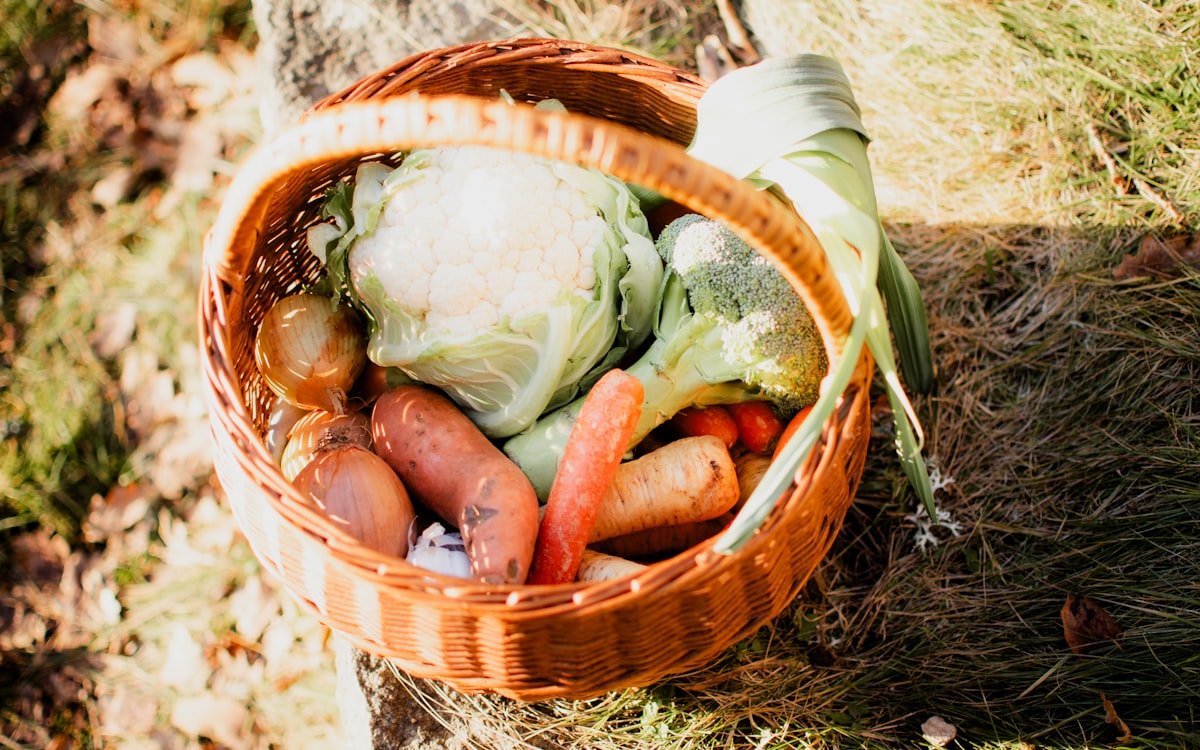
Softer or riper produce that you cannot use straight away often freezes or cooks down well, which widens the window. Overripe bananas go into the freezer for baking, a glut of tomatoes becomes a batch of sauce, and bagged spinach on its last day wilts into a soup. A markdown with a plan attached is a bargain, and a markdown bought on optimism is tomorrow’s food waste.
When organic lines go on offer
Sales often feature organic ranges, and the label carries real meaning that a discount does not change. The USDA organic seal is federally regulated under the National Organic Program: land must have had no prohibited substances applied for at least three years before harvest, practices such as genetic engineering, irradiation and sewage sludge are not allowed, and certified operations are inspected every year. That is a genuine standard, not a marketing word, so an organic item on offer is a real product at a lower price. It is still not a reason to abandon the one-minute test. If your household would happily buy the conventional version and the organic line is cheaper on offer this week, take it. If you are reaching for it only because the word feels virtuous, the same question applies as to any other sale item: would you have bought it today at full price?
What rarely justifies a sale purchase
Ready meals, packaged snacks, novelty drinks, specialty sauces, brands you never normally buy. The lower price is real, but the change in your behaviour is not. The product comes home, sits, and is either eaten without much enthusiasm or thrown away. Both are losses, and the second is worse than it looks. Households are the largest single source of food thrown out worldwide; the UN Environment Programme’s Food Waste Index puts households at about 60 percent of all food wasted globally, some 631 million tonnes in 2022, and roughly a billion meals a day. On a per-person basis that works out to about 79 kilograms of food each of us throws away in a year. A discount that nudges you toward food you will not eat is not a saving at all, and one you pay for yourself.
Loyalty cards and personalised offers
Loyalty cards are worth using for most households: the discounts and tailored offers generally outweigh the inconvenience, and the data trade, while real, is a small and conscious one. The care needed is with the personalised offers themselves. They are built to feel relevant, which makes them very good at pushing you past the one-minute test. Treat a personalised offer exactly as you would any other sale price. If you would not have bought the item today at full price, the fact that the shop guessed you might is not a reason to. Scan the tailored coupons for the few that match items already on your list, use those, and let the rest go by without guilt.
Planning the shop around the weekly leaflet
A few minutes with the week’s offers before you leave the house turns the sale from a set of ambushes into a tool. Look through the leaflet or the app, pick out only the discounts that fall on things you already buy, and build the week’s meals around those where it makes sense. If a protein you like is reduced, plan a couple of dinners around it; if a pantry staple you use is on offer, note it against your usual pack size. Then write the list and shop the list. Everything not on it has to earn its place with the one-minute test at the shelf, which lets the genuine offers shape a plan you would have wanted anyway.
Why buying less, cheaper, is the sustainable choice
A trolley with fewer items but more discounted essentials beats a trolley full of discounted novelties. The first is genuinely cheaper across the year; the second is a slow leak of small spending the household barely registers. It is also the greener trolley. Food that is bought and not eaten does not simply vanish. Most of it goes to landfill, where it makes up a large share of what is buried: the EPA finds that food waste is about 24 percent of all material landfilled in the US, and that landfilled food waste is responsible for about 58 percent of the fugitive methane emissions escaping municipal landfills. Buying only what you will actually eat is one of the plainest ways to cut that at home.
How often to actually stockpile
For most households, rarely. Reliable supply chains and a fresh set of offers every week make large stockpiling unnecessary unless you have real storage and the turnover to match it. Nor is it usually worth driving across town for a better price: the fuel and the time cost more than the saving unless it is a big planned shop, and two nearby shops serve you better than one cheaper distant one. Light, regular use of the sales that genuinely suit your kitchen beats a once-a-year pantry overhaul almost every time. The habit to build is not hunting for the biggest discount, but recognising the ordinary offers that fit your household and ignoring the rest.
Frequently Asked Questions
Are loyalty cards worth the data trade?
For most households, the discounts and personalised offers exceed the inconvenience. The data sharing is real, but the offers are also real. Treat loyalty cards as a small, conscious trade.
Is "yellow sticker" or markdown produce worth chasing?
Sometimes substantial. Markdown produce works well when you have a specific use within two days and freezer-friendly options if not. Without a plan it tends to add waste.
Why do supermarkets place sale items at the end of aisles?
Because end caps are the highest-visibility shelf in the store. Sale items there often have higher margins than the regular sales further down the aisle. Always check the rest of the aisle for the genuinely cheaper version.
Should I drive across town for better sale prices?
Almost never. The transport cost and the time cost usually exceed the savings unless you are doing a big planned shop. Two close stores are better than one cheaper distant one.
How do I tell a real sale from a fake one?
Check the per-100g price, not the headline saving. Some sale prices are higher per gram than the regular value brand on the same shelf. The maths catches almost every fake sale.