The first visit to a small local grocer is awkward for almost everyone. You do not know the layout, you cannot find the labels you are used to, the prices are unfamiliar, and the person behind the counter is watching you work it out. That awkwardness passes quickly. After a few visits you learn the shape of the place, and for a lot of people the local grocer becomes the most pleasant errand of the week rather than a chore.
The aim here is modest. It is not to talk you out of the supermarket, which for most households is neither realistic nor necessary. It is to help you fold a local shop into your routine in a way that actually sticks.
Start by Replacing One Thing, Not the Whole Shop
The most common mistake is treating the change as a full switch. You try to move the entire weekly shop at once, the local grocer does not carry everything, the trip drags, and before long you are back at the supermarket for good.
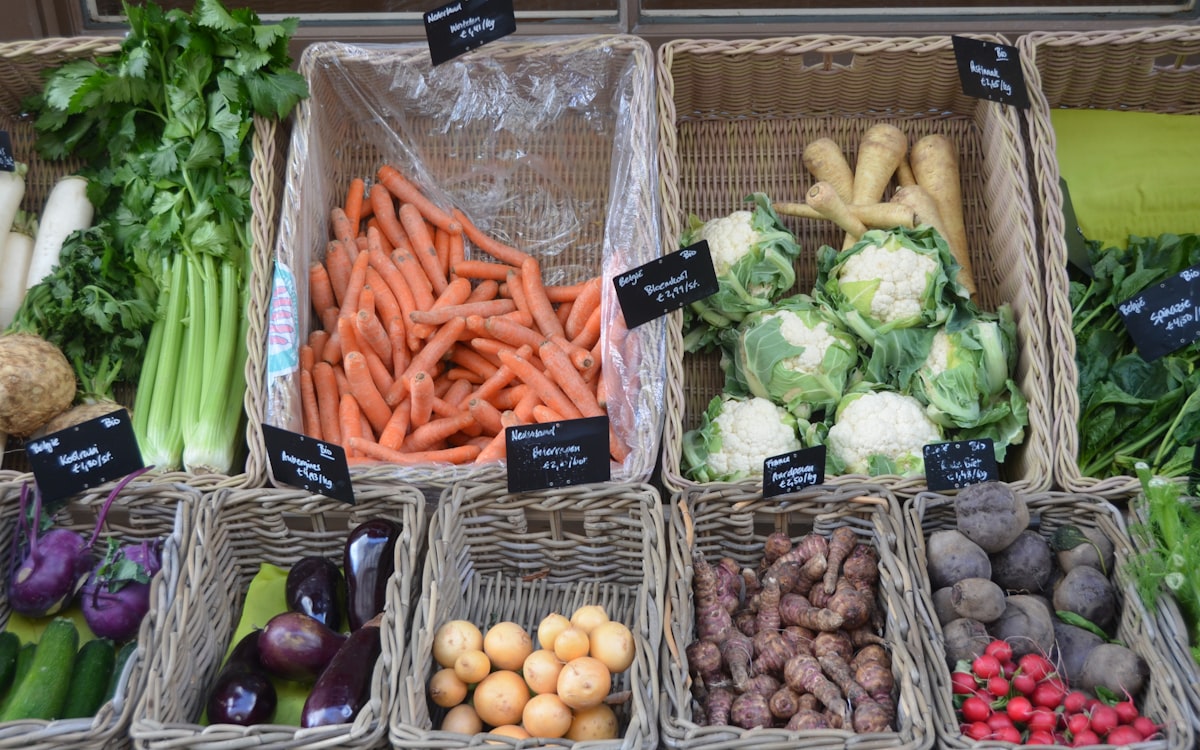
Instead, pick a single category you can buy well from a local grocer: fresh vegetables, eggs, bread, or a few pantry staples. Buy only that category there and leave everything else where it already is. When that one swap feels normal, add a second. The change becomes a quiet habit rather than a project you have to keep deciding to continue.
If you like a plan, a concrete sequence makes the first month easy. Begin with eggs alone, since they are simple to compare and usually competitive on price. Once that short detour has become automatic, add whatever vegetable is in season and cheap that week. A little later, add bread bought on the day it is baked. Keeping a short standing list of just those grocer items, separate from your supermarket list, stops the two shops blurring into one confusing errand. Each step is small enough that the grocer never lets you down on half your basket, which is the experience most likely to end the habit before it has formed.
Go on a Weekday Morning, Not a Saturday Lunchtime
Saturday is when small grocers are at their busiest and least helpful to a newcomer. The queue is long, the shelves have been picked over, and nobody has time to answer questions. A weekday morning is a different shop entirely. The produce has usually just been put out, the pace is calm, and the owner has room to talk. If you can only manage a weekend, aim for opening time rather than the middle of the day, when the best of the fresh delivery is still on the shelf and you can take a slow first lap without holding anyone up.
Ask the Boring Questions Out Loud
Independent grocers tend to like being asked plain questions. Where did this come from. Is it in season yet. What is good this week. Far from being an imposition, these are usually the conversations that make the job worth doing, and they are the fastest way for you to learn the rhythm of the shop: which day the bread is baked, when the vegetables are delivered, what tends to sell out by noon. A supermarket cannot tell you any of this. A grocer often will, gladly. Within a few weeks you will find yourself timing your visit around the answers, arriving on baking day or the morning the produce lorry comes, and buying better for it.
What a Local Shop Actually Costs
The assumption that a local grocer is automatically expensive is where most people go wrong. Small shops are not uniformly dearer than supermarkets; they are priced differently. In-season produce and local eggs are frequently cheaper than the chain equivalent. Speciality items and dry goods are often more. A great deal sits at roughly the same price. Writing the whole shop off as a luxury misses the specific places where it genuinely competes.
When you do compare, compare like with like: a loose, fresh egg from a local supplier against the equivalent grade at the chain, not against its cheapest line. Matched fairly, the gap is often smaller than the reputation suggests, and now and then it runs the other way. If cost is the thing holding you back, this is exactly why the one-category approach works. Start with something that is competitive on price at your local grocer, and the change need not touch your budget at all. Eggs are a common and safe first choice. You can expand into the pricier corners later, or never, and still come out ahead on the basics. Asking about price, phrased respectfully, is not rude either. Most owners take an honest question about cost as the mark of an engaged customer rather than a complaint.
Slow Down and Bring a Bag
Small shops are slower, but in a useful way. The queue is shorter and the transaction is longer, because the transaction includes a conversation. Expect the trip to take a little longer than the supermarket equivalent, and budget for that in your head rather than arriving in a rush. Bring your own bag as a matter of course; independent grocers rarely keep the same wall of free plastic, and you will not want it anyway. The unhurried pace, which is irritating when you are pressed for time, quietly becomes part of why you keep going back.
Store the Fresh Food So It Gets Eaten
Buying little and often only cuts waste if what you carry home survives long enough to be cooked, and the weak link for most households is the fridge. Cold slows the spoilage that turns good food into binned food, but only if the appliance is genuinely cold. Keep the refrigerator at or below 4C (40F) and the freezer at -18C (0F), which is the range at which perishable food keeps safely. Many home fridges run warmer than their owners assume, and a cheap fridge thermometer settles the question in a day.
Two habits do most of the rest. First, eat cooked leftovers within 3 to 4 days, the window in which refrigerated cooked food stays good, and freeze anything you will not reach in time rather than letting it drift to the back of the shelf. Second, do not let perishable food sit out: the safe limit at room temperature is two hours, and only one hour when it is above 90F, after which the sensible move is the fridge or the bin. A grocer trip built around small, frequent baskets suits this rhythm well, because you are rarely storing more than a few days of food at once, so less of it ever reaches the age where it has to be thrown away.
The Sustainability Case Is Broader Than Food Miles
Most people reach for a local grocer expecting the benefit to be food miles, the shorter journey from field to shelf. That is real, but it is the smallest part of the story and the hardest to measure. Two other effects tend to matter more.
The first is packaging. A grocer selling loose vegetables and cutting bread to order generates far less of it than an aisle of shrink-wrapped trays, and that is not a trivial saving. Containers and packaging are the single largest category of municipal waste, making up about 28 percent of what is thrown away. Buying food with less wrapping around each item chips at the biggest pile there is.
The second is food waste, and this is where a small change of habit does the most work. Most food is not wasted on farms or in shops but at home: households are responsible for around 60 percent of all food thrown away worldwide, close to a billion meals every day. Seen whole, that came to about 631 million tonnes in a single year, and works out at roughly 79 kilograms for every person on the planet, most of it edible food that simply went off before anyone got to it. Buying little and often, which is the natural rhythm of a local grocer, means you carry home nearer to what you will actually eat, and less rots forgotten at the back of the fridge.
A related habit helps here too. A lot of home waste is food binned on the strength of a printed date rather than its condition. In most cases those labels signal quality, not safety: aside from infant formula, they are not reliable indicators of whether food is safe to eat, and something with no sign of spoilage is generally fine past its best-before date. Loose, unpackaged food from a grocer often carries no date at all, which nudges you back towards trusting your eyes and nose, which is the better test anyway.
Underneath both is the plainest benefit of all: money spent at an independent shop stays in the local economy in a way a supermarket transaction does not. For many regulars that community angle, not the carbon one, is the real reason they keep coming.
Finding One, and What to Expect
If you are not sure where your nearest good grocer is, the honest answer is that you probably walk past it. Independent shops sit behind quieter fronts than chains and are easy to miss at speed. Walk or cycle a slightly different route for a while, ask neighbours who cook, and check any local food directory for your area. Farmers markets are worth folding in on the same principle: excellent for produce, eggs, dairy and baked goods, a poor fit for the entire weekly shop, and best treated as a supplement rather than a replacement. When you find a shop you like, becoming a regular is what brings out the best of it, since the owner starts putting things aside, telling you what is coming in, and steering you towards the day’s real bargains.
Build a Two-Shop Habit, Not a Switch
For most households the realistic and durable outcome is not replacing the supermarket but pairing it with a local shop: the grocer for produce, eggs and bread, the supermarket for packaged staples and household goods. The combined cost tends to stay close to what you spent before, the quality of the fresh food rises noticeably, and the trolley becomes more sustainable almost as a side effect rather than a sacrifice. That is a change worth making, and an easy one to keep.
Frequently Asked Questions
How do I find a good local grocer near me?
Walk or cycle a different route for two weeks. Independent shops are often hidden behind quieter shopfronts than chain stores. Recommendations from neighbours are reliable. Local food directories are also helpful in many regions.
Are farmers markets worth it for everyday food?
They can be, especially for produce, eggs, dairy and baked goods. They are usually a poor fit for the entire weekly shop. Most regulars treat them as a once-a-week supplement.
What if I cannot afford to switch?
Often you can without realising it. Start with one item that is genuinely competitive at the local grocer. Eggs are a common starting point. The switch is small enough not to affect the budget.
Is it rude to compare prices out loud at a local shop?
Most owners welcome honest questions about price. Phrased respectfully, asking about cost is a sign of an engaged customer, not a complaint.
Do I need to be wealthy to shop at small local stores?
No. Many local grocers compete strongly on price for in-season produce and basics. The pricier specialty items tend to be the visible ones, but they are not the whole shop.