Hydration has picked up a surprising amount of equipment. There are marked bottles that track the hours, electrolyte sachets, phone reminders and elaborate drinking schedules. For a healthy adult living an ordinary life, almost none of it is necessary. Staying well hydrated rests on a handful of small, repeatable habits, and not one of them requires a gadget or a subscription. This is a guide to the version that actually holds up day after day, mainly because it asks so little of you.
Forget the eight-glasses rule
The familiar instruction to drink eight glasses a day has no firm scientific basis as a universal target, and it never really did. How much fluid a person needs shifts with body size, activity, climate and diet. Someone doing physical work in high summer needs far more than someone at a desk in a cool office, and no single figure covers both. The rule stuck around because a round number is easy to remember, not because the body actually works to it.
The more useful idea is that a healthy body is fairly good at signalling its own needs. The kidneys adjust urine minute by minute to hold your internal balance steady, and thirst switches on before any real shortfall. Your job is mostly to listen rather than to hit a quota, which is a lot less work and a good deal more reliable. A fixed target can even mislead, leaving you short on a hot, active day and nudging you to overdrink on a cool one.
The three cues that matter
Three simple signals tell you almost everything you need to know. Thirst is the first: for most healthy adults it is a reasonably trustworthy prompt, not something to override or fear. The thirst signal blunts with age, so older adults sometimes need to drink a little more deliberately rather than waiting to feel parched.
The colour of your urine is the second, and it is the most objective of the three. A pale straw shade suggests you are fine, while a consistently dark colour suggests you could drink more. One caveat makes this cue more useful: the first sample of the morning is naturally darker after a night without fluid, and some supplements and foods like beetroot can tint it too, so judge the steady daytime trend rather than a single glance.
Steady energy and focus are the third, since mild dehydration often shows up as a dull afternoon or a vague headache before you register any thirst at all. If all three cues look right across a normal day, you are almost certainly well hydrated. If one is reliably off, treat that as your prompt to drink a little more, not as a reason to panic or to start rationing your day by the hour.
A glass of water before the coffee
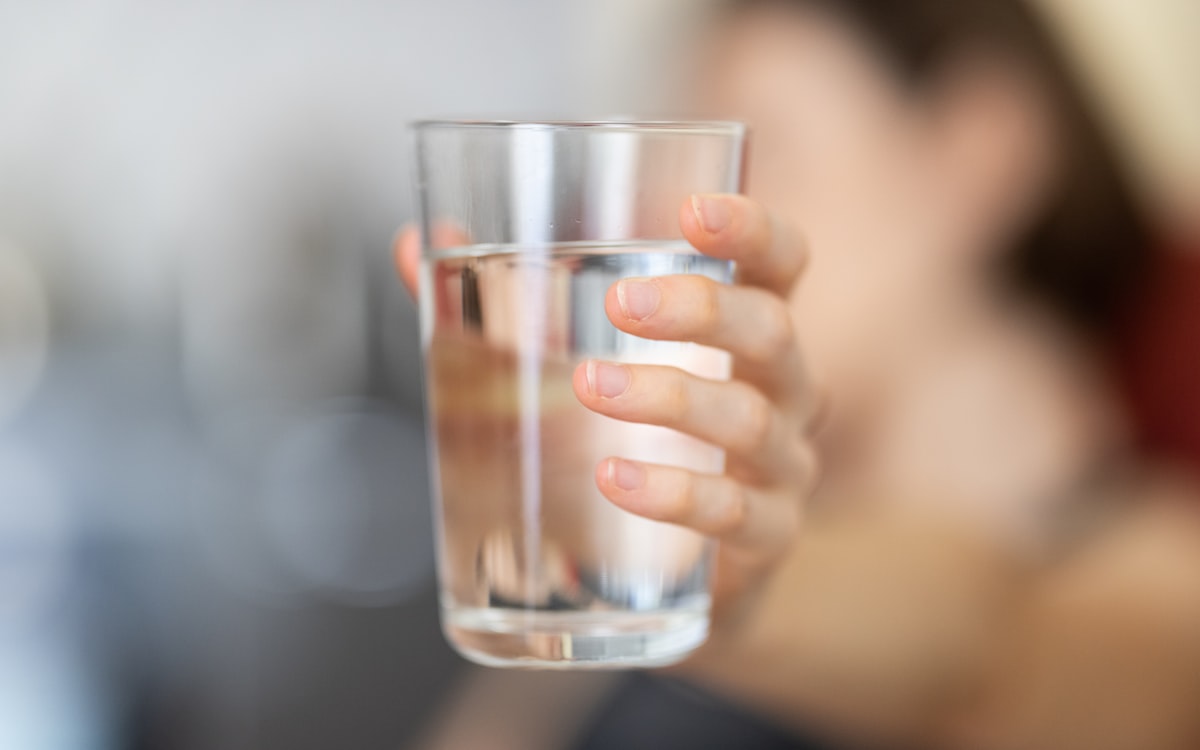
If you adopt only one habit from this whole guide, make it this one. A large glass of water first thing, before the tea or coffee, is the single most useful hydration move available to you. You have gone the whole night without any fluid, and topping up on waking is an easy way to start the day slightly ahead rather than behind. It also attaches neatly to something you already do every single morning, which is precisely why it sticks. Bolt a new habit onto an old one and the existing routine reminds you for free: you are not remembering to drink water, you are simply not making coffee until the glass is empty. To make it easier still, leave a glass by the kettle the night before.
Drink with your meals
Pour a glass of water with each meal. Three meals, three glasses, and combined with the morning glass you have quietly reached a good part of a comfortable daily intake without counting anything. Meals are dependable anchors. They happen at roughly the same times each day, and pairing water with them removes the need to think about it separately. The same logic extends to any other fixed point in your day, such as the hot drink you make when you get in from work. Add those to the water hidden inside food, and the average person is comfortably hydrated by early afternoon with no conscious effort at all. The strength of this approach is that it never relies on willpower; it relies on timing you have already set.
Food does a lot of the work
A meaningful share of your daily fluid arrives on the plate rather than in a glass. Most fruit and vegetables are largely water, so a diet with plenty of them delivers real hydration alongside their fibre and nutrients. Think of cucumber, tomatoes, oranges and melon, and of cooked dishes like soups and stews that carry a great deal of fluid too.
The World Health Organization recommends at least 400 g, or five portions, of fruit and vegetables a day, and someone meeting that is drawing steady moisture from meals without ever framing it as hydration. The practical upshot is straightforward: people who eat mostly dry, heavily processed food often need to drink more water on purpose, while people who eat plenty of fresh produce tend to need noticeably less. If you feel thirsty a lot, the answer might sit as much in what is on your plate as in what is in your glass.
Tea and coffee count too
The idea that tea and coffee dehydrate you is largely a myth. They are mild diuretics, so they do prompt a little extra output, but the fluid they contain more than offsets that, leaving them net hydrating. For everyday amounts there is no need to treat your morning coffee as something to cancel out with an extra glass, or to strike it off some mental hydration ledger. It counts.
Plain water is still the sensible default for the bulk of your intake, chiefly because it carries no sugar and no cost, but ordinary tea and coffee sit perfectly comfortably alongside it. The distinction worth holding onto is between the drink and what people add to it. A plain black coffee or an unsweetened tea is hydrating and harmless for most; a large sweetened, syrup-laden version belongs in the same bracket as the fizzy drinks discussed further down. Herbal and fruit teas count too, and are an easy way to make hydration more appealing without reaching for sugar.
Heat and exercise change the maths
Hot weather and hard exercise are the genuine exceptions. When you sweat heavily you lose not only water but salt, and replacing the water alone can leave you feeling flat and heavy. After a long, sweaty session or a scorching day outdoors, water with a small pinch of salt, or simply some salty food alongside it, restores the balance better than plain water on its own, and does the job people assume requires a branded sachet.
It is worth keeping this in proportion, though. It applies to real, prolonged sweating, not a brisk walk or a normal commute. For ordinary days most of us already take in plenty of salt without trying: the World Health Organization advises keeping salt under 5 g a day, and typical diets tend to run over that rather than under. So the pinch of salt is a targeted fix, not a daily addition, and on ordinary days plain water remains entirely enough.
The bottle question
A reusable bottle earns its place, partly for the sake of cutting down on single-use plastic and partly as a quiet nudge. Water within arm’s reach simply gets drunk more often than water in a kitchen you have to get up and walk to.
Beyond that, the specific bottle hardly matters. The expensive insulated one with the cult following does the same job as a clean, plain bottle you already own. What matters is that it lives somewhere constantly in view, on your desk or in your bag. Choose whatever you will actually carry and refill without resenting it, keep it clean, and ignore the marketing around the rest.
What you can safely ignore
Several popular habits add effort without adding much benefit. You do not need to schedule water by the hour. You do not need electrolyte powders for normal activity, whatever the packaging implies; many simply add sugar and salt you were not looking for. You do not need to weigh or track ounces unless a doctor has given you a specific reason to.
And you do not need to keep drinking well past thirst. Forcing water down after your body has already signalled it has had enough achieves nothing useful, and in genuine extremes, mostly among endurance athletes who drink enormous volumes over long events, far too much water can dangerously dilute the body’s salts. That is rare, but it is the clearest evidence that more is not automatically better. For everyone else the message is reassuringly dull: drink to your thirst and your cues, and stop worrying about it.
The problem that actually matters
For most people, the real hydration issue is not a shortage of water but a reliance on sweetened drinks. Daily fizzy drinks, fruit juices and sugary coffees add up quietly, and swapping the bulk of them for water, with the odd unsweetened tea or coffee, does far more for your health than chasing any particular water target. Because they are liquid, the sugar in them slips past without the fullness solid food brings, so it is easy to take in a large amount without noticing.
Making the swap also helps keep your sugar intake in check: the World Health Organization advises keeping free sugars below 10 percent of energy intake, and ideally under 5 percent, and sweetened drinks are one of the easiest places for those sugars to build up without notice. A single sugary drink can use up a good part of that day’s allowance on its own. You do not have to give them up entirely to benefit. Move them from the default to the occasional, make water the thing you reach for first, and much of the problem quietly solves itself.
The whole system, in a breath
Here is the entire approach. Water on waking, before the coffee. A glass with each meal, and another alongside your usual hot drinks. Attention to thirst, urine colour and energy rather than a fixed number on a chart. Plenty of fresh food, which hydrates while it feeds you. Sweetened drinks kept to the occasional treat, with a little extra salt only after real sweat. There is no app to install, no schedule to follow and no specialty product to buy. The point of hydration done well is that, once these habits settle in, you stop thinking about it almost entirely, which is exactly how it should feel.
Frequently Asked Questions
How much water should I drink in a day?
It depends on your size, activity and climate. For most adults, somewhere between 1.5 and 3 litres total fluid intake (including food and other drinks) is comfortable. Trust thirst.
Are electrolyte drinks ever necessary?
For prolonged intense exercise or significant illness with sweating or fluid loss, yes. For everyday office life, almost never.
Does sparkling water hydrate the same as still?
Yes. The carbonation does not change hydration value.
Should children drink as much as adults?
Proportionally less in absolute terms, but consistent hydration matters. Water at meals and free access to water during the day handles most children's needs.
Can I drink too much water?
Yes, although it is rare in normal life. Drinking massive amounts of water in a short period (several litres in an hour or two) can be dangerous. Spread intake naturally across the day.