Most nutrition writing is aimed at people who already enjoy food. It assumes you want to hunt down recipes, compare ingredients and care whether one tomato tastes different from another. If you eat mainly to get on with your day, that world can feel closed off. But eating well does not depend on food enthusiasm. It depends on a small number of repeated, durable habits you can run almost without thinking.
You do not need to cook elaborately
A genuinely healthy diet can be built from a short stretch of plain cooking each day. No special techniques, no fresh herbs, no careful plating. Boiled, baked and sauteed food that looks unremarkable still supports your health perfectly well. The nutritional value sits in the ingredients and the overall pattern, not in the presentation. Once you accept that plain food is allowed to stay plain, the whole task gets lighter and the pressure to perform in the kitchen falls away.
The proportions that actually matter
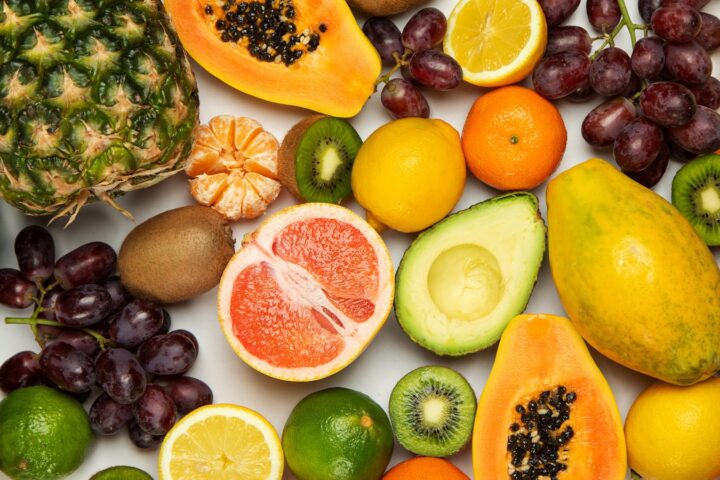
Behind almost every reasonable piece of dietary advice sits a short set of targets, none of which requires an adventurous palate. The World Health Organization’s guidance on a healthy diet asks for at least 400 grams of fruit and vegetables a day, which works out to roughly five portions. It suggests keeping salt under 5 grams a day, and holding free sugars under 10 percent of your energy intake, ideally under 5 percent.
You can hit these marks by structure rather than measurement. Five portions is easier to reach if a vegetable turns up at more than one meal, so a handful at lunch and two vegetables at dinner gets you most of the way without counting grams. Salt stays low almost by accident when you cook from basic ingredients rather than packets and jars, because most of the salt in a typical diet arrives already added. Free sugars are largely a drinks and snacks problem, so the biggest lever is what you reach for between meals. You do not need to track any of this.
Lean on a three-meal default
If deciding what to eat is a chore rather than a pleasure, shrink the number of decisions. Keep breakfast the same most days. Let lunch rotate between a handful of options. Build dinner from a small set of reliable formulas. Variety is overrated for a lot of people; consistency is what quietly holds a diet together, and the proportions above are met through repetition rather than novelty.
A worked version looks dull on paper and works well in practice. Breakfast is the same bowl of oats or eggs on toast every weekday. Lunch cycles through a wrap, a jacket potato, last night’s leftovers or a tin of soup with bread. Dinner draws from the formulas below, so the daily decision shrinks from “what exists in the world” to “which of my few options tonight”.
Five dinner formulas that cover most nights
Rather than searching for something new each evening, keep a short menu of shapes to fall back on:
- A protein, a starch and a vegetable on one plate.
- A one-pot soup or stew you can make in a single pan.
- A grain bowl built from whatever vegetables and protein you have.
- Pasta with a simple sauce and some vegetables stirred through.
- A flatbread or wrap with a few fillings.
These shapes cover nearly every dinner without asking you to be imaginative. You swap the components as the seasons or your fridge change, but the underlying structure stays put, so there is never really a blank page to face. The grain bowl shows how forgiving these formulas are: cook a grain (rice, couscous or whatever is in the cupboard), tip in some frozen vegetables to warm through, add a protein such as a tin of chickpeas or a couple of eggs, and you have a complete meal without a recipe.
Batch cooking rewards the reluctant cook
The one-pot soup or stew earns its place because it keeps. Cooking once and eating several times is the reluctant cook’s best friend. According to FoodSafety.gov, cooked leftovers keep 3 to 4 days in the fridge, so a single pot made at the weekend can quietly feed you into the working week, and dinner on a tired evening becomes little more than reheating.
A few storage habits keep this safe. The same guidance advises not leaving perishable food at room temperature for more than two hours, or more than one hour if the room is above 90F, so the pot should go into containers and into the fridge rather than sitting out for the evening. Your fridge does this work only if it is genuinely cold: FoodSafety.gov recommends keeping the refrigerator at 40F (4C) or below. If a batch makes more than the 3 to 4 day window allows, portion the extra into boxes and freeze it.
Frozen vegetables are a genuine gift
For anyone who finds cooking a nuisance, frozen vegetables solve several problems at once. They do not spoil while they wait, they need no chopping, and they cook in about the time it takes to boil water. Nutritionally they hold up well against fresh, since they are usually frozen soon after harvest. Keeping a few types in the freezer means a vegetable is always within reach, which is often the difference between eating one and not bothering. Held at the recommended freezer temperature of 0F (-18C), they stay usable far longer than anything in the fridge.
There is a waste angle too. The UN Environment Programme’s Food Waste Index Report found that households throw away roughly 79 kilograms of food per person each year. Frozen vegetables sit patiently until you get to them, so far less ends up wilting at the back of a drawer and then in the bin.
Date labels are mostly about quality, not safety
Food often gets binned early because of a misunderstanding about the dates on the packet. According to the USDA’s guidance on food product dating, those labels are not required by federal law, with the single exception of infant formula, and they are not safety indicators. A “Best if Used By” date describes quality, when the maker thinks the product is at its best, not the moment it becomes unsafe, and food showing no signs of spoilage is generally fine past that date.
For a reluctant cook this is quietly liberating. A well-stocked cupboard is not a ticking clock: tins, dried grains and other staples sit for a long time and stay good, so buying them ahead is sensible rather than wasteful, and fewer things get thrown out on the strength of a printed date alone.
Pre-cut produce has its place
Pre-cut produce comes with extra packaging, and for some households that is a fair reason to leave it on the shelf. But if the honest alternative is no vegetables at all, the trade-off shifts. Vegetables actually eaten do more good than vegetables bought with good intentions and forgotten. Context matters more here than a blanket rule about packaging.
Tinned beans, lentils and eggs
Open a tin of beans or lentils, drain, rinse and stir them into whatever is already in the pan. That is protein and fibre with essentially no effort, and the tins sit in the cupboard for a long time without deteriorating. For a non-foodie, tinned pulses may be the single most useful health-supporting item in the kitchen, and a tin tipped into a soup or stew stretches the same pot further across the week.
Eggs are the close runner-up. Boiled, scrambled, fried or baked, they are ready quickly and bring protein, vitamins and minerals with them. Between a few tins and a box of eggs, you can put together a decent meal on the least promising evening, with nothing more than a pan and a few minutes.
The waste a simple kitchen avoids
Running a predictable kitchen is not only easier; it wastes less, and the scale of household waste is larger than most people assume. The UNEP report found that households account for 60 percent of all food wasted globally, about 631 million tonnes in 2022, and that roughly 1 billion meals are thrown away worldwide every day. A repeatable shop cuts into the household share of that directly, because you stop buying speculative ingredients for meals you never quite make. Frozen and tinned staples wait without spoiling, and leftovers get eaten within their few-day window rather than forgotten. None of this takes effort; it falls out of cooking the same handful of simple things.
What you can safely ignore
A surprising amount of food culture is optional. You can skip the recipe blogs with enormous ingredient lists, the cookbooks built around fiddly technique, and any gadget beyond a basic kit of a pan, a pot, a knife and a baking tray. You can walk past the “wellness food” aisle, where the marketing usually outpaces the benefit. And you can leave the daily nutrition trackers alone. All of these assume an enthusiasm you may simply not have, and none of them is required to eat well.
Simple does not mean lacking
Plenty of people who feel no great love for food eat better than people who do. Their meals are consistent, their portions sensible, and they are not swayed by every passing trend. A simple kitchen is not a compromise. The core of a healthy diet is unglamorous: reach for those five portions of fruit and vegetables a day, keep salt modest and go easy on sugary foods. Routine cooking hits those marks more reliably than occasional ambitious cooking ever does, because repetition is what turns a target into a habit.
The shopping habit that supports it
Most of this rests on a steady shop. Buy roughly the same list each week, adjusting only for what vegetables are in season. A few staples, a few proteins, a handful of vegetables and some basic fruit will support a week of straightforward dinners. No surprise items, no experiments left to rot at the back of the fridge. A predictable shop is quick, and it keeps the cupboard and freezer stocked with the forgiving items, tins, eggs, frozen vegetables and a grain or two, that carry you through the evenings when you have nothing left to give.
The calm position
You do not need to love food to eat well. You need a handful of patterns you can run almost automatically, a freezer and cupboard that forgive a busy week, and a shopping list you barely have to think about. Over time, small preferences tend to appear on their own, and the base habits absorb them without any fuss. A household that runs these quiet patterns consistently is in a stronger nutritional position than one chasing food as a hobby it never quite commits to.
Frequently Asked Questions
Can I really stay healthy eating the same things every day?
Yes, if the patterns include a reasonable variety of vegetables, proteins and whole grains. Routine eating is not nutritionally worse than varied eating; it just looks different.
What is the minimum cooking skill I need?
Boiling water, baking in an oven, basic sautéing. With these three skills, a non-foodie can produce nearly all the simple dishes outlined above.
Are ready meals acceptable for non-foodies?
Some are reasonable; many are not. Look for simple ingredient lists and modest sodium. A few good ready meals plus the simple dishes above cover most weeks.
Will I miss out on nutrition by keeping it simple?
No, if the simple diet includes vegetables, fruit, protein and whole grains regularly. Simple does not mean limited.
How do I stay motivated when food is not a hobby?
Frame it as a small daily input that supports the things you actually care about: energy, focus, longevity, mood. The food is the means, not the meaning.