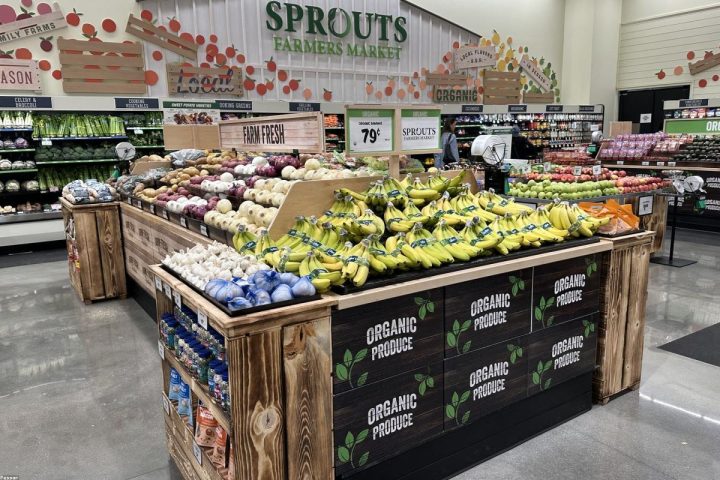
Stand in front of a supermarket shelf and the label that tends to catch the eye is the one telling you where something came from. A punnet of berries flown across an ocean feels heavier on the conscience than the same fruit grown down the road. It is a sensible instinct, and for years “eat local” has stood in as shorthand for eating responsibly. The trouble is that the sums do not really back it up. When researchers add up the greenhouse gases behind our food, the distance a product travelled turns out to be a minor line in the accounts. What sits on your plate matters far more than the miles it clocked getting there.
Food miles are a smaller piece than they feel
The most thorough look at this comes from a study by Joseph Poore and Thomas Nemecek, which drew on data from about 38,700 farms across 119 countries. Summarising that work, Our World in Data makes a point that catches most people off guard: what you eat matters far more than how far it travelled. For the great majority of foods, transport is only a small share of total emissions. The bulk of the footprint is created on the farm and in the land the food occupies, long before anything is loaded onto a lorry.
This is worth sitting with, because it quietly rearranges the usual advice. Choosing a locally grown steak over an imported one trims the transport slice, but that slice was never the problem. The animal, the feed and the land behind that steak dominate its footprint regardless of the postcode where it was raised. If you want a smaller impact, the productive question is not “where is this from?” but “what is this?”
Where the footprint is really made
It helps to picture what “on the farm” actually covers, because that is where the weight lives. Before a food leaves the gate it has already accounted for the land cleared to grow it, the fertiliser spread on that land, the feed raised for any animals, the methane those animals release as they digest, and the fuel burned by machinery. A shipping container or a delivery van is added at the very end of that chain, and for most foods it is a modest addition. Two lentils, one grown a continent away and one grown nearby, carry almost the same footprint because the growing dwarfs the journey. This is the core reason distance is a poor guide: it measures the last and smallest step while ignoring the first and largest ones.
The ranking that actually counts
Rank foods by the emissions behind each kilogram and a clear order appears, one that has almost nothing to do with geography. The gaps between the tiers are large, which is why swapping between them does real work.
At the top: beef and lamb
Ruminant animals, cattle and sheep, sit far above everything else. Their digestion releases methane, a potent greenhouse gas, and they need a great deal of land and feed for each unit of meat produced. The result is that beef and lamb carry a heavier footprint than any other common food by a wide margin. Our World in Data is direct about the consequence: shifting away from ruminant meat toward chicken, pork or plant-based foods cuts a diet’s footprint substantially. If you make only one change, this is the one that carries real weight, the single biggest dial in an ordinary kitchen.
The reason the gap is so stark comes down to biology and arithmetic together. A cow or sheep converts only a fraction of the feed and grass it eats into meat, so a large area of land and a large volume of feed stand behind every kilogram on the plate. On top of that, the methane released during digestion is a warming agent in its own right, produced steadily whether the animal is raised at home or abroad. Because both of these sit entirely on the farm side of the ledger, a local rump steak and an imported one land in much the same place. Distance cannot rescue a food whose footprint was decided in the field.
In the middle: pork, poultry and dairy
Chicken and pork sit well below beef and lamb. They are still animal products with a real footprint, but the drop from ruminant meat is steep enough that a mid-week swap genuinely moves the needle. Dairy is more mixed. Milk itself is fairly modest, but cheese concentrates a lot of milk into a small amount of food, so it tends to land higher than the birds. None of this makes chicken or cheese a problem food; it simply places them between the extremes.
Pigs and poultry do not ferment their food the way cattle do, and they turn feed into meat more efficiently, which is most of why they sit lower. Cheese is the case worth remembering at the counter: it takes several litres of milk to make a single block, so the milk’s footprint is compressed into every slice. That does not rule cheese out, but it is a reason to treat a strong hard cheese as a flavouring rather than the main event, and to enjoy a glass of milk or a pot of yoghurt with a lighter conscience.
At the lower end: plants
Beans, lentils, peas, grains, root vegetables and most other plants sit at the bottom of the ranking. This is where the largest reductions come from, and it holds true even for plant foods that were shipped a long way. A lentil grown overseas and a lentil grown nearby land in roughly the same place, because the growing, not the shipping, is what counts. Building meals around pulses and vegetables a few times a week does more for the numbers than any amount of label-checking.
Pulses deserve a special mention within this group. Beans, lentils and chickpeas are filling and protein-rich, which makes them the most natural stand-in for meat in a familiar dish rather than a compromise on the side of the plate. A chilli, a curry, a bolognese or a shepherd’s pie can carry half or all of its meat swapped for pulses with very little fuss, and each of those swaps moves a meal from the top of the ranking towards the bottom. That is the practical shape of the advice: not a wholesale change of diet, but a steady tilt in what forms the base of an ordinary dinner.
So where does “local” still earn its place?
None of this is an argument against buying locally. Food grown near you can be fresher, can support growers in your area, and often arrives with less packaging and less time in cold storage. Those are good reasons on their own terms. The point is narrower: local sourcing is not the main carbon lever, and treating it as one can crowd out the change that would actually help. A basket of local beef is not a lower-impact choice than imported beans. Enjoy local produce for what it does well, and keep the emissions decision on the food type.
The exception worth knowing: air freight
There is one corner where transport does matter a great deal, and it is worth understanding rather than fearing. Food moved by air carries a far heavier transport footprint than food sent by ship, road or rail. The saving grace is scale: Our World in Data notes that air freight is only a tiny fraction of food transport overall. The items that fly tend to be highly perishable and quick to spoil, some soft berries, asparagus and fine green beans, for instance, out of their local season. Most of what fills a weekly shop never goes near a plane. A reasonable habit is to be a little wary of delicate, out-of-season produce that clearly could not survive a slow journey, and to let the rest go.
Spotting the small group that flies is easier than it sounds once you know the pattern. The tell is fragility combined with season: soft, quick-spoiling produce on sale well outside the months it would ripen locally has usually been flown, because a slow sea voyage would leave it inedible on arrival. Hardy staples that keep for weeks, such as grains, dried pulses, onions, apples and root vegetables, travel perfectly well by ship and road, so their origin is rarely worth a second thought. If a punnet of raspberries appears in the depths of winter, that is the moment the transport question earns its keep; for almost everything else in the trolley, it does not.
The footprint you throw away
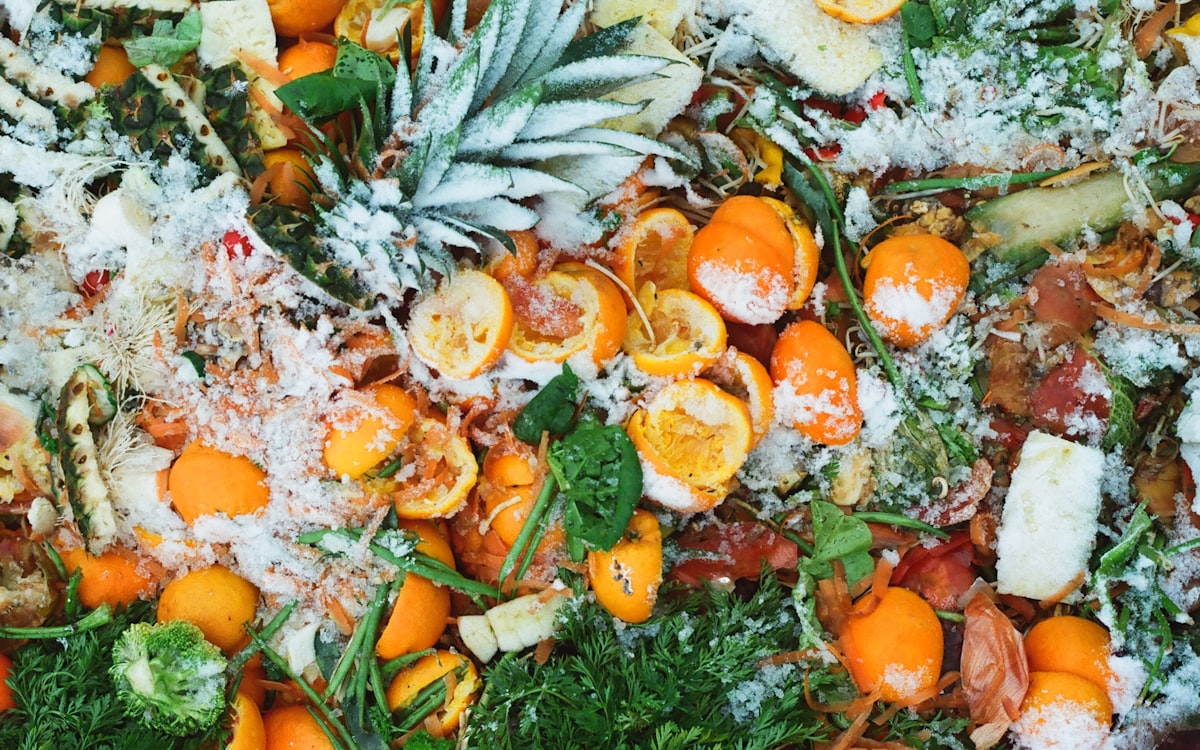
Once you have the type of food sorted, the next largest saving is hiding in the bin. Every item you buy and then discard carries the full weight of its production, transport and storage, wasted for nothing. This is not a marginal issue. According to the UN Environment Programme’s Food Waste Index Report 2024, households throw away about 79 kilograms of food per person each year. Households account for 60 percent of all food wasted globally, around 631 million tonnes in 2022, and roughly 1 billion meals are binned worldwide every single day.
The reason this belongs in a conversation about carbon is simple. Wasting a low-footprint vegetable is a small loss; wasting the beef you carefully chose undoes the whole calculation. Cutting waste protects the emissions you have already spent, whatever the food, which makes it a companion to the food-type decision rather than a rival to it.
Practical ways to waste less
Cutting household waste is mostly a matter of small routines rather than effort. A rough plan for the week before you shop keeps you from buying food that has no meal to go to. Storing things properly stretches their life: many vegetables last longer in the fridge than in a warm kitchen, herbs keep better standing in a little water, and bread freezes well and toasts straight from frozen. Learning to read date labels helps too, since a “best before” date is about quality rather than safety, and a great deal of edible food is thrown out on the strength of it. Cooking slightly less than you think you need, and treating leftovers as tomorrow’s lunch rather than an afterthought, closes most of the remaining gap.
Turning the data into dinner
Pulled together, the evidence points to a handful of concrete moves, none of which require a spreadsheet at the checkout:
- Treat beef and lamb as occasional, not default. Moving those meals toward chicken, pork or, better still, beans and lentils is the change with the most behind it.
- Stop grading your shop by distance. A well-chosen plant meal beats a local steak, so spend your attention on the food, not the origin sticker.
- Reserve your caution for air-freighted, highly perishable items. That narrow group is the one place where transport genuinely swings the total.
- Buy what you will actually eat, and use it. Planning meals, storing food well and finishing leftovers protects the footprint you have already paid for.
The comfort in all this is that the effective choices are also the practical ones. You do not need to memorise a table of numbers or interrogate every label. Lean your week a little more towards plants, keep ruminant meat for the meals where it truly counts, waste less of what you bring home, and you will have done the part that the data actually rewards. Where the food came from is a footnote; what it is, and whether you eat it, is the story.
Frequently Asked Questions
Is buying local food actually better for the climate?
Not usually, at least not for the reasons people assume. For most foods, transport is only a small share of total emissions, so the distance a product travelled is a minor factor next to what it is. Local food can still be fresher, support nearby growers and use less packaging, which are good reasons in their own right, but it is not the main lever for cutting your food's carbon footprint.
Which foods have the highest carbon footprint?
Ruminant meat, meaning beef and lamb, sits far above everything else. Cattle and sheep release methane as they digest and need a great deal of land and feed for each kilogram of meat, so their footprint is heavier than any other common food by a wide margin. Our World in Data, drawing on data from about 38,700 farms across 119 countries, finds that shifting from these meats towards chicken, pork or plant-based foods cuts a diet's footprint substantially.
Does importing vegetables cancel out their low footprint?
Almost never, because the growing rather than the shipping is what dominates a plant food's emissions. A lentil grown overseas and one grown nearby end up with roughly the same footprint, so imported beans still beat local beef comfortably. The one thing to watch is delicate, quick-spoiling produce sold out of season, which may have been flown rather than shipped.
How much does air-freighted food matter?
Air freight carries a far heavier transport footprint than shipping, road or rail, but it makes up only a tiny fraction of food transport overall, so most of a weekly shop never goes near a plane. The items that fly are usually soft, highly perishable and on sale outside their local season, such as some berries, asparagus and fine green beans. Being a little wary of that narrow group is sensible, while hardy staples like grains, pulses and root vegetables are not worth a second thought.
Why does reducing food waste help my footprint?
Anything you buy and then throw away still carries the full weight of its production, transport and storage, so wasting food wastes all the emissions that went into it. The scale is large: the UN Environment Programme's Food Waste Index Report 2024 found households waste about 79 kilograms of food per person each year, account for 60 percent of all food wasted globally, and that roughly 1 billion meals are binned worldwide every day. Planning meals, storing food well and using leftovers protects the emissions you have already spent, whatever the food.