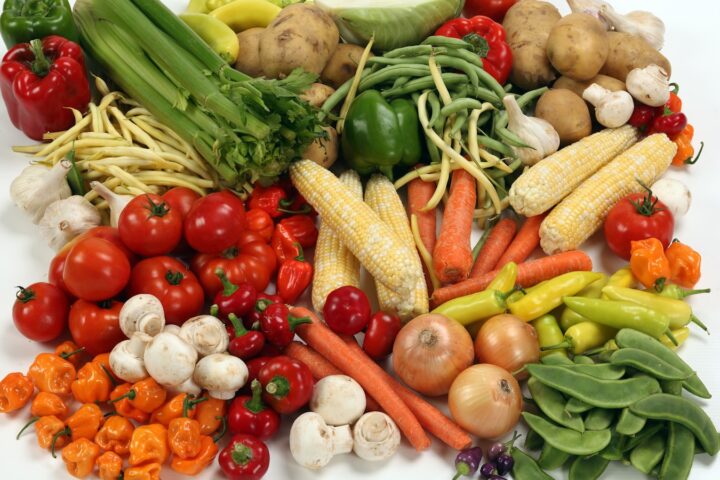

Household food waste is the version most people hear about, and it is a real and significant part of the picture. But it is only one part. Food is lost at every stage between the field and the fork, and each stage has its own causes. Seeing the whole chain makes household action both more meaningful and more honest, because it shows where your effort genuinely counts and where the responsibility sits elsewhere.
Where Food Waste Actually Happens
Waste is spread across the supply chain, and the biggest share depends on where you look. In wealthier countries, the home tends to be the largest single source. In lower-income countries, more is lost earlier, on farms and during storage and distribution, where refrigeration and transport are patchier. Globally, the scale is hard to ignore: the UN Environment Programme’s Food Waste Index Report 2024 found that households alone accounted for about 60 percent of all food wasted in 2022, around 631 million tonnes, and that roughly a billion meals are thrown away worldwide every day. Numbers like these are not a reason for despair. They are a map of where the problem sits, and a reminder that no single actor is causing all of it. Reading the chain stage by stage is the difference between effort that connects to a real cause and effort that only feels productive.

Farm-Level Waste
Food is lost on farms to weather, pests, and the timing of harvest, all of which are partly structural and hard to remove entirely. But a large share is avoidable. Produce is rejected for being the wrong shape, size or colour, and crops are sometimes left unpicked when the price drops below the cost of harvesting them. Cosmetic standards set by buyers turn perfectly edible food into waste before it ever reaches a shop, which is why the campaigns for “wonky” fruit and vegetables address a real cause rather than a token one.
Picture a field of carrots. Some grow forked, curved or larger than a specification allows, and although the flavour and nutrition are identical, those carrots may never be lifted because no buyer will take them at a workable price. The same logic strands a whole crop when a glut pushes the market price below the cost of a picking crew. The food is edible and the loss is a matter of economics and specification, not spoilage, which is why buying loose, imperfect or surplus produce presses on a genuine lever rather than a symbolic one.
Distribution and Retail Waste
Between farm and shelf, food is lost to damaged packaging, broken refrigeration, and stock that expires in the warehouse before it can be sold. A single failure in the cold chain, a chiller that drifts warm overnight, can spoil a whole pallet at once. In the shop itself, overstocking to keep shelves looking full, cautious expiry policies, and forecasting errors add more on top. A display piled high sells better, but guarantees some of it will not move in time. Many retailers are working on this, and some have made real progress, but the loss across the sector is still far from zero.
Restaurant and Foodservice Waste
Kitchens generate waste through trimmings and prep offcuts, over-portioning, and the food diners leave on the plate. The pressure to present abundance, generous portions and full displays, tends to push all three upward at once. Buffet service and unpredictable customer numbers make the problem harder still, because the food has to be prepared before anyone knows how much will actually be eaten. A kitchen can trim this by using offcuts for stocks and sauces, offering more than one portion size, and forecasting covers from booking data rather than cooking for a room that may never fill.
Household Waste
In wealthy countries the home is often the single largest source, and the causes are familiar: buying more than you use, storing it poorly, forgetting leftovers, and binning food out of confusion about dates. The UNEP figures put the average at roughly 79 kilograms of food per person per year, a striking amount once you picture it accumulating week by week. This is also the stage where your own decisions have the most direct effect, which is precisely why it deserves attention even though it is not the whole story.
What Households Can Do Most Effectively
A handful of practical habits cut the bulk of household waste without demanding much effort once they settle in:
- Buy less, more often. Overshopping is the root of most home waste. Shopping to a loose plan, and to what the fridge already holds, beats a big weekly haul that outlasts your appetite for it. A rough plan for 3 or 4 meals before you leave the house helps, because food you never bought cannot be wasted.
- Store food properly. Learning which items like the fridge, which prefer a cool dark cupboard, and which freeze well extends the usable life of almost everything you buy. Herbs kept stem-down in a little water, and potatoes and onions stored apart in the dark, quietly stop a lot of premature spoilage.
- Treat leftovers as ingredients. A half-used tin, yesterday’s rice or a tired vegetable is the start of the next meal, not a problem to be forgotten at the back of a shelf. Keeping cooked food at the front of the fridge, at eye level, means you see it in time to use it.
- Read date labels correctly. This one is worth understanding properly. The USDA’s guidance on food product dating explains that, apart from infant formula, these labels are not required by federal law and are not safety indicators. A “best if used by” date signals quality, not safety, and food showing no signs of spoilage is generally fine past it. “Use by”, where it appears, is the stricter date to respect. In practice that means trusting your senses: a yoghurt or a bag of flour a few days past its “best” date, with no off smell, texture or appearance, is a quality judgement rather than a safety emergency.
- Use the freezer. A working freezer turns a looming deadline into weeks of breathing room for bread, cooked meals, herbs and much else that would otherwise be thrown out. Freezing food in portion sizes you will actually use, and labelling it with a date, means it comes back out as a meal rather than a mystery block you eventually discard.
The Packaging That Comes With It
Food comes wrapped, boxed, bagged and bottled, and that packaging is a large part of the wider waste story around food. According to the US Environmental Protection Agency, containers and packaging are the single largest category of municipal solid waste, at about 28 percent of what is generated, and a meaningful share of that is the packaging food travels and sits in.
The awkward part is that packaging and food waste pull against each other. A film wrap or modified-atmosphere pack can add days to the life of a cut of meat or a bag of salad, preventing waste that would carry a larger footprint than the plastic itself. Stripping all packaging away is not automatically greener if more food then spoils on the way home. Some packaging earns its place by protecting food, and some is there mainly to make a product look fuller, and the two deserve to be judged differently rather than lumped together.
Reading Green Claims on the Wrapper
Packaging increasingly carries reassuring words: biodegradable, compostable, eco-friendly. These are worth reading with care, because they do not all mean what they appear to. The US Federal Trade Commission’s Green Guides treat an unqualified “biodegradable” claim as deceptive for anything that will end up in a landfill, because items buried in landfill will not meaningfully degrade within a year. The Guides also require marketers to be able to substantiate environmental claims such as recyclable or compostable, rather than simply printing them.
For a shopper, the practical reading is straightforward. A “compostable” tray only delivers on its promise if it actually reaches composting, and does very little sitting in general waste. A vague “eco-friendly” badge with nothing specific behind it tells you almost nothing. The most useful claims are the concrete ones you can act on: a clear recycling instruction, a “home compostable” mark, a note on recycled content.
What Retailers Can Do
Shops hold levers that households do not. They can stop rejecting cosmetically imperfect produce, sharpen forecasting so they order closer to what they actually sell, and mark down short-dated items clearly rather than letting them expire unnoticed at the back of a display. Above all, they can route edible surplus to redistribution and food charities rather than to the bin, and keep refrigeration and logistics in good order so less is lost in transit. On packaging they can favour materials that protect food while remaining genuinely recyclable, and drop the layers that exist only for appearance.
What Policy Can Do
Some changes only work at the level of rules that apply to everyone at once. Clearer, more consistent date labelling would reduce the confusion that drives so much household waste in the first place. Support for surplus-redistribution infrastructure would make donating surplus easier and cheaper than dumping it. Waste-reporting requirements for large retailers turn a hidden cost into a visible one, and a cost that has to be measured and published tends to be the first thing a business starts to reduce. On packaging, holding “biodegradable” and “compostable” claims to a real definition protects shoppers from labels that promise more than they deliver.
Why the Whole Picture Matters
A household that halves its waste is doing real work, but it cannot fix forecasting in a supermarket chain or cosmetic standards on a farm. A retailer that improves its ordering cannot change what happens in a million kitchens. Genuine progress needs action at each level, and seeing that clearly guards against two traps at once: the guilt of believing your kitchen bin is single-handedly responsible for a global problem, and the complacency of assuming someone further up the chain will quietly handle it.
The Calm Position
Do your part at home, where your control is greatest and the saving is immediate, because less food wasted also means less of the water, land and energy that went into producing it wasted too. Read the labels for what they are, and judge packaging on whether it protects food rather than on how green it claims to be. Then support the wider changes: back retailers and producers that visibly reduce waste at their level, and welcome policy that addresses the stages you cannot reach yourself. The food waste conversation works best when it holds all these levels together, rather than loading the whole weight onto the one person standing at the kitchen bin.
Frequently Asked Questions
What percentage of household food is typically wasted?
Estimates vary, but for wealthy countries the figure is often 20-30 percent of food brought into the home. The exact number depends on measurement and definitions.
Are "best by" dates strict?
Generally no. "Best by" is a quality indicator, not a safety one. Many foods are perfectly safe and pleasant well past their "best by" date. "Use by" is the stricter safety date.
Why do supermarkets throw away so much food?
Cosmetic standards, overstocking to ensure visual abundance, expiry policies and logistical inefficiencies. Some retailers are improving rapidly; others lag significantly.
Can I really make a difference by reducing my own waste?
Yes, especially in aggregate. Personal waste reduction directly reduces emissions, water and land use associated with the food you would have wasted. It is also the level you can most directly control.
What about composting? Does it solve food waste?
Composting handles the back end. It does not address the fact that the food itself was wasted, with all the production impact already incurred. Reducing waste at the source is more impactful than composting it after the fact.