Strict local eating asks a great deal. It insists that every ingredient travel only a short distance to your plate, and for most households that rule quietly collapses within a few weeks. Regional eating is the calmer relative. It celebrates what your wider region grows well without demanding that everything come from within a tight radius. For most people it is the more sustainable path precisely because it is the one that actually sticks, a habit you keep rather than a resolution you abandon.
What “region” means in practice
A region is bigger than your town and smaller than your continent. In practice it is a few hours’ drive in any direction, a coherent climate zone, or a natural food economy that shares a single growing calendar. The Pacific Northwest is a region. The Mediterranean coast is a region. The English countryside is a region. What binds each together is shared seasonality and a shared food character, so the produce, cheeses and grains on offer tend to belong alongside one another. A quick way to sketch your own boundary is to notice where the food at a good local market actually comes from; that catchment is usually your region in miniature.
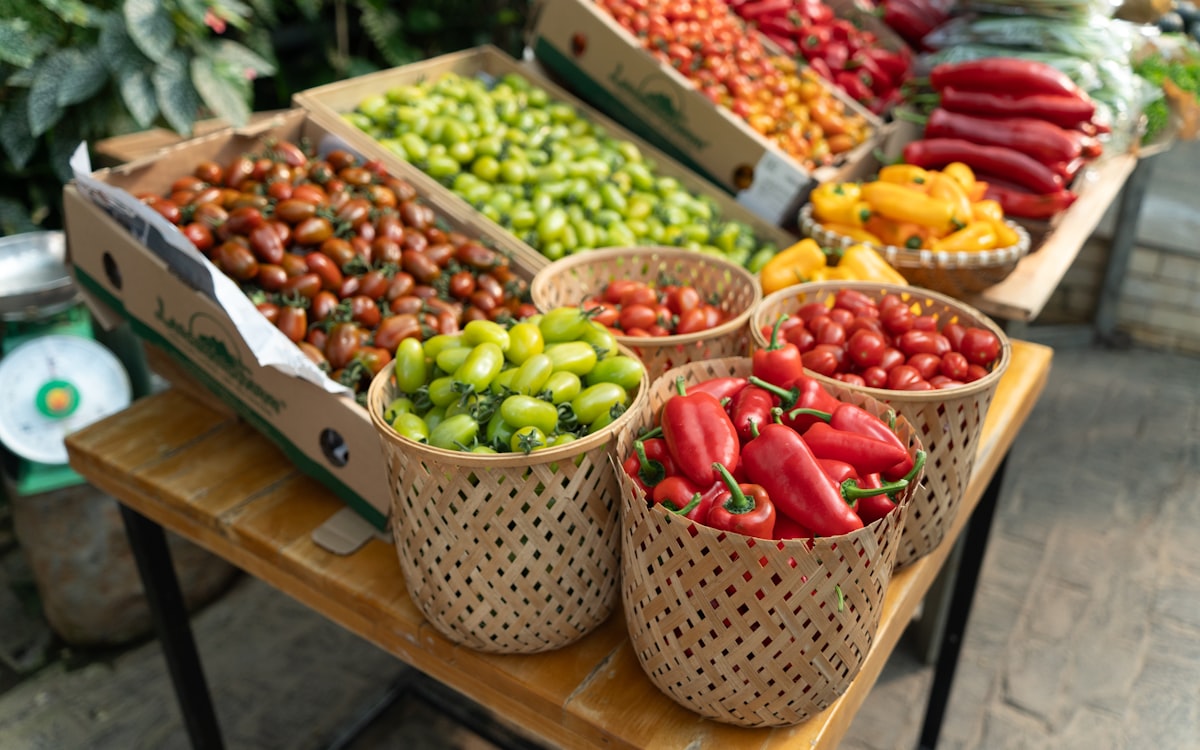
You do not need to draw the line precisely, and arguing about the exact edge misses the point. The useful question is not “is this from my region” but “does my region do this well”. Somewhere that grows apples abundantly should have you reaching for apples before imported stone fruit in autumn. Somewhere with good dairy pasture should have you buying its cheese and butter by habit. The boundary is soft on purpose, because a soft boundary is one you can keep to without turning every meal into an audit.
Identify three regional heroes
Every region grows three or four things brilliantly, and the wider you draw your boundary the longer that list becomes. Pick three you can buy easily and often: a regional cheese, a vegetable that is genuinely in season, and a regional grain or bread. Lean on them. These become the anchors of your cooking, the ingredients you reach for by default rather than the ones you track down for a special occasion. The vegetable slot is worth rotating as the year turns, so the same habit carries you from spring greens through summer fruit to winter roots without much thought.
To see how little effort this really takes, picture a single week built around three heroes: a firm regional cheese, a seasonal squash, and a wholegrain loaf from a nearby bakery. Monday, the squash roasts alongside whatever else is in the oven and becomes a tray of vegetables. Tuesday, the leftovers fold into a soup thickened with the heel of the loaf. Wednesday, the cheese grates over pasta with a handful of the same vegetable. Thursday, toast from the loaf carries the cheese and a spoon of chutney. Nothing here is a project. Three ingredients, bought once, have quietly shaped four dinners, and the shopping list barely changed from the week before.
Import for the categories your region lacks
Regional eating is not a vow of self-sufficiency. If your region does not produce good olive oil, buying it from a place that does is entirely sensible. If your region cannot grow coffee, importing it thoughtfully is fine. The aim is to import the categories your region genuinely lacks and to lean on the categories it nails. Drawn this way, the line is easy to hold, because it follows how food actually grows rather than an arbitrary distance on a map.
What regional eating does not require
It does not mean giving up coffee, chocolate, vanilla, citrus or the other tropical and subtropical goods most modern cooking leans on. It does not mean buying only from within a fixed radius, and it does not mean turning every shop into a research project. Regional eating is a tilt, not a wall. You are shifting the balance of the trolley, not policing every item in it, and that lower-stakes framing is exactly what makes it durable.
How to find your regional foods
Farmers markets are the fastest route, because the people behind the stalls usually grew or made what they are selling and will happily tell you when something is at its best. Go early for the widest choice, and ask what the stallholder would cook this week. That single question does more than any label. A grower will tell you which variety is peaking, what is a fortnight away, and how they would treat a glut at home, and those answers are the regional cooking knowledge you are really after.
Independent grocers come second, specialty food shops third, and restaurants that showcase the region fourth. A fifth source is easy to overlook: ask older relatives what their grandparents cooked. Regional specialities have a habit of hiding in family memory, and the map of what your area does well is usually closer than the supermarket suggests. Even a large supermarket has a regional layer if you look for it: the loose seasonal produce, the local dairy shelf, the bakery counter. You do not have to abandon convenient shopping to shift its balance.
Reading freshness rather than labels
Buying closer to your region means handling more food that carries little or no packaging, and that rewards learning to judge freshness by sight, smell and feel rather than by a printed date. It is worth knowing what those printed dates actually mean on the packaged items you do buy, such as regional cheese or a bagged loaf. In the United States, and with the single exception of infant formula, date labels are not required by federal law and are not indicators of safety, according to the USDA’s Food Safety and Inspection Service. A “Best if Used By” date speaks to quality, not safety; food showing no signs of spoilage is generally fine to eat past it. Understanding that distinction is one of the quieter ways to stop good regional food ending up in the bin simply because a printed number has passed.
The quiet cultural layer
Regional eating carries a sustainability benefit, but it also carries a cultural one. Eating from your region connects you to its traditions, its festivals and its seasons in a way that a uniform, everywhere-the-same shop never can. A regional cheese tends to come with a story; a supermarket own-brand block usually does not. Sustainability and culture often share the same table, and the two pleasures reinforce each other rather than competing for your attention.
Build it into your week
The change works best when it is undramatic. Replace one imported ingredient with a regional equivalent each week: a regional cheese in place of a standard block, a regional wholegrain loaf in place of a generic one, a seasonal regional vegetable in place of an imported one. No single swap feels like a sacrifice. Over months, though, the balance of the kitchen tilts steadily towards its region without any one week demanding effort or planning.
A short list can keep this honest. Try three headings: the categories your region does well (buy these here), the categories it lacks (import these without guilt), and the one swap you are making this week. Keeping it to a single swap matters. A whole new shopping regime tends to buckle under its own weight, whereas one change repeated fifty times a year moves the balance further than any grand January overhaul ever does.
The honest trade-offs
Regional foods sometimes cost more at the till, especially specialty items such as cheese and bread. They often cost less for fresh produce in season, when a local glut pushes prices down and quality up at the same time. Across a full year the mix tends to balance out, and the eating is consistently better for it. It is worth being honest about this rather than pretending regional food is always cheaper: it is the better-value choice far more often than it is the cheapest one. Buying in season is where the value concentrates, because a crop at its peak is both at its best and at its most plentiful, and plenty is what pulls a price down.
How it compounds over time
Regional eaters tend to know their food economy well. They understand the growing calendar, so they buy closer to what they will actually cook and waste less of it. That last point matters more than it first appears. Households, not farms or shops, are the single largest source of food waste. According to the UN’s 2024 Food Waste Index, households account for 60 percent of all food wasted worldwide, roughly 631 million tonnes in 2022, and the average person throws away about 79 kilograms of food a year at home. Totalled up, that comes to around 1 billion meals wasted somewhere in the world every single day. Buying in tune with your region’s seasons, and cooking what you buy, is one of the plainer ways to take a small share of yourself out of those figures.
Food that is binned rarely disappears quietly either. In the United States, food waste makes up about 24 percent of everything sent to landfill, and once buried it is responsible for roughly 58 percent of the fugitive methane released by municipal landfills, the Environmental Protection Agency reports. Methane is the reason a bag of forgotten vegetables is not a trivial thing. Shopping a little more deliberately, so that less of what you buy reaches that stage, is a modest habit with an outsized effect at the far end.
Closing the loop on the scraps
Some waste is unavoidable, even in a well-run kitchen: peelings, cores, stalks, the ends of the regional loaf. Where those scraps go matters. Composting at home routes them through aerobic decomposition, which means the microbes that produce methane are not active, so the methane released in a landfill is avoided altogether, the EPA explains. The finished compost then improves soil structure, helps the soil hold on to moisture and nutrients, and reduces the need for fertilisers. For anyone with a garden or a few pots, that closes a neat circle: the trimmings from this season’s regional vegetables help feed the next. Even a small caddy for kerbside collection keeps those scraps out of the ground where they would do harm.
None of this is dramatic on day one. Over a few years, though, the effect is genuinely large: you build relationships with the people who grow your food, develop cooking skills suited to your region’s strengths, waste less at both ends of the process, and end up with a kitchen that quietly reflects where you actually live. The system is simple by design, and simple is what lasts.
Frequently Asked Questions
How big is "regional" supposed to be?
Wider than local, smaller than continental. A coherent climate zone or food economy. For most people, a few hours' drive in any direction.
Is regional eating cheaper than imported?
For in-season produce, often. For specialty items, sometimes more expensive. The mix tends to even out across the year, with the food quality noticeably higher.
Can I be regional and still drink coffee?
Yes. Regional eating focuses on what your region grows well. Coffee, chocolate, and tropical fruits sit outside this rule for most regions and are perfectly fine imports.
How do I find regional specialities I have never heard of?
Ask older relatives, talk to farmers market stallholders, and look at the menus of restaurants showcasing your region. The food traditions are often closer than the supermarket suggests.
Is regional eating realistic for urban dwellers?
Often yes. Cities tend to be hubs of regional food, with markets, specialty shops and dedicated grocers. The key is knowing where to look.