

Most meal-planning advice starts with a beautiful menu, then sends you to the shop to buy everything on it. That is not meal planning. It is grocery-list generation with a recipe-shaped wrapper. Real meal planning starts with the cupboards you already own and treats the shop as a small bridge, not a major event.
If your weekly food bill has crept up since you started “planning”, this guide is for you: same week, same dinners, almost no extra shopping. It also happens to be one of the simplest ways to waste less. Households throw away more food than any other part of the supply chain, wasting about 79 kilograms of food per person a year, roughly 60 percent of all the food thrown out worldwide and around 631 million tonnes in a single year. That works out at close to a billion meals binned every day, much of it food that was bought, forgotten at the back of a shelf, and never cooked. Planning around what you already have is how you stop adding to that pile.
Take inventory before you open the recipe blog
Open every door. Fridge, freezer, pantry, that one cabinet where the lentils live. Write down anything that is genuinely the centre of a meal: rice, pasta, beans, eggs, frozen mince, leftover chicken, tofu, root vegetables, a half-used tin of coconut milk. This list, not the recipe blog, is the seed of your week.
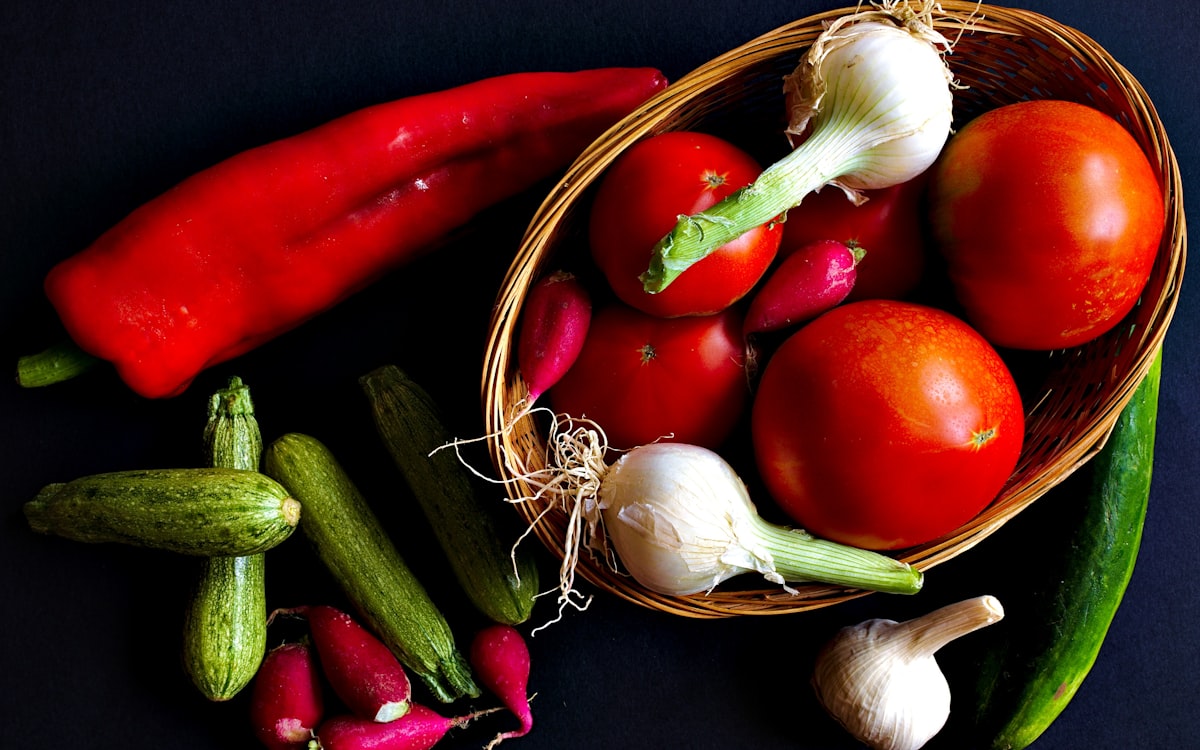
A quick way to do this without it becoming a chore is to split the page into three columns as you go. Put long-life staples (rice, pasta, tinned pulses, oats) in the first, because they anchor meals and rarely spoil. Put freezer items in the second, since a freezer held at minus 18C keeps food frozen safely and is where your emergency dinners quietly wait. Put the perishables (fresh veg, dairy, opened tins, anything already cooked) in the third, and treat that column as urgent. Those are the ingredients working against the clock, and they should decide what you cook first.
The point is not to be exhaustive. It is to give yourself permission to plan around what already exists in the kitchen. While you are at it, do not be put off by the dates printed on tins and dry goods. A “Best if Used By” date describes quality, not safety, and outside of infant formula these labels are not required by law at all. A bag of rice or a tin of beans a little past its date is almost always fine to build a meal around, provided the packaging is intact and there are no signs of spoilage.
Match ingredients to three strong anchor meals
You only need three reliable dinners to anchor a week. Everything else can be improvised. Pick three anchors that overlap with what you already have. If your inventory shows pasta, frozen mince, eggs, onions, lentils and cheese, your anchors might be:
- Big-batch pasta with mince and tomato
- Lentil stew with toast
- A frittata built around whatever leftover vegetables show up
These are not glamorous, and they are not what the algorithm shows you. That is the whole point. Anchor meals are the workhorses of the week, and they should look a little boring on paper. Boring is what survives a Tuesday when you are tired and the day has already gone sideways.
Let the anchors carry the vegetables
Anchor meals are also where you quietly hit the targets a healthy week needs, without buying anything special. The World Health Organization suggests at least 400 g of fruit and vegetables a day, roughly five portions, and anchors are the easiest place to reach it because they are so forgiving. A pasta with mince and tomato swallows a grated carrot, a handful of frozen peas and a chopped onion without complaint. A lentil stew takes whatever roots are softening in the drawer. A frittata exists precisely to use up half a courgette and the last of the spinach. Building veg into the workhorse dishes means you are not relying on willpower, or on a separate salad you may never actually make.
Cooking your own anchors has a second quiet benefit: you decide the salt and sugar. The same guidance keeps salt under 5 g a day and free sugars under 10 percent of energy, ideally under 5, and both are far easier to manage from your own pan than from a jar of sauce or a takeaway, where the amounts are decided for you. A home tomato sauce can be seasoned lightly and sweetened, if at all, by the onions themselves rather than a spoonful of sugar you never see going in.
Build a leftover night into the plan
Almost no household actually eats a full week of dinners cooked from scratch. Build that truth into the plan instead of pretending otherwise. One designated leftover or “fridge cleanup” night recovers a surprising amount of food. Plan for it. Name it. Otherwise the leftovers quietly slide to the back of the shelf and become next week’s waste.
Timing helps here. Cooked leftovers keep for three to four days in a fridge held at 4C or below, so a leftover night lands best in the middle or back half of the week, once a couple of cooked meals have accumulated. Slot it too early and there is nothing to clear; leave it too late and the food has already turned.
One habit makes leftover night reliable rather than risky: get cooked food into the fridge without dawdling. Perishable food should not sit out for more than two hours at room temperature, and only one hour if the kitchen is very warm. Cool a big batch quickly by spreading it into a shallow container rather than leaving it to sit in a deep pot, then refrigerate. Do that, and the three-to-four-day clock on those leftovers starts from a good place instead of halfway gone.
Plan a buffer night that costs nothing
The night that derails meal planning is the one where you come home late and tired. Have a buffer plan ready for it: a toast-and-eggs night, a bean-and-rice bowl, a grilled cheese with whatever soup the freezer offers. This is not a failure of planning. It is the planning. Without a buffer night, the whole week tends to collapse into a takeaway the first time real life interrupts.
Now, and only now, build the shopping list
With three anchor meals, one leftover night and one buffer night, you only need a couple of flexible nights’ worth of ingredients. That is usually a handful of items: fresh produce to round out the anchors, perhaps a protein, perhaps something perishable that complements what you already own.
Compare that with a typical recipe-led plan, which asks for a long list of ingredients across a full week of separate dinners and assumes none of them already exist in your kitchen. The shorter list is not only cheaper; it is far less likely to leave you with three unused herbs and half a vegetable quietly rotting in the drawer by Sunday. Write the list against your inventory, not against the recipes: for each anchor, note only what is missing, and resist the urge to buy a full ingredient set for a dish you are half-improvising anyway.
Cook once, eat twice
Sustainable cooks rarely make every meal from scratch. They cook big once or twice a week and then reshape the leftovers. Yesterday’s roasted vegetables become today’s frittata filling. Last night’s stew thickens into a topping for jacket potatoes. A pot of pasta sauce stretches across two dinners with a different shape of pasta the second time.
A worked example makes the logic obvious. Say on Sunday you roast a large tray of vegetables alongside a batch of grains. Monday, half of it becomes a warm bowl with a fried egg on top. Tuesday, the rest goes into a frittata with whatever cheese needs using. That single roasting session has quietly produced three dinners, none of which felt like cooking from scratch. The same trick works with a pot of stew: eat it as stew on the first night, spoon it over a jacket potato on the second, then thin what remains with stock into a soup for the buffer night.
The cleverness is not in the recipe. It is in giving a dish a second life on purpose rather than by accident. Cooking once and eating twice also keeps you inside that three-to-four-day window, because the food gets used while it is still good rather than discovered too late. When a dish outpaces the window, the freezer buys you time: portion the surplus, label it, and drop it in at minus 18C, where it stays safe well beyond the fridge’s limits. A frozen portion of bolognese or curry is worth more than any ready meal, because it is already yours, already paid for, and ready to become the buffer night you did not have to plan.
Keep the weekend for pleasure, not productivity
Treat weekend cooking as a separate category. The weekday plan is meant to be quiet, fast and resourceful. The weekend can hold longer cooks, a new recipe, an experiment with the bag of dried beans you have never quite got round to using. Mixing the two is what makes meal planning feel like a chore. Keeping them apart is what keeps the weekday routine sustainable, and it gives you a natural moment to cook the big batch that feeds Monday and Tuesday.
Why planning less, done better, tends to stick
Households that switch from a full weekly menu to a three-anchor model usually notice two things: they spend less, and they feel less tired at the end of the day. The second part is not a coincidence. Three real meals, plus a leftover night, plus a buffer night, asks far less of you than a spreadsheet of seven separate recipes, which is exactly why it survives a busy week when the ambitious version does not.
It also chips away at the household share of wasted food, which is the part of the problem most within your control. The kitchen does not need a perfect plan. It needs a few reliable habits and the willingness to use what is already there. Done this way, meal planning is not about doing more. It is about asking your kitchen what it already has, and trusting the answer.
Frequently Asked Questions
How long should this kind of meal planning take?
About ten minutes. The fridge audit is two minutes, picking three anchor meals is three minutes, writing the shopping list is five. If you find it taking longer, that is a sign you are trying to plan all seven nights instead of three.
What if my family wants more variety than three anchor meals?
You can rotate the three anchors weekly so they shift across a month. You can also add one new recipe per week as your fourth meal. Anchors are the backbone, not the entire menu.
Do I need a special meal planning app?
No. A sticky note on the fridge with five lines on it is usually more sustainable than any app, because you actually look at it every day.
What is the most common reason a week falls apart?
Skipping the buffer night. Without it, one tired evening blows up the entire plan. The buffer night is the most important meal of the week, not the most ambitious one.
Can I plan for multiple weeks at once?
You can, but most households do better with a rolling weekly approach. Two weeks is the upper limit before reality starts diverging from the spreadsheet. Three anchor meals per week, repeated and rotated, beats elaborate monthly menus almost every time.