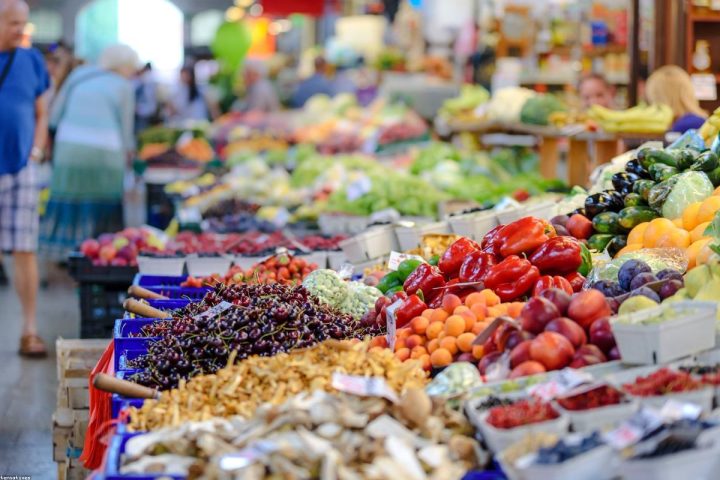
One of the calmest ways to cook is to walk into the market with no fixed plan and let whatever is loudest that week shape your meals. It sounds chaotic. With a small amount of structure, it turns out to be the opposite: the household eats better, throws less away, and usually spends less. The whole method rests on a single decision made at the stall, and everything else follows from it.
Start with one hero vegetable
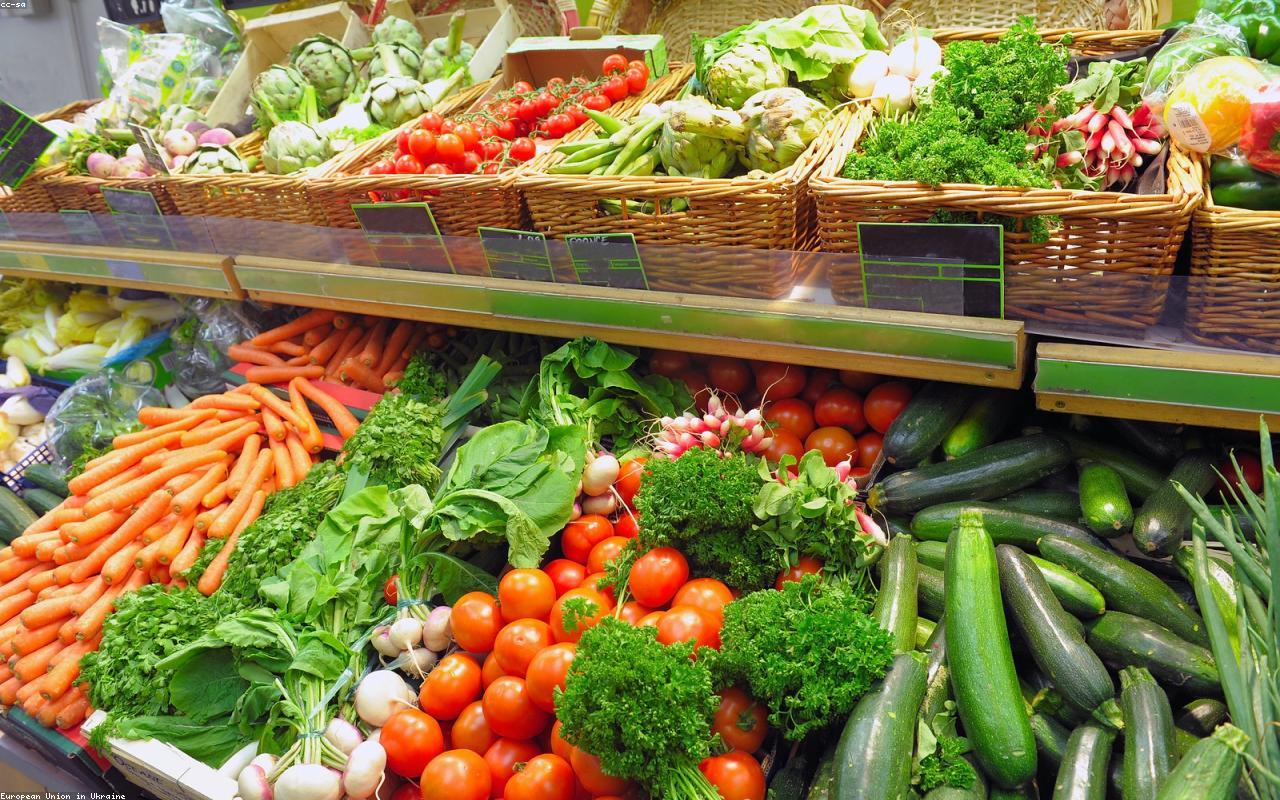
Look across the whole market and choose the one vegetable that is obviously at its peak. Bright, heavy tomatoes. Dark, firm courgettes. A deep stack of spinach. A heap of asparagus that was clearly cut that morning. That single hero becomes the spine of three meals across the week. Resist the urge to name two or three favourites at once. The discipline of choosing just one is what keeps the rest of the week simple, and it is the hardest part of the habit to learn.
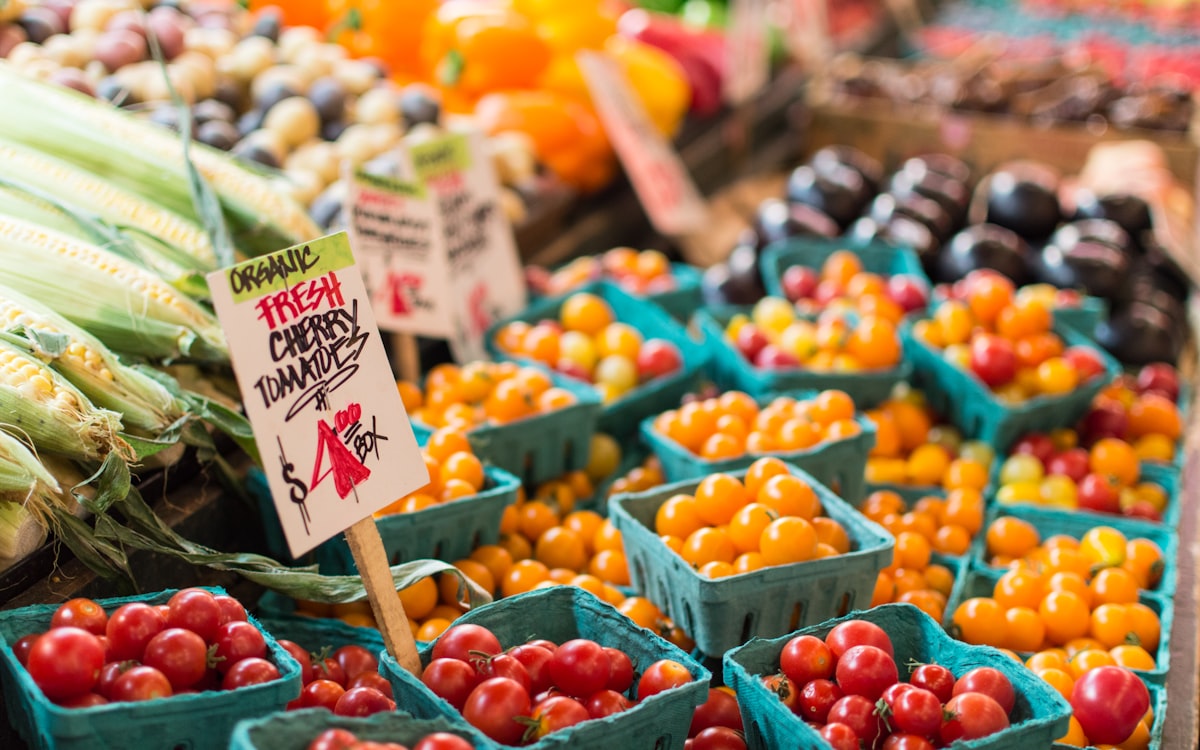
Learning to spot the peak is worth practising, because the loudest stall is not always the best one. Pick the vegetable up and feel its weight: produce at its best is dense and heavy for its size, a sign it is still full of water and has not begun to dry out. Look for taut, unbroken skin rather than wrinkles or soft patches, and smell the cut end or the stem, where a ripe tomato or a fresh bunch of herbs gives itself away long before the eye does. Ask the stallholder what was picked that morning and what they are keen to move before the end of the day, because the honest answer usually points straight at the week’s hero.
Add two supporting vegetables
Around the hero, pick two supporters that play off it rather than compete: a sharper green, a denser root, something aromatic like fennel or spring onions. Their job is to add variety across the three meals without pulling focus. If you cook for fussy eaters, this is where you earn their patience. Let the hero be the reliable favourite and let the supporters carry the small surprises. The structure bends easily around a household, and it scales the same way when you are feeding many people: a proportionally larger hero and one or two extra supporters, with the pattern otherwise unchanged.
Three meals from one hero
The trick is to cook the same vegetable three genuinely different ways, so it never feels repetitive across the week.
The most direct treatment. Tomatoes on toast with good olive oil and salt. Asparagus grilled and finished with lemon. Courgettes sliced thin and raw under a sharp dressing. This is the hero tasted almost as it arrived, with nothing to hide behind.
A longer-cooked form. Tomatoes slow-roasted for a pasta sauce. Asparagus folded into a frittata. Courgettes braised gently with garlic until soft and sweet. Heat changes the vegetable into something that reads as a different ingredient entirely.
A completely different shape. Tomato gazpacho, cold from the fridge. Asparagus stirred through a risotto. Courgette fritters with yoghurt. By now the same market bag has produced three meals nobody would call the same dinner twice.
The same three-step pattern works for almost any hero, so it is worth carrying one more example in your head. A big bag of spinach goes raw into a salad with lemon and cheese on the first night, wilts into a garlicky side or a filling for eggs on the second, and turns into a green soup on the third. Fennel can be shaved raw over the first meal, roasted until sweet for the second, and braised slowly in stock for the third. Once you see that every vegetable has a raw form, a cooked form and a transformed form, you stop needing a recipe to tell you what to do with the bag in your hand.
If the hero you carried home turns out tired or slightly past its best, do not throw it out and do not panic. Cook it first, and cook it hard. A soup, a braise or a long sauce will forgive a vegetable that would never survive a raw plate.
The pantry does the other half of the work
This only works if a small, reliable pantry is always in the cupboard. Olive oil, salt, lemon, garlic, eggs, a pasta or grain, tinned beans, a sharp cheese and a decent vinegar will turn almost any market hero into three different meals. None of it is exotic, and none of it spoils quickly. The pantry is what lets you improvise with confidence instead of standing over an unfamiliar vegetable with no idea where to begin. Keep it stocked and the hero is the only variable you ever have to think about.
The pantry also lasts longer than most people assume, which matters when you are buying staples in advance so the hero is the only fresh thing you carry home. The dates stamped on tins, jars and dried goods are mostly about quality rather than safety. The US Department of Agriculture points out that, apart from infant formula, date labels are not required by federal law and are not safety indicators, and that a ‘Best if Used By’ date describes when a food is at its best rather than the moment it becomes unsafe. A tin of beans or a bag of grains showing no signs of spoilage is generally fine to cook well past the printed date, so there is rarely a good reason to bin a pantry staple simply because a number has passed.
Why this eats better and costs less
The loudest vegetable at the market is usually the cheapest, because supply is high and the seller wants it moving before the end of the day. One hero, two supporters and a stocked pantry is a genuinely affordable way to feed a household for a week, and it costs far less than chasing scattered recipes that each demand their own single-use ingredient.
It also cuts the quiet waste that recipe-by-recipe shopping creates: the half-bunch of herbs, the lonely half-cabbage, the jar of something nobody finishes. That waste is not trivial in aggregate. According to the UN Environment Programme’s food waste index, households are responsible for about 60 percent of the food wasted worldwide, roughly 631 million tonnes in 2022, which works out at around 79 kilograms per person every year and adds up to roughly a billion meals thrown out every single day. Cooking around one vegetable at a time, and using all of it, is a small personal correction to a very large habit.
Let the freezer catch the rest
If a fourth night of the hero would be too much, the freezer takes the overflow instead of the bin. Roasted tomatoes blend into a sauce and freeze well. Blanched asparagus holds its texture. Sliced courgettes make a ready base for future fritters. Blanching is the small step that makes the difference: drop the trimmed vegetable into fast-boiling water for a minute or two, lift it straight into iced water to stop it cooking, then drain it thoroughly before it goes into the freezer. That brief shock sets the colour and slows the enzymes that would otherwise turn a frozen vegetable dull and soft. Kept at the recommended freezer temperature, which the US cold food storage guidance puts at 0F, or around -18C, these keep for weeks without forcing anyone to eat the same vegetable four nights running. Cooked leftovers you would rather eat sooner keep three to four days in the fridge, held at 40F, or around 4C, so a batch of roasted hero made on a Sunday genuinely earns its place in a Wednesday meal.
There is one habit worth building around any batch you cook to freeze or refrigerate. The same guidance warns against leaving perishable food at room temperature for more than two hours, and no more than one hour when the room is above 90F, so a tray of roasted tomatoes should be cooled and packed away rather than left on the side to admire. Getting the surplus into the cold quickly is what lets the freezer and fridge do their job, and it is the difference between a batch that saves a future meal and one that quietly spoils on the counter.
The sustainability is built in
There is an environmental argument sitting underneath the practical one. Food that ends up in landfill does real damage as it rots. Food waste makes up about 24 percent of everything sent to landfill in the US, and the US Environmental Protection Agency attributes about 58 percent of a landfill’s escaping methane to that rotting food. Eating down a single hero, freezing the surplus and buying only what is abundant keeps more of that food out of the bin in the first place, which is the part of the problem a home cook can actually influence. Done across a year, the approach is automatically seasonal too: the hero changes as the market changes, and the whole rhythm aligns itself with what grows when, without anyone ever consulting a chart.
The quiet skill it builds
Cooking around what the market offers trains a kind of literacy that recipes alone cannot give you. You learn what each vegetable wants, how heat changes it, and roughly how it will behave before it even hits the pan. This is the difference between cooking from rules and cooking from understanding, and over a year it becomes automatic. If you arrive and no single vegetable is obviously shouting, default to whatever is most abundant and in season, cabbage in deep winter or roots in late autumn, even when it looks dull. The hero does not have to be glamorous to anchor a good week.
The one trap to avoid
Do not buy three heroes in a single visit. Three peak vegetables competing for attention turns the week into a logistics problem, and usually into waste, because no household eats three things three ways before they start to turn. One hero, treated three ways, with two quiet supporters and a good pantry behind it, is a calm and genuinely sustainable way to eat. Better still, it keeps getting easier the longer you do it, until the plan you thought you needed disappears into instinct.
Frequently Asked Questions
What if the hero I picked turns out to be tired or off?
Use it first, in the most cooked form. Soup, braise or pasta sauce. Cooking forgives a vegetable that would not survive a raw application.
Can this approach work for picky family members?
Yes, but the supporters become more important. The hero might be the family favourite while the supporters introduce variety. The structure is flexible.
What if I cannot find a clear hero at the market?
Default to the most abundant in-season vegetable, even if it does not look exciting. Cabbage in winter, root vegetables in late autumn. The hero does not have to be glamorous.
How do I avoid buying too much hero?
Plan for three meals plus one freezer portion. That is the natural ceiling. More than that and the vegetable starts working against you.
Does this scale to feeding many people?
Yes, with proportionally more hero and a few more supporters. The pattern holds regardless of household size.