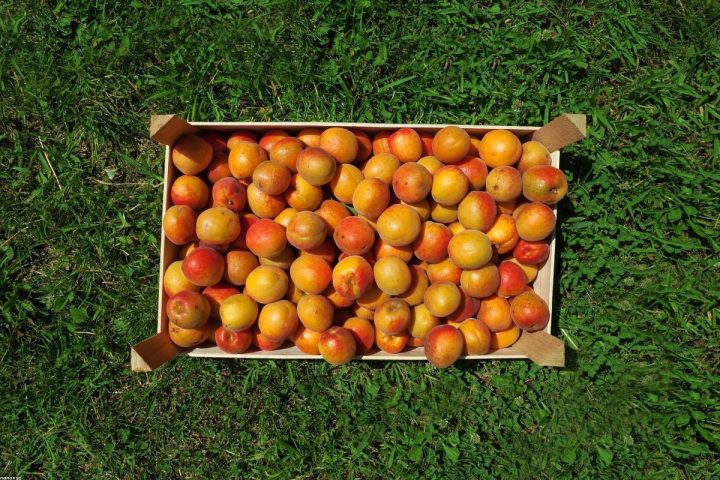

Ethical food sourcing is one of those phrases everyone uses and few people define. Producers stamp it on packaging, retailers build campaigns around it, and shoppers reach for it assuming it means something specific without quite being able to say what. The honest definition is less tidy than the marketing version, but it is far more useful once you are standing in front of the shelf.
What the phrase is actually trying to capture
At its core, ethical sourcing asks four practical questions about a food product. Who grew or produced it? Were the people involved treated and paid fairly? How was it grown or raised, particularly with respect to animal welfare and environmental impact? And how was the rest of the chain handled, from processing to packaging and transport? A single food can score well on one of these and badly on another, which is why a blanket label rarely tells you much on its own.
The last question, the supply chain itself, is easy to overlook because it sits furthest from the farm. Packaging alone is a sizeable part of the picture. According to the US Environmental Protection Agency, containers and packaging make up the single largest category of municipal solid waste, about 28 percent of the total. A product can be sourced with real care and still arrive wrapped in material that quietly undoes some of it.
Why it is never a simple yes or no
Because those axes move independently, ethical sourcing is a spectrum rather than a switch. A product can do well on labour and poorly on animal welfare, or well on the environment and poorly on pay, or well on packaging and poorly on the soil it came from. Anyone who tells you a food is simply ethical or unethical is compressing several different judgements into one word. The more honest question is not whether a food is ethical, but which parts of it you are choosing to prioritise this time.
What the common certifications actually cover
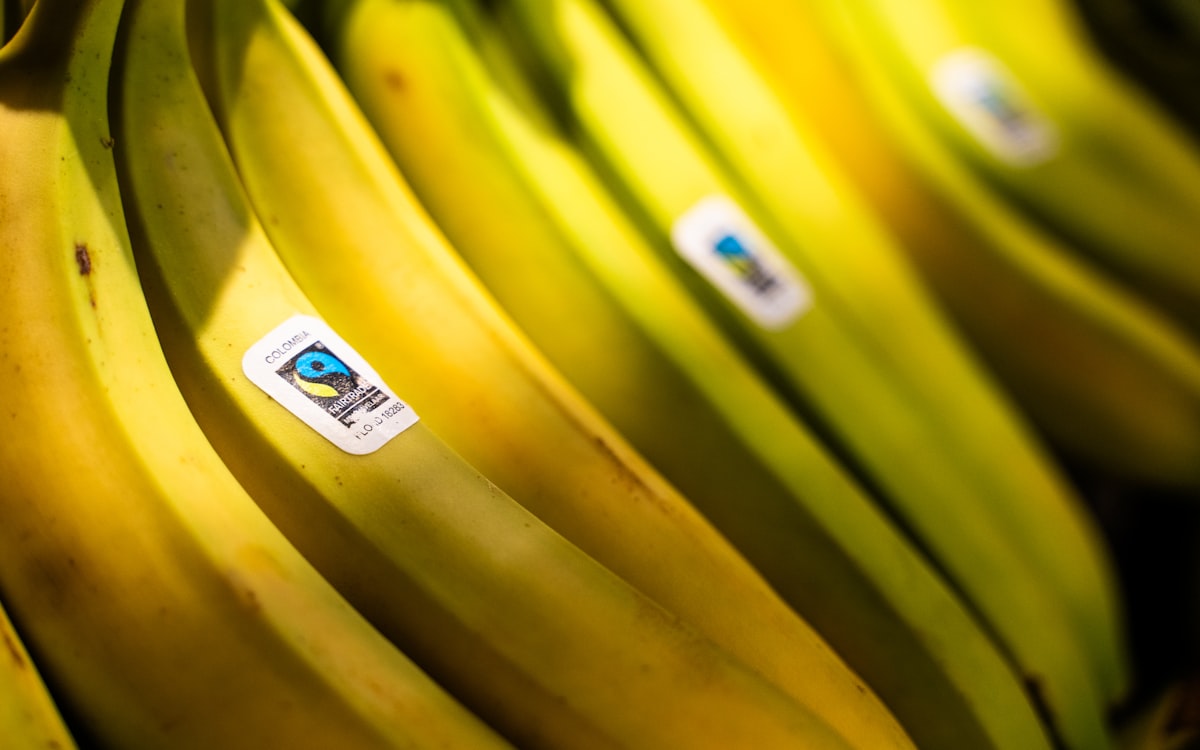
Several independent schemes each handle one slice of the picture. Fairtrade concentrates on producer pay and working conditions. Rainforest Alliance looks at land use alongside labour. RSPCA Assured and comparable schemes focus on animal welfare. MSC and ASC deal with wild-caught and farmed seafood. Organic regulation is mostly about growing methods rather than the people or the packaging. None of these is a complete account of a product’s ethics. Reading two of them together usually tells you more than trusting one to cover everything, and it is worth a moment to look up any scheme you do not recognise. The major bodies publish their standards and audit processes openly, and a claim with no traceable organisation behind it rarely survives that check.
A worked example makes the point. Take a bar of chocolate carrying both a Fairtrade mark and an organic certification. The first tells you something about what the cocoa growers were paid and the conditions they worked under. The second tells you about growing methods, the pesticides and inputs used on the land. Neither says anything about the wrapper, or about how the finished bar was transported and stored. Read together they cover more ground than either does alone, but even two strong certifications leave part of the chain unexamined. That is not a reason to distrust them. It is a reason to know what each one is for, so you are not asking a seafood scheme to vouch for a coffee grower’s pay.
When “ethical” on the pack means something, and when it does not
The word ethical has no legal definition, so on its own, printed without a named certifying body, it is closer to voice than evidence. A producer’s self-claim may well be true; it simply has not been audited by anyone independent. Specific environmental claims are treated differently, though. The US Federal Trade Commission’s Green Guides require marketers to be able to substantiate terms such as recyclable or compostable, and treat an unqualified “biodegradable” claim as deceptive for anything bound for landfill, where it will not break down within a year. So a vague “ethically sourced” line carries little weight, while a specific, named claim is at least something you can hold to account.
That substantiation rule cuts further than it first appears. A wrapper printed with “compostable” is making a claim the seller has to be able to back up, and compostable in an industrial facility is not the same as compostable in a bin at the bottom of the garden. “Recyclable” carries a similar catch: the material is supposed to be recyclable through the collection most buyers actually have access to, not merely recyclable in principle somewhere by someone. This is why the specific green claims on a pack repay more scrutiny than the vague ethical ones. They are the claims a regulator can measure against a standard, and so the ones where a careful producer has had to do real work rather than reach for a warm adjective.
Where your choices actually move the needle
An individual swapping one product for another at the supermarket is a small action with limited direct reach. Policy, regulation and industry-wide standards drive the larger shifts. But personal choices still matter as part of a collective signal, and that signal is far stronger in some categories than others.
Three stand out. Animal products, where the gap between conventional and higher-welfare farming is wide and shows up in concrete things: space to move, outdoor access, and how animals are transported and handled. Coffee and chocolate, where Fairtrade and similar certifications change producer income in a way you can trace. And seafood, where MSC certification genuinely shifts fishing practice over time. In these categories a shopping decision translates into an outcome relatively cleanly, which is why they reward attention more than most of the trolley does.
The change most households overlook
Before agonising over which certified version to buy, there is a plainer change that tends to matter more: not wasting the food you already have. The UN Environment Programme’s Food Waste Index Report 2024 found that households are responsible for about 60 percent of all food wasted worldwide, on the order of 79 kilograms per person each year. In 2022 that household share came to roughly 631 million tonnes, and across all sources the world throws away on the order of 1 billion meals every single day. Every discarded item carries the full weight of however it was grown, packed and shipped, along with the packaging that makes up the largest slice of municipal waste. Planning meals around what you will realistically eat, storing food properly and actually using leftovers often does more good than any single swap at the till, and it costs less rather than more.
The practical side of this is unglamorous and effective. Buy to a rough plan rather than to appetite, because hunger in the aisle reliably overbuys. Learn which foods actually need the fridge and which keep longer in a cool cupboard, since a good deal of household waste is simply food stored in the wrong place and then forgotten. Keep a shelf or a box for items nearing their date so they become the next thing you cook rather than the thing you find gone off. And treat best-before dates as guidance about quality rather than safety, which for most foods is exactly what they are. None of this requires a certification or a premium, and it reaches every category in the trolley at once rather than one product at a time.
What is on the plate counts too
Sourcing is only half of the question. What you buy in the first place sets the size of the problem the labels are trying to solve. The widest ethical gap in most trolleys sits in animal products, so the composition of the plate is itself a lever, and it happens to point the same way as mainstream dietary advice. The World Health Organization suggests eating at least 400 g of fruit and vegetables a day, roughly five portions. Shifting the balance of the shop in that direction lowers the share that carries the heaviest welfare and environmental load, without demanding that anyone give anything up entirely.
The overlap runs the other way as well. The same World Health Organization guidance recommends keeping free sugars under 10 percent of energy intake, and ideally under 5 percent, and keeping salt under 5 g a day. The foods that push hardest against those limits tend to be the heavily processed ones, and those are precisely the products whose supply chains are too tangled for any single ethical claim to capture honestly. So the part of the shop where sourcing labels mean the least is often the same part where the dietary advice is to go easy in any case. Buying a little less of it answers both questions at once, which is rare in a field where most choices trade one good against another.
Where ethical shopping hits diminishing returns
Some categories resist the effort. Highly processed foods have supply chains too tangled for any single claim to capture honestly. Imported produce varies farm by farm rather than country by country, so the label on the crate tells you little about the conditions behind it. Most packaged snacks carry ethical claims that stay firmly on the surface. Chasing marginal gains here can quietly turn into a great deal of label-reading for very little return, and it is a reasonable place to relax your standards without guilt.
A calm place to start
If you want to eat more ethically without turning every shop into a research project, begin with the three categories that count most: coffee, chocolate and animal products. Buy certified versions where you can, and check that any certification names an actual body with public standards rather than a vague phrase. The change looks small at the level of the trolley and is substantial at the level of impact. Other categories tend to follow on their own as you build a feel for which claims are worth trusting and which are decoration.
What ethical does not mean
It does not automatically mean local, and it does not automatically mean organic; organic regulates growing methods and says comparatively little about pay or animal welfare. It does not have to mean expensive, and it never means perfect. Ethical sourcing is a direction of travel rather than a destination, and treating it as a destination is the fastest route to burnout. The household that shifts gradually toward better-sourced food over years does more good than the one that tries to overhaul everything in a month and gives up by the third week. It is a slow recalibration of where the money goes, not a moral identity to perform.
Frequently Asked Questions
Is organic the same as ethical?
No. Organic regulates how food is grown but says little about labour, animal welfare beyond a minimum, or fair pay. The two categories overlap but are not the same.
What is the most important first ethical swap?
For most households, coffee. Fairtrade or comparable certified coffee shifts producer income meaningfully and is a daily purchase. Chocolate is a close second.
Are higher-welfare animal products worth the cost?
For most shoppers concerned with ethics, yes. The cost difference is real but the welfare difference is also significant. Eating less meat overall and choosing higher-welfare when you do is a common balance.
How do I know if a certification is legitimate?
Look up the certifying body independently. Major certifications have public standards documents and audit processes. Vague "ethically sourced" claims without a named body are usually less reliable.
Can ethical shopping really change supply chains?
Modestly at the individual level, substantially at the collective level. Brand pressure from consumer demand has driven measurable changes in many product categories over the last twenty years.