Most writing about seasonal eating pictures a rural scene: a farm gate, a weekly basket, a market square ringed by growers you know by name. If you live in a city with few or no farms nearby, that picture can make the whole idea feel like something happening somewhere else. It isn’t. Urban seasonal eating is entirely possible. It simply works through different channels, and once you learn to read them, a city can offer more seasonal variety than a village ever could.
Read the supermarket as a seasonal signal
Even large chains follow the harvest, whether or not they advertise it. Whatever is piled high near the entrance, priced to move and stacked in volume is almost always the week’s seasonal abundance. Retailers buy heavily when a crop peaks because supply is high and cost is low, and they pass some of that on. You do not need a special shop to benefit from this; you only need to notice it. Walk in, look at what is cheap and plentiful rather than what is on your list, and let that shape a meal or two. It is the lowest-effort seasonal habit there is, and it costs nothing extra.
Two small checks sharpen the signal. Glance at the price per kilo rather than the price per pack, because a genuine seasonal glut shows up as a low unit price, not a clever multibuy on something flown in out of season. Then read the country-of-origin label. Produce grown close to home and stacked cheap is usually at its local peak, while the same item shipped from the other hemisphere is riding a different season entirely. In late summer that reading points you towards tomatoes, courgettes, sweetcorn and plums; by deep winter it points towards cabbages, leeks, citrus and roots. Cook from whichever pile is winning that week and your meals will track the year without any calendar or chart.
Find the specialty grocers
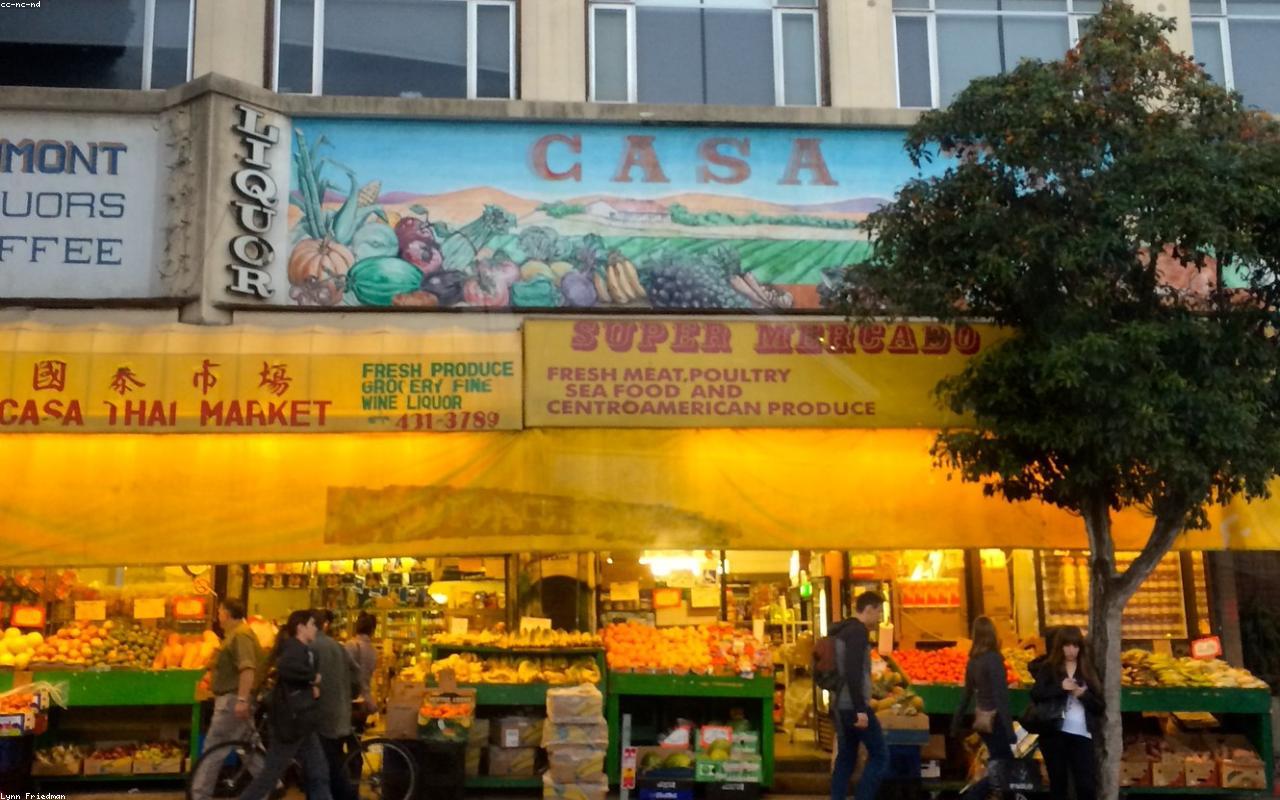
Most cities are full of small grocers who source seasonally by instinct and necessity: Mediterranean shops, South and East Asian markets, Caribbean grocers, Eastern European delis, Turkish and Middle Eastern stores. Because they serve cooks who expect particular produce at particular times, they often carry fresher, more seasonal stock than a supermarket for the cuisines they specialise in. Prices on staples such as herbs, greens, citrus and roots are frequently lower too.
It helps to know what each kind of shop does best. A South Asian grocer is the place for bunched fenugreek, gourds, green mango and cheap coriander by the armful. A Mediterranean or Middle Eastern store will have artichokes, bitter leaves, fresh dates in their short season and citrus when it is at its brightest. East Asian markets carry leafy greens, fresh mushrooms and aromatics that supermarkets stock tiredly if at all. Caribbean grocers bring callaloo, plantain and scotch bonnet. Getting to know two or three near you widens what you can cook and pulls you closer to the actual rhythm of the growing year.
The farmers market is closer than you think
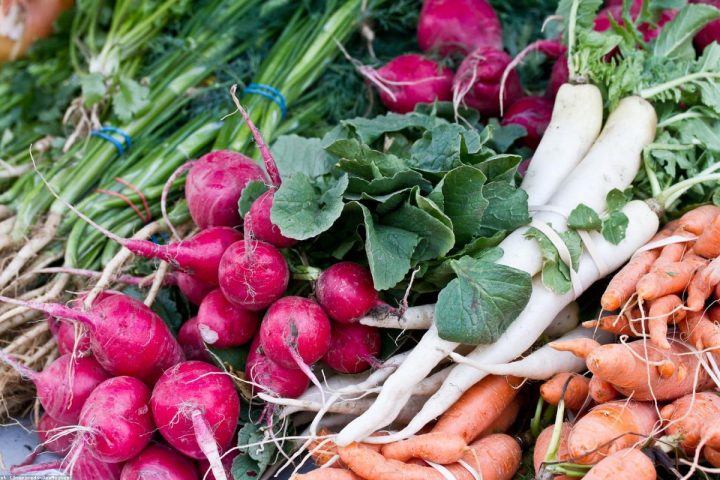
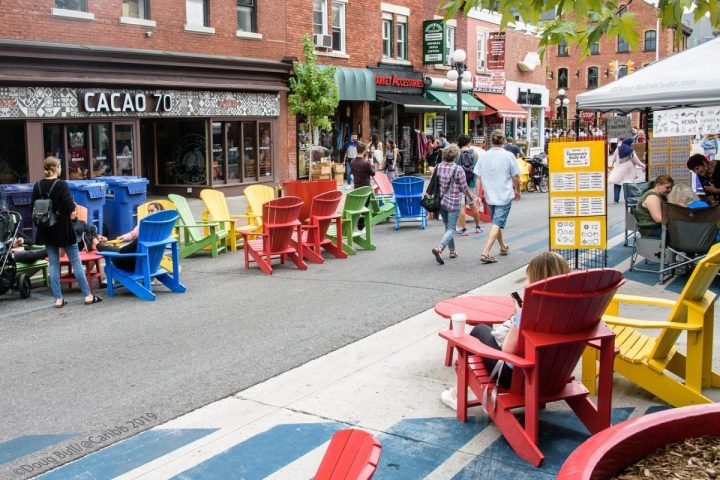
Urban dwellers routinely overestimate the distance to their nearest market. In dense cities there is often one within walking distance, tucked into a neighbourhood you have no reason to pass through otherwise. A short weekly visit is usually all it takes. The produce is picked closer to sale than supermarket equivalents, so it is fresher and more genuinely in season. If you are not sure one exists near you, search your council’s website, local food directories and community noticeboards before assuming it doesn’t. Once you have found it, the habit is easy to keep: buy a few things, notice what has changed since last time, and let that steer the week’s cooking. Growers are also the best source of advice you will get, since asking what is good today and how they would cook it costs nothing and tends to produce the most useful tips of the week.
Vegetable box schemes deliver to cities too
Many veg box schemes are built for exactly this problem. They grow or aggregate produce from the wider region and deliver a weekly selection to your door, so the contents shift with the season without any planning on your part. For a household with no convenient market and no car, a box can be the closest thing to a direct line from farm to kitchen. The trade-off is that you eat what arrives rather than what you chose, which for seasonal eating is arguably the point. Treat the odd unfamiliar vegetable as a prompt rather than a problem: a swede or a bunch of chard you did not pick is how a cook’s range quietly grows over a year.
The freezer is an urban advantage
City kitchens tend to be small, with little room for the bulk buying and preserving that seasonal eating traditionally relied on. Frozen produce quietly solves this. Vegetables and fruit destined for freezing are usually picked at peak and frozen soon after, so their quality holds up well, and they take up far less space than jars or a cellar of roots. A bag of summer peas or berries in the depth of winter is seasonal eating shifted through time rather than abandoned.
Freezing your own market gluts is straightforward once you have the temperatures right. Keep the freezer at 0F (-18C) and the fridge at 40F (4C) or below, the standard settings the official cold storage guidance gives for holding quality and safety. Most vegetables freeze best if you blanch them briefly in boiling water first, cool them fast and pack them dry, which protects colour and texture. Soft fruit and herbs can go in as they are. Freeze in meal-sized portions so you defrost only what you need, and label each bag, because a freezer is only an advantage if you can find what is in it. The same guidance notes that cooked leftovers keep 3 to 4 days in the fridge, so a big seasonal batch cooked once can feed several meals before any of it needs freezing. In a small flat, the freezer often does more for seasonal eating than the fridge.
Trust your senses, not just the date on the label
Waste creeps into small kitchens through misread labels as much as through forgetfulness. It is worth knowing that, except for infant formula, date labels are not required by federal law and are not safety indicators, according to the United States Department of Agriculture’s guidance on food product dating. A “Best if Used By” date points to quality rather than safety, and food showing no signs of spoilage is generally fine past it. For seasonal produce this matters twice over. It frees you to buy the marked-down fruit and veg near their date, cook or freeze them promptly and save money on exactly the produce that is most abundant. And it shifts the decision back to your own senses: look, smell and touch tell you more about a tomato or a bunch of greens than any printed date. Handling still counts, so do not leave perishable produce or cooked food at room temperature for more than two hours, or one hour when it is above 90F, before it goes back to the cold.
Let restaurants and their menus guide you
A thoughtful neighbourhood restaurant changes its menu as ingredients come into their best. If a dish suddenly appears across several places at once, that ingredient is almost certainly at its peak and worth buying yourself. You do not have to eat out to use this; reading menus in windows or online is a quiet, reliable seasonal compass, and cities give you far more of them to read than the countryside does. Greengrocer blackboards and the specials taped to a deli counter work the same way, since both change fastest when something has just come into season and needs selling.
What a city actually gives you
It is worth naming the real advantages, because seasonal-eating writing rarely credits them. A city offers a density of cuisines and therefore a density of seasonal produce from many growing regions at once. It offers markets and shops with high turnover, so stock moves and stays fresh. It lets you walk between several grocers in a single trip, comparing what each has at its best. All of this makes it easier, not harder, to build meals around what is genuinely in season, and to reach something like the World Health Organization’s guidance of at least 400 g, or five portions, of fruit and vegetables a day. Produce eaten at its seasonal peak is usually the cheapest and most appealing way to get there, and fruit picked in its own season is sweet enough on its own that you lean less on the added sugar the same guidance suggests keeping under 10 percent of daily energy.
The limits worth being honest about
Some things are genuinely harder in a city. Direct relationships with the people who grow your food are rarer. A few items, especially from specialty shops, cost more. Storage space caps how much you can preserve at home, so you cannot lay down a winter’s worth of anything in one go. These are real constraints, but notice that none of them stops seasonal eating. They shape it, nudging you towards frequent small shops rather than occasional big ones.
That last point connects to waste, which is where small urban kitchens can quietly do well. Households account for 60 percent of all food wasted globally, about 631 million tonnes in 2022, according to the UN Environment Programme’s Food Waste Index Report. That is roughly 79 kilograms per person each year, and about 1 billion meals thrown away worldwide every day. Buying little and often, in the amounts you will actually cook, and moving gluts into the freezer rather than the bin, is a practical way to waste less while eating with the seasons. A small kitchen that shops twice a week almost naturally buys closer to what it uses.
A calm weekly routine
None of this needs to become a project. A workable rhythm looks like a weekly supermarket shop for staples and store-cupboard items, a short visit to your nearest farmers market for fresh seasonal produce, and a trip to a specialty grocer now and then for what the chains handle poorly. Through winter, lean on frozen versions of summer produce, and on the market gluts you froze yourself when they were cheap. That is the whole system. It fits around a job and a small flat, it asks for no rural fantasy, and it produces food that genuinely tracks the year.
Frequently Asked Questions
What if my city has no farmers market at all?
Most cities have at least one, often hidden in a neighbourhood you do not normally pass through. Search local food directories, council websites and community boards. They are usually there.
Are urban prices for seasonal produce higher than rural?
Marginally on average. Specialty shops can cost more but supermarket seasonal pricing is largely similar to rural. The convenience offsets much of the price difference.
Can I grow my own seasonal produce in a flat?
A windowsill of herbs, a balcony of salad greens or a community garden plot can supplement a city kitchen meaningfully. None of these alone makes a household self-sufficient, but they add real seasonal variety.
Does living in a city mean missing the food rhythm of the seasons?
Only if you let it. Urban shoppers who tune in to seasonal cues at their supermarket and market often eat more seasonally than rural shoppers who default to convenience.
What is the easiest first step for an urban dweller?
Find your nearest farmers market. Visit once. Buy three things. The habit grows from there organically.