When people set out to shrink the footprint of their diet, they often start with the map: buy local, avoid anything flown in, shop at the farmers’ market. It is a sensible instinct, but for protein in particular it tends to miss the larger lever. The evidence gathered on food emissions is consistent on this point: what you eat matters far more than how far it travelled. Choosing between beef, chicken and beans shifts the numbers on your plate more than choosing between local and imported ever will. If you want a practical way to compare protein sources, start there.
The miles matter less than the choice
One of the most detailed pictures we have of food’s environmental cost draws on data from about 38,700 farms across 119 countries. From that body of work a clear pattern emerges: for most foods, transport is only a small share of total emissions, and air freight, the part everyone worries about, accounts for just a tiny fraction of food transport overall. Most of what reaches British shops travels by sea or road, which carries a far lighter load than the aeroplane image suggests.
It helps to picture where the emissions actually come from before the food leaves the farm gate. For a joint of beef, most of the environmental cost is bound up in the animal itself: the land cleared to graze it or grow its feed, the time it spends being reared, and the methane it releases while it lives. By the time the meat is boxed and driven to a distribution centre, the heavy lifting is already done. Shipping a crate of lentils across an ocean, by contrast, adds only a modest amount to a total that was small to begin with. This is why the mileage implied on a label is a poor guide to the real cost of what is inside it.
This does not make distance irrelevant, but it does mean that swapping a high-footprint protein for a lighter one usually does more good than sourcing the same protein closer to home. So the question worth asking at the counter is less “where is this from?” and more “what is this?” A cut of beef reared down the road still carries a heavier footprint than lentils shipped across a continent, because the bulk of the emissions is created on the farm, not on the road.
Why protein sources diverge so sharply
Not all protein carries the same weight, and the spread between the heaviest and lightest sources is large, larger than most people might expect. It also follows a broad order that holds up well across studies. Ruminant animals, cattle and sheep, the source of beef and lamb, are the most demanding. They need a great deal of land, and their digestion releases methane, a potent greenhouse gas that plant crops simply do not produce. That combination is why beef and lamb sit at the top of almost every ranking of protein by footprint.
The land question is worth dwelling on, because it compounds the methane problem. A grazing animal turns only a fraction of the grass and grain it eats into edible meat, so a great deal of ground has to be given over to feeding it. That land could often have grown crops for people directly, or been left as forest and rough pasture that holds carbon in place. Each portion of beef therefore carries not only the methane from the animal but the wider cost of the acres behind it. Pulses and other plant proteins skip most of that chain: the crop is grown, harvested and eaten, with far fewer steps in between for emissions to accumulate.
Chicken and pork, though still animal products, are considerably lighter. They convert feed into meat more efficiently and do not belch methane in the way ruminants do. Plant proteins sit lower still, and pulses are among the gentlest of the lot. The practical takeaway from the data is direct: shifting from ruminant meat such as beef and lamb towards chicken, pork or plant-based foods cuts a diet’s footprint substantially. You do not have to reach the bottom of the ladder to benefit; even moving down a rung or two changes the picture.
The case for pulses
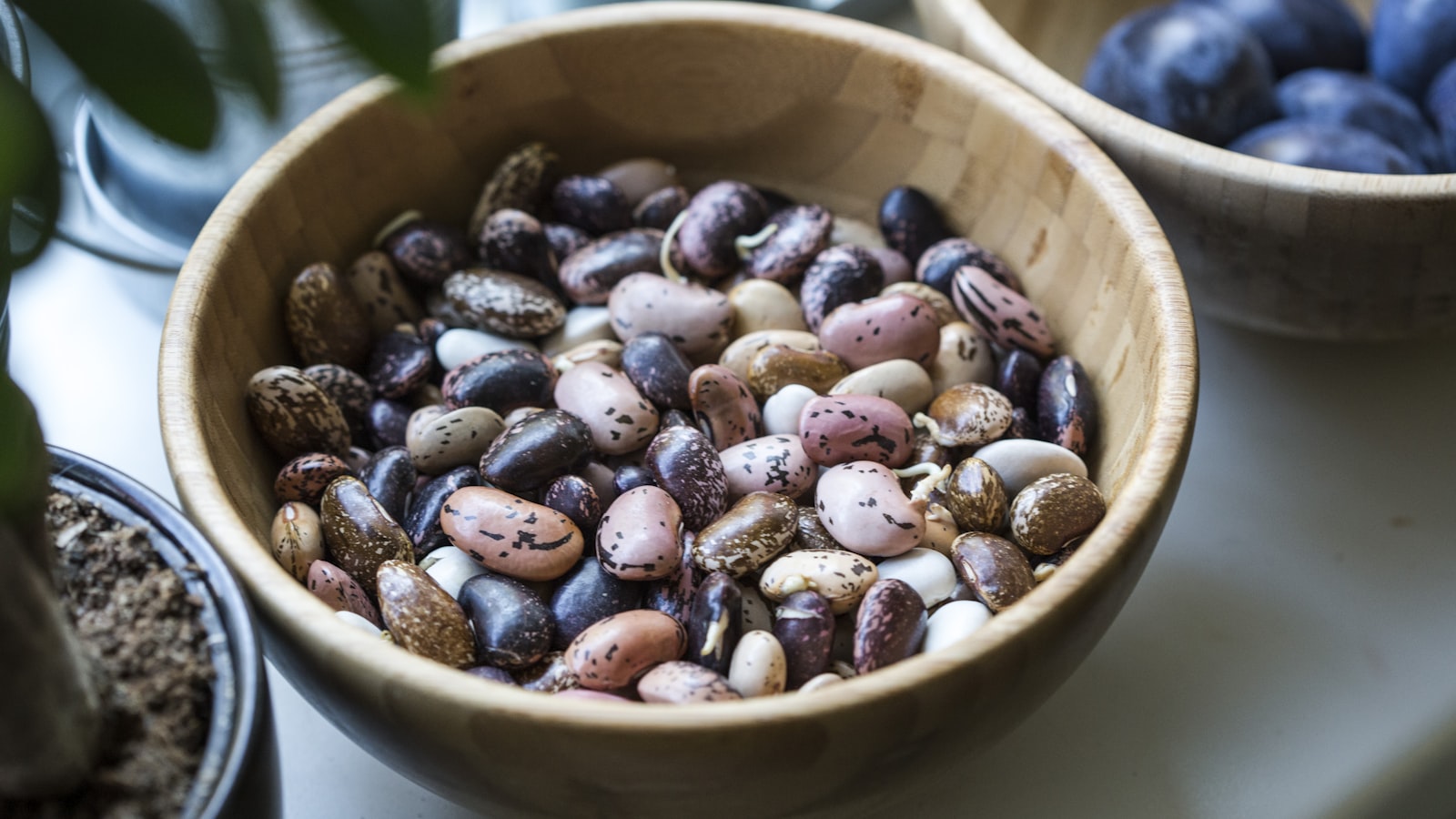
If a single protein rewards a closer look, it is the humble pulse. Pulses are the edible seeds of legume plants, lentils, chickpeas and the many beans, from cannellini to kidney to black. Nutritionally they make a strong case on their own terms: they are high in protein and fibre, low in fat, and contain no cholesterol. That profile makes them a genuine stand-in for meat in a great many dishes rather than a grudging compromise, and the fibre in particular is something a steak cannot offer.
What pulses bring to the plate
The nutritional argument is worth spelling out, because it is often what decides whether a change lasts. A bowl of dahl or a bean stew delivers a good amount of protein without the fat that comes with a comparable portion of red meat, and the fibre it adds helps a meal feel filling for longer. Because pulses carry no cholesterol and little fat, they sit comfortably within the kind of eating pattern that is usually recommended for heart health. To round out the range of protein a pulse-heavy meal provides, it is worth pairing beans and lentils with a wholegrain such as rice, bread or barley, a habit that many traditional dishes already follow. For anyone trying to eat well and tread lightly at once, the low-footprint choice and the healthy choice are frequently the same plate of food.
Their growing conditions are where they really distinguish themselves as a low-footprint protein. Pulses have a low water footprint and are drought-tolerant, so they can be grown in places and seasons where thirstier crops struggle. In a warming climate, where water availability is becoming less predictable, a protein crop that copes with dry ground is worth paying attention to. For anyone comparing protein sources on more than carbon alone, that resilience is part of the ledger.
What pulses do for the soil
Pulses also give something back to the ground they grow in. They fix nitrogen in the soil, which can reduce the need for synthetic fertiliser, and since manufacturing and spreading that fertiliser is itself a meaningful source of emissions and water pollution, a crop that supplies some of its own nitrogen carries a quieter cost across the whole system. Rotated with cereals or other crops, pulses can leave a field in better condition for whatever is planted next, a benefit that never appears on the packet but matters at the level of the farm. The FAO’s account of pulses sets out these qualities in more detail, and they help explain why the same seeds that feed us also tend to be easier on the land.
This soil benefit is easy to overlook, yet it changes how a whole farming system adds up. Where a field of pulses has fixed nitrogen, the wheat or barley that follows tends to need less bought-in fertiliser to thrive, so the saving carries forward into the next season’s crop as well. A protein that reduces the chemical load on the land while feeding people is doing two useful jobs at once, and neither of them shows up in the price on the shelf.
Making the change in a real kitchen
None of this asks for an all-or-nothing pledge, and it is worth being honest about that. The emissions evidence does not say you must never eat beef again; it says that moving the balance is what counts. If cutting meat entirely feels a step too far, the biggest single win is simply eating less beef and lamb and reaching more often for chicken, pork or pulses instead. That alone lightens a week’s cooking considerably.
A concrete example makes the swap feel less abstract. Take a chilli that would normally use a pack of beef mince for four. Brown half the usual mince as before, then add a drained tin of kidney beans and a handful of red lentils along with the tomatoes and spices. The lentils break down as they cook and thicken the sauce, the beans give it body, and most people at the table will not notice that half the meat is gone. The same trick works in a shepherd’s pie, a ragu or a burger mix. You keep the flavour cues that make the dish familiar while quietly halving its heaviest ingredient.
In practice, a few small habits do most of the work:
- Bulk out mince. Replace part of the beef in a bolognese, chilli or cottage pie with cooked lentils. The texture holds up and the dish stretches further.
- Keep tins to hand. Chickpeas, butter beans and kidney beans need no soaking and turn a store cupboard into a meal, from a quick curry to a bean stew.
- Cook a pot at once. A batch of lentils or dried beans made at the weekend slots into soups, salads and traybakes through the week with no extra effort.
- Anchor a couple of meat-free days. Two dependable pulse-based meals a week, a dahl or a bean chilli, shift the weekly average without any sense of going without.
Because pulses are inexpensive and keep for a long time, this is one of the rare changes that is easier on both the planet and the household budget. There is no need to track grams of carbon or memorise a league table of ingredients. The shape of the advice is simple enough to carry in your head: the type of protein you choose does far more than the distance it travelled, ruminant meat is the heaviest option, and pulses are among the lightest while doing quiet good for the soil they grow in. Comparing protein sources by their footprint sounds technical, but on the plate it comes down to reaching for the beans a little more often and the beef a little less.
Frequently Asked Questions
Is it better to buy local beef or just eat less beef?
Eating less beef does far more for your food's footprint than sourcing the same beef locally. For most foods, transport is only a small share of total emissions, and what you eat matters far more than how far it travelled. A cut of beef reared nearby still carries a heavier footprint than pulses shipped a long way, because most of the emissions are created on the farm rather than on the road.
Which protein sources have the biggest carbon footprint?
Ruminant meats, meaning beef and lamb, sit at the top of almost every ranking. They demand a great deal of land, and the animals' digestion releases methane, a potent greenhouse gas that plant crops do not produce. Chicken and pork are considerably lighter because they convert feed more efficiently and do not belch methane, while plant proteins such as pulses are lighter still.
Can beans and lentils really replace meat in a meal?
Nutritionally they make a strong stand-in: pulses are high in protein and fibre, low in fat, and contain no cholesterol. Pairing them with a wholegrain such as rice, bread or barley, as many traditional dishes already do, rounds out the range of protein a meal provides. In cooking they hold up well, thickening sauces and adding body, so half the mince in a chilli or bolognese can be swapped for lentils and beans without losing the character of the dish.
Does avoiding air-freighted food make a big difference?
Less than most people assume. Air freight accounts for only a tiny fraction of food transport overall, and transport as a whole is a small share of most foods' emissions. Most food reaches British shops by sea or road, so the type of protein you choose does much more to lower your footprint than worrying about how it arrived.
Are pulses good for the environment beyond their carbon footprint?
Yes, on several counts. Pulses have a low water footprint and are drought-tolerant, so they can be grown where thirstier crops struggle. They also fix nitrogen in the soil, which can reduce the need for synthetic fertiliser and can leave a field in better condition for whatever is planted next.