A surprising share of household food waste is not a shopping problem, it is a storage problem. The food was good when it came home and the kitchen kept it wrong. The UN Environment Programme’s Food Waste Index Report 2024 estimates households throw away about 79 kilograms of food per person a year, and that households account for around 60 percent of all the food wasted worldwide, roughly 631 million tonnes in 2022. Put another way, close to 1 billion meals are binned every day. A large slice of that is food that spoiled a few days sooner than it needed to. Once a handful of storage basics shift, the same weekly shop quietly lasts longer.
Set the temperatures first
Before worrying about where each item goes, get the appliance right. US food-safety guidance is to keep the refrigerator at 40°F (4°C) or below and the freezer at 0°F (-18°C). A fridge running a few degrees warm shortens the life of everything inside it at once, so an inexpensive fridge thermometer left on a middle shelf and read in the morning is one of the highest-return things you can buy for a kitchen. Frozen food held steadily at 0°F stays safe more or less indefinitely: the quality clock keeps ticking, but the safety one effectively stops. Two small habits protect that setting. Do not cram the fridge so full that cold air cannot circulate, and do not stand with the door open deciding what to cook, because every open door lets warm room air pour in across the shelves.
What belongs on the counter, not the fridge
Tomatoes, onions, garlic, potatoes, bananas, avocados until ripe, winter squash, basil and whole melons all keep better out of the cold. Refrigeration turns tomatoes mealy and dulls their flavour, softens potatoes faster and blackens fresh basil overnight. These belong on the counter with airflow and shade, away from the hob and any sunny windowsill. Keep potatoes and onions apart, though: onions give off moisture and gases that push potatoes to sprout sooner, so a bowl of each at opposite ends of the worktop lasts longer than the two jumbled in one basket. The one exception: once a tomato or avocado is fully ripe and you cannot eat it that day, the fridge becomes the right call, because cold halts further ripening and buys a little more time. A chilled tomato recovers most of its texture if you let it return to room temperature before eating.
Use the fridge drawers on purpose
The two crisper drawers are not random storage, and using them the wrong way round quietly costs you produce every week. The high-humidity drawer, kept closed, is for things that wilt: leafy greens, spinach, herbs other than basil, broccoli, asparagus and spring onions. The trapped moisture keeps them turgid. The low-humidity drawer, with its vent cracked open, is for fruit that gives off ethylene gas, such as apples, grapes and ripe pears, which would otherwise speed the wilting and yellowing of any greens sitting nearby. The single most useful rule in a crisper is to keep the ethylene producers apart from the ethylene-sensitive greens. Line the humid drawer with kitchen paper to catch excess water, and pull anything slimy out promptly, because one rotting leaf spreads fast.
Keep raw proteins coldest and lowest
Raw meat, poultry and fish belong on the bottom shelf, the coldest part of most fridges, ideally in a covered container or on a plate that catches any drips so nothing can land on food below. Cooked and ready-to-eat food sits higher up, above the raw. This arranges the fridge for temperature and cross-contamination at once, at no cost. If you know you will not cook a piece of meat or fish within a day of buying it, move it to the freezer straight away rather than letting it drift to the edge of its window in the fridge.
Dairy on a middle shelf, never the door
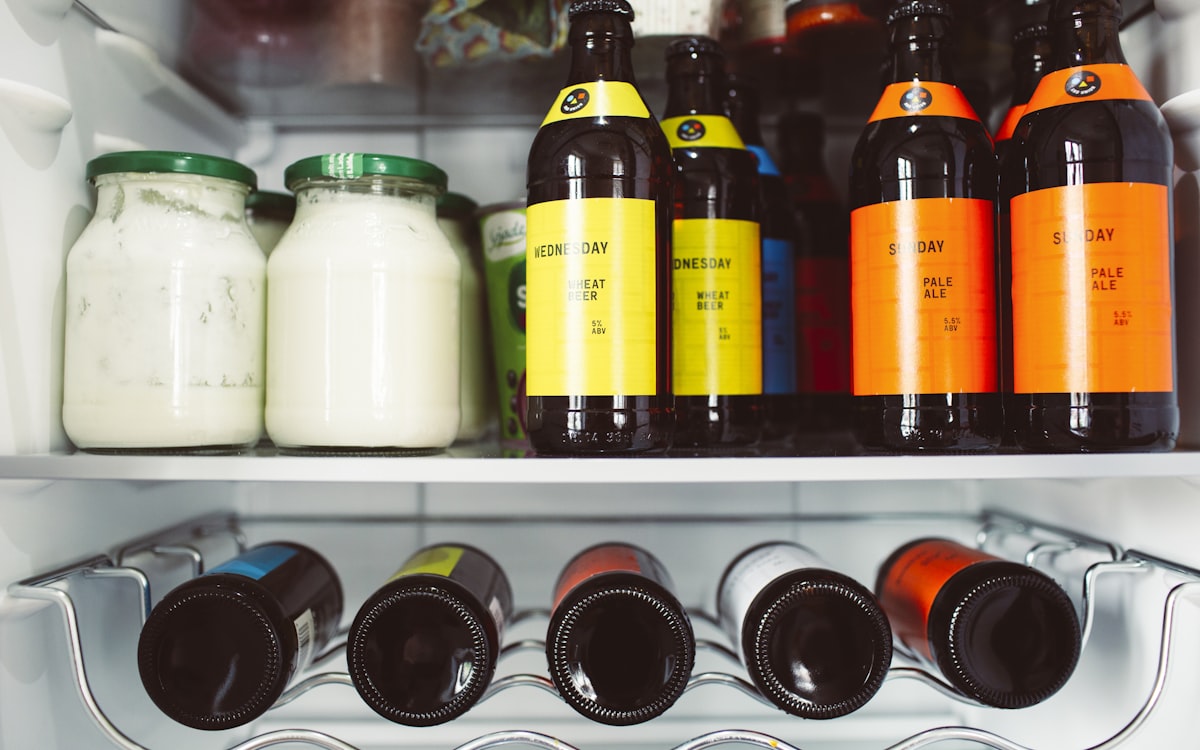
The door is the warmest and most temperature-variable part of the fridge, because it is exposed to the room every time the door opens. Storing milk, yoghurt and soft cheese there is one of the most common shelf-life mistakes. Move dairy to a middle shelf, where the temperature holds steadier, and the same carton noticeably outlasts one kept in the door. Reserve the door for things that genuinely tolerate the swing: condiments, jars and bottled sauces that are acidic or salty enough not to mind.
Bread: counter, then freezer, almost never the fridge
Bread goes stale fastest in the fridge, not slowest, because the starch retrogrades quickest at fridge temperatures, which runs against most people’s instinct. Keep a loaf on the counter in a bread bin or paper bag for a few days, then slice and freeze whatever is left before it turns. Frozen slices toast straight from the freezer with no thawing, and a whole loaf revives well warmed briefly in the oven. For anyone who buys good bread and watches half of it go hard, the freezer is the single best place to stop the waste.
Stand soft herbs in water
Soft herbs such as parsley, coriander, dill and mint keep far longer if you treat them like cut flowers: trim the stem ends, stand them in a glass with a little water, and drape a loose bag over the top before putting the whole thing in the fridge. Change the water when it clouds. Hard, woody herbs such as rosemary, thyme and sage prefer the opposite, wrapped in a barely damp piece of kitchen paper in the fridge. A bunch of coriander that usually turns to slime within a few days will often hold for a week or more treated this way, which is the difference between using a whole bunch and binning most of it.
Handle leftovers by the clock, not the guess
Cooked leftovers keep three to four days in the fridge, and the safest habit is to write the date on the container so nobody has to rely on memory. Do not leave cooked food sitting out to cool for hours first: perishable food should not stay at room temperature for more than two hours, and no more than one hour if the room is above 90°F (32°C), the range where bacteria multiply fastest. Get it into the fridge in a shallow, wide container rather than a deep pot, so the heat escapes and the middle cools before trouble starts. Anything you will not realistically eat within those few days should go into the freezer on day one, while it is still at its best, not on day four as a last resort.
Read date labels correctly
A great deal of perfectly good food is binned on the strength of a printed date. With the single exception of infant formula, the USDA’s Food Safety and Inspection Service points out that date labels are not required by federal law and are not safety indicators. A ‘Best if Used By’ date describes quality, the point after which flavour or texture may start to slip, not a deadline for safety, and food showing no signs of spoilage is generally fine past it. For most cupboard and fridge staples, trust your eyes and nose over the stamp: look, smell, and if in real doubt, taste a small amount. Raw meat, seafood and anything visibly mouldy or off still deserve normal caution, but the printed date alone is a poor reason to throw food away.
Know what freezes well, and how
The freezer is the storage tool people underuse most, and a few specifics make it far more effective. Freeze in meal-sized or portion-sized amounts, because you can always thaw two portions but you cannot easily refreeze one you did not need. Lay berries or chopped fruit flat on a tray until solid before bagging them, so they freeze loose rather than in one welded brick. Grated cheese, sliced bread, cooked rice cooled and frozen promptly, chopped chillies, and leftover soft herbs blitzed with a little oil into an ice-cube tray all freeze cleanly and drop straight into cooking. Soft, watery items such as lettuce, cucumber and whole raw tomatoes do not survive freezing, because the ice crystals rupture their structure and they thaw to mush, so cook them first. Squeeze the air out of bags before sealing to cut freezer burn, and label every one with its contents and the date, because an unlabelled freezer turns into an archaeological dig nobody wants to excavate.
Eggs and their position
Where eggs are washed and refrigerated commercially, as in the United States, they belong in the fridge and on a shelf rather than the door. Where eggs are sold unwashed, as in much of Europe, room temperature is fine for a week or so before they move to the fridge. If in doubt, follow the producer’s packaging, and keep them off the door either way so they stay at a steady temperature.
Store it so you actually eat it
There is a quieter benefit to storing food well: you actually eat the fresh things you bought. The World Health Organization advises eating at least 400 grams, or five portions, of fruit and vegetables a day, and the biggest obstacle for most households is not willpower but produce going limp before the week is out. Crispers set up correctly, greens in the humid drawer and ethylene producers penned off keep that produce appetising for longer, which turns five portions into a matter of opening the fridge. Storing raw ingredients well also nudges you towards cooking from them rather than reaching for something ready-made, which supports the same guidance’s targets of keeping salt under 5 grams a day and free sugars under 10 percent of energy, ideally under 5 percent.
The one habit that fixes most of it
If you change only one thing, change this: move food to the front when it needs eating soon. Set aside a ‘use first’ zone at the front of a middle shelf and refresh it for two minutes before each shop, pulling forward whatever is closest to turning. Most fridge waste is not dramatic spoilage, it is food quietly becoming invisible at the back until it is too far gone. A small weekly rearrangement, with no new equipment at all, removes most of it.
Re-store half-used items well
The other half of storage is what happens after you open something. Half an onion wrapped snugly, a cut lemon stored flat on its cut face, an opened bag of salad pressed free of air and clipped shut, all last noticeably longer than the same item shoved into the fridge bare and open. Five seconds of better wrapping rescues a surprising amount of food. Good storage is not glamorous and it does not photograph well. It just quietly stretches the life of every shop you do, and combined with a short weekly drawer audit, it removes the most common ways a kitchen turns wasteful without changing anything about how you shop.
Frequently Asked Questions
Should I always wash fruit and vegetables before storing?
No. Wash just before use. Pre-washing introduces moisture that accelerates spoilage in leafy greens and berries. Dry storage is the longer-lasting option for almost everything except hardy roots.
Are reusable produce bags actually helpful for storage?
For leafy greens and herbs, yes, if they breathe slightly. Cotton mesh works well. Sealed plastic without a breath hole can trap moisture and shorten shelf life rather than extend it.
Why do my potatoes keep sprouting?
Light and warmth. Store them in a dark, cool spot like a cupboard or a paper bag, and keep them away from onions, which speed up sprouting.
How long does an open jar of pasta sauce last?
About a week in the fridge in a clean jar. To extend, freeze in small portions in ice cube trays for instant single-portion sauce later.
What is the worst common storage mistake?
Storing dairy on the fridge door. It is the warmest, most variable part of the fridge and it shortens the life of milk and yogurt considerably.