Composting in a house with a garden is straightforward. Composting in a one-bed flat with a galley kitchen is the version that catches most people out, and it is the one worth getting right, because a small home is exactly where a fiddly system quietly falls apart. The good news is that there are three workable setups for small spaces, and none of them involves a worm tower next to the bath.
The reason to bother is modest but real. Food scraps kept out of the general rubbish stay out of landfill, where rotting food breaks down without oxygen and gives off methane. The US Environmental Protection Agency estimates that landfilled food waste is responsible for about 58 percent of fugitive methane emissions from municipal landfills, and that food waste makes up about 24 percent of everything sent to landfill in the US. A single kitchen caddy will not shift those figures on its own, but it is a genuine contribution rather than a gesture.
Option one: the council collection setup
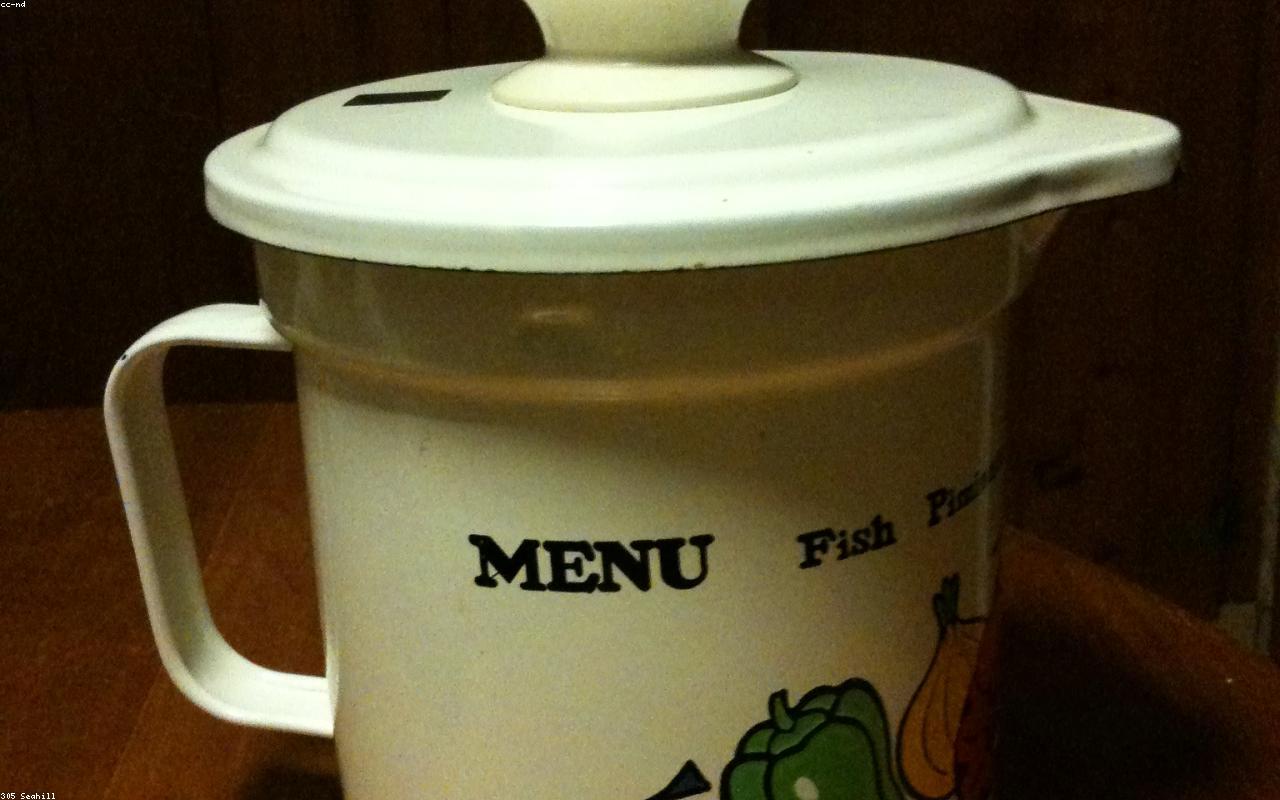
If your local council collects food waste, this is the easiest path by a wide margin. You need only a small lidded container on the counter or under the sink, lined with a compostable bag or a sheet of newspaper, that travels out to the larger council bin every couple of days. Total cost: a single jar or counter caddy. The council does the actual processing, so you never have to think about carbon-to-nitrogen ratios or turning a heap. The one habit that keeps it clean is emptying the liner into the kerbside bin on a fixed day rather than waiting for it to look full, since a part-full caddy left for a week is where the smell begins.
Option two: the freezer drop-off setup
If your council does not collect but there is a drop-off point nearby, such as an allotment, a community garden or some farmers’ markets, the calmest setup is a freezer bag of scraps. Cold storage removes the smell entirely, and most households cannot tell the bag is there among the peas and the ice. Keep it flat to save space and label it so nobody mistakes it for dinner. Once a week, or whenever it fills, take the bag to the drop-off and start a fresh one. There is no odour, no fruit fly, and nothing to clean. A reusable silicone bag or an old ice cream tub works as well as a disposable one, and stacks more neatly, which matters in a small freezer where every centimetre is spoken for.
Option three: the indoor bokashi setup
For homes with no collection and no drop-off, an indoor bokashi bucket is the cleanest option. It works by fermentation rather than the aerobic decomposition of a garden heap, which is why it can take meat and dairy, unusual for compost, and why it stays odourless while the lid is sealed. You sprinkle a handful of bokashi bran between layers of scraps to feed the fermentation, press the waste down to push out air, and drain the liquid that collects through the tap at the base every few days. The bucket fits under a sink.
A little technique makes bokashi reliable rather than temperamental. Add scraps in layers rather than all at once, and press each layer down firmly with the back of a spoon or a clean jar, because the fermentation is anaerobic and stray air pockets are where the process turns sour and starts to smell. Keep the lid fully closed between additions. The drained liquid is strong, so dilute it heavily before pouring it on plants, or simply tip it down the drain, where it can help keep the pipe clear. When the bucket is full, leave it sealed for a further week or two to finish fermenting before you empty it.
Every fortnight or so the fermented result goes into a garden bed, a large planter, or a neighbour’s compost, where it finishes breaking down. What comes out of the bucket is pickled rather than fully composted, so it needs a spell in soil to become the crumbly dark stuff people picture. Even a single outdoor pot benefits: the EPA notes that compost improves soil structure, helps soil retain moisture and nutrients, and reduces the need for fertilisers.
What actually goes in the bin
Most plant scraps, coffee grounds, paper tea bags, eggshells and paper towels with food on them all belong in the bin. Coffee filters are fine if they are unbleached paper, and the grounds themselves are excellent material. Crushing eggshells helps them break down. Avoid meat, oily food and dairy unless you are running bokashi, since those are what draw pests and odours in an ordinary system. Avoid the small stickers on fruit and vegetables too, as they are usually plastic and will not rot. You do not need to chop everything finely for council or drop-off schemes; for bokashi or a home heap a rough chop simply speeds things along. If you drink loose-leaf tea or make a lot of coffee, those two alone can be the bulk of what you divert, and both are clean and dry to handle.
A weekly routine that runs itself
The setups above only work if they map onto an actual week rather than an ideal one. Here is a routine that survives a busy household. Keep a small sealed tub or a jar next to the chopping board and scrape peelings, cores and coffee grounds straight into it as you cook. At the end of each day, tip that tub into whichever store you are using: the council caddy under the sink, the flat freezer bag, or the bokashi bucket. Rinse the tub, and the counter is clear again by the time you wash up.
Then set one fixed handover point in the week. For council collection, that is simply bin night, when the caddy liner goes into the kerbside food bin with everything else. For a freezer bag, pick the day you already pass the allotment or the market and take the bag then, swapping in a fresh one the moment you get home so there is never a gap. For bokashi, the handover is less frequent, roughly once a fortnight when the bucket is full and has sat sealed for a week or two, at which point the fermented contents go out to soil. Anchoring each method to something you already do, rather than to willpower, is what turns it from a project into a habit.
The counter caddy question
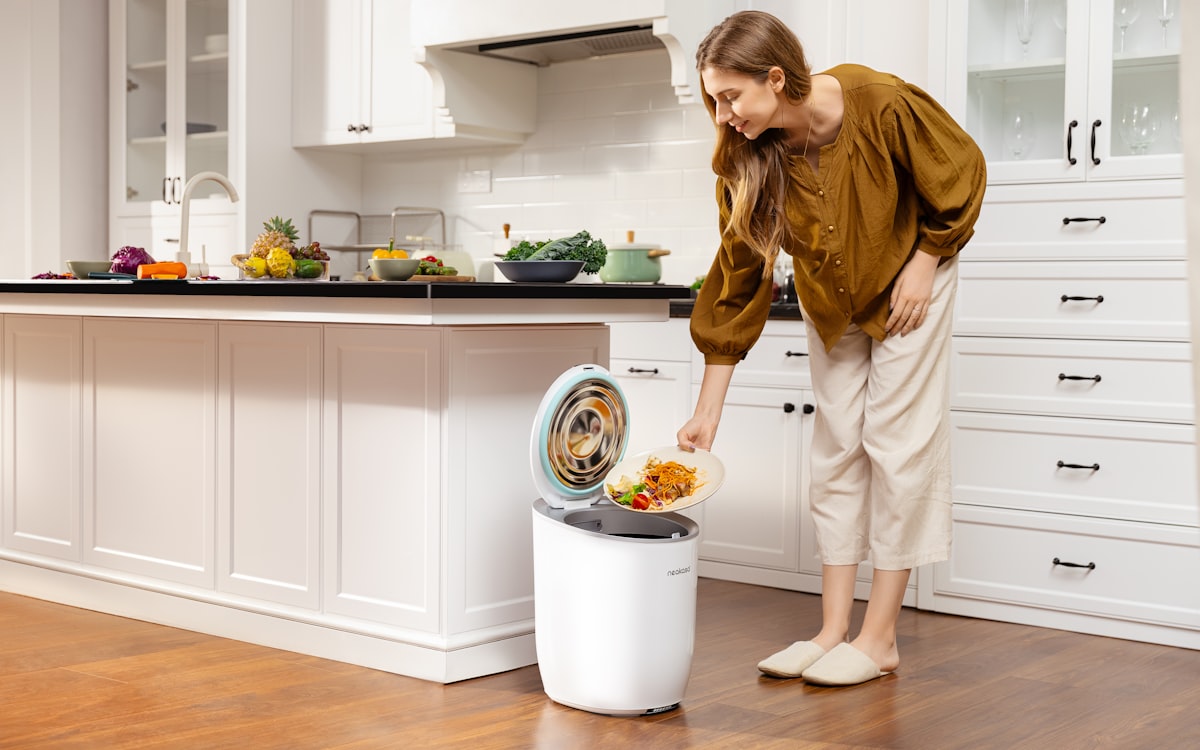
A counter caddy with a charcoal filter looks tidy on the worktop. It also quietly encourages keeping scraps around longer than they should be, which is precisely when smell and fruit flies arrive. For most small homes the freezer bag is cheaper, cleaner and lower-maintenance. If you like the look of a caddy, treat it as a staging post to empty daily rather than a place to store waste for the week.
Tools that earn their keep
One sealable container, one freezer bag, and optionally one bokashi bucket. That is the entire kit. Anything past that is decoration, and decoration is often where small-home composting collapses into a project instead of a habit. The setups that last are the ones with the fewest moving parts and the shortest path from chopping board to bin. Before buying anything, look at what you already own: a lidded takeaway tub, a jam jar, or a reused ice cream carton will each do the job that a boxed kitchen caddy is sold for.
The honest limit of home composting
If you have neither council collection nor a drop-off, and bokashi feels like too much to take on, putting food scraps in the general bin is not the moral failing that some sustainability content implies. It helps to keep the scale of the problem in view. The UN Environment Programme’s Food Waste Index found that households account for about 60 percent of all the food wasted globally, roughly 631 million tonnes in 2022, which points to where the biggest difference lies: not in perfectly processing scraps, but in generating fewer of them.
The same report puts household food waste at about 79 kilograms per person each year, and estimates that roughly 1 billion meals are wasted worldwide every day. Those figures are worth sitting with, because they reframe the whole exercise: the scraps you compost are the ones you could not avoid, and the larger win is shrinking the pile before it ever reaches the caddy. Buying a little less, planning meals around what is already in the fridge, cooking with leftovers, and freezing what you cannot eat in time all cut waste before composting enters the picture. Composting is the cherry, not the cake.
One quiet driver of avoidable waste is misread date labels. Food that is perfectly good gets binned because a printed date has passed, and those labels are less authoritative than they look. The USDA’s Food Safety and Inspection Service points out that, apart from infant formula, date labels are not required by federal law and are not safety indicators. A “Best if Used By” date speaks to quality rather than safety, and food showing no signs of spoilage is generally fine to eat past it. Trusting your eyes and nose over the print, rather than the other way round, keeps edible food out of both the bin and the compost caddy, which is the better outcome for all of them.
A note for households with children
Children take to composting quickly when it is set up to be simple. A small caddy with a clear label, a routine of who empties it on which day, and the freezer bag as the fallback for trips away lets the habit run with very little adult oversight. It also gives a concrete, visible answer to where food goes and why it matters, which tends to land better than an abstract lesson about the environment.
The quiet compounding effect
A working setup, however small, noticeably reduces the volume in your general bin over time, because food scraps are both bulky and wet. It also cuts the smell, since those wet scraps are the part of the rubbish that turns first. There is a real distinction worth naming: a garden heap relies on aerobic decomposition, in which, as the EPA puts it, methane-producing microbes are not active and methane is avoided, while a bokashi bucket ferments and then finishes in soil. Either way the scraps end up somewhere better than a sealed landfill cell. The kitchen becomes calmer almost incidentally, with fewer bin bags, less odour, and one small routine that looks after itself.
Frequently Asked Questions
Do I need to chop scraps small for compost?
For council and drop-off systems, no. For home compost or bokashi, smaller pieces break down faster. A rough chop is enough.
Will my freezer smell like food waste?
No if you use a sealed bag. The cold eliminates the odour, and most households cannot tell the bag is there.
Can I compost coffee filters?
Yes for unbleached paper filters. The grounds themselves are excellent compost material.
Do bokashi setups smell?
A faint pickle-like smell when opened, almost nothing when sealed. Far less than a typical compost bin or rubbish bag.
What if I move and lose access to my drop-off?
A bokashi setup travels well. Otherwise, the freezer bag method allows you to bridge any gap by accumulating scraps until you find a new setup.