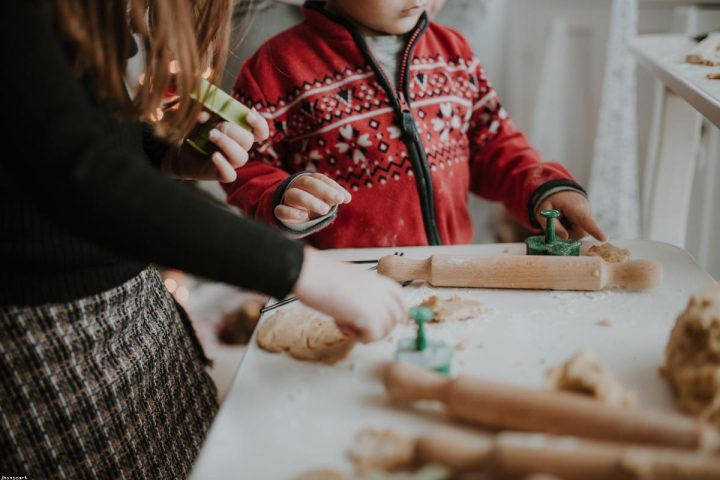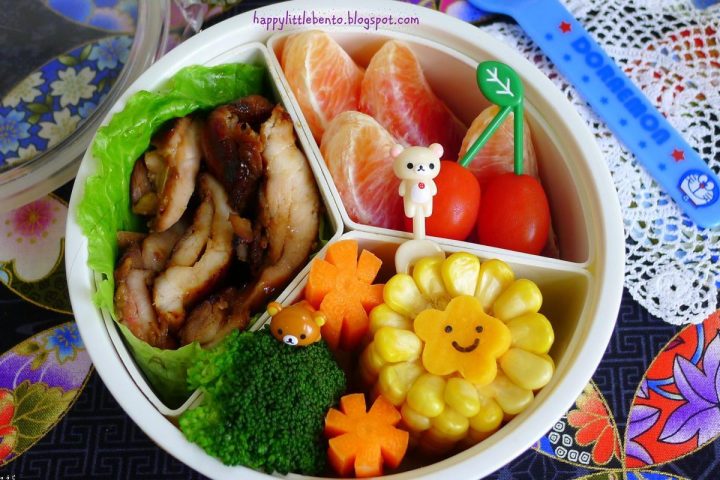
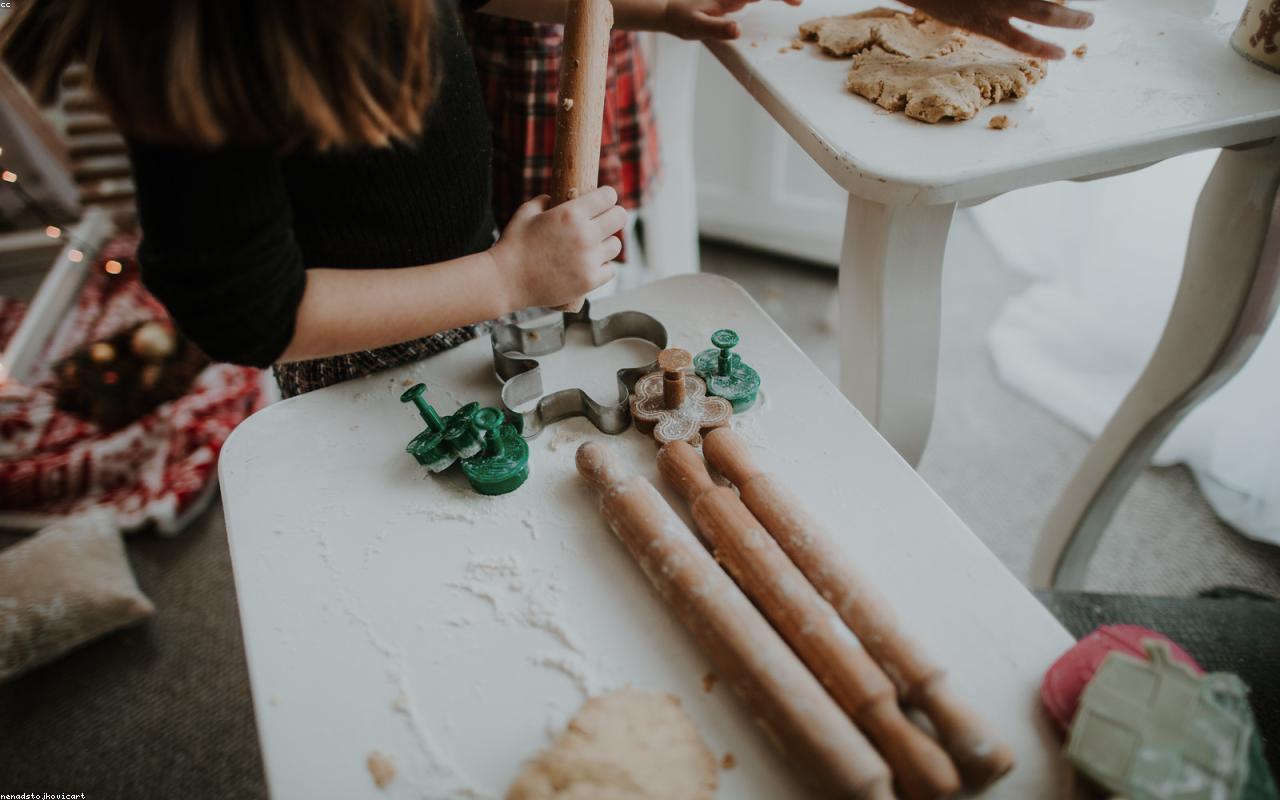
The most reliable way to teach children sustainable food habits is to live them where they can see you. Children absorb far more from what the adults around them do than from anything those adults say. A lecture about food miles rarely lands; the sight of a parent turning yesterday’s roast into today’s lunch almost always does. What follows is a set of ordinary routines that, repeated over years, tend to stick, along with the practical detail that makes each one easier to hold to.
Model it before you mention it
Children treat the household’s habits as the definition of normal. If you shop with the seasons, cook from scratch more often than not, keep leftovers rather than binning them, and put a range of vegetables on the table without comment, a child grows up assuming that is simply how food works. None of it needs to be announced. The lesson is strongest when it is never framed as a lesson at all. It is just the texture of daily life, absorbed the way a first language is.
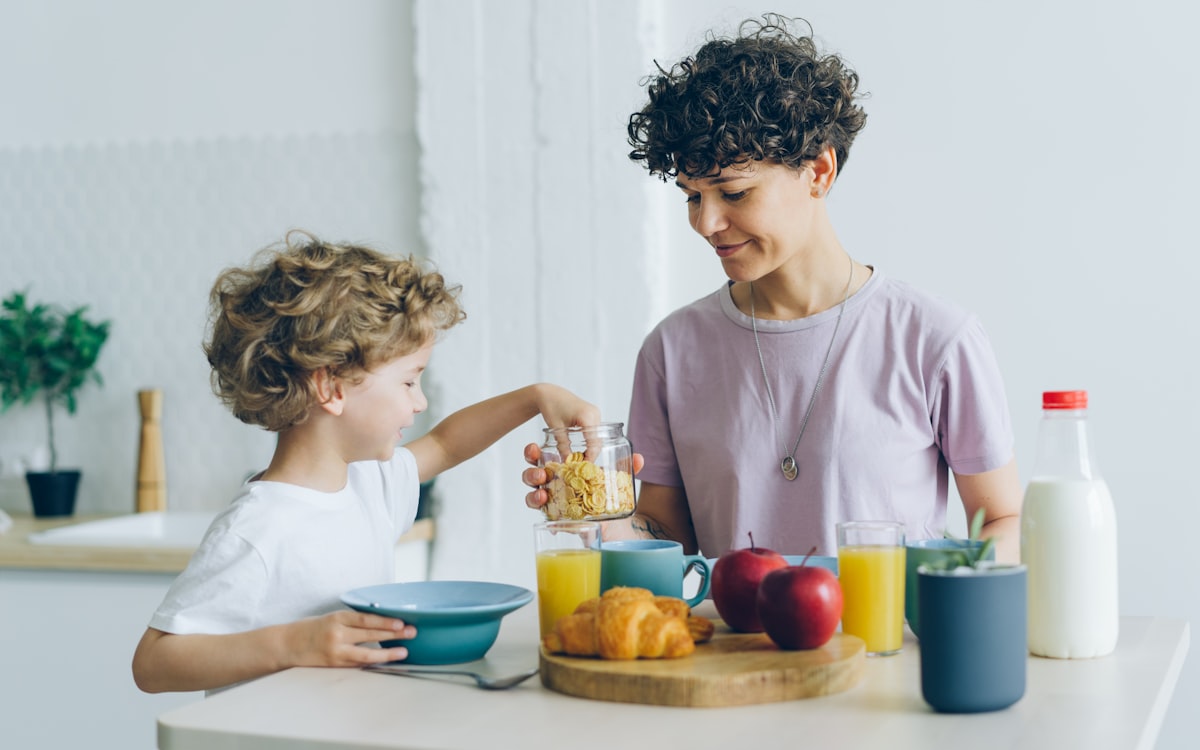
The practical version of this is quieter than it sounds. It means letting a child watch you plan a week around what is already in the cupboard rather than starting each meal from a blank page. It means cooking a slightly larger pan of something on a Sunday so that Monday and Tuesday are half solved before they begin. Children who see this repeated stop thinking of it as thrift and start reading it as ordinary competence, which is a far more durable motivation than any appeal to the planet. The point is not perfection. A household that models the habit most weeks, and lets the child watch it recover after a bad week, teaches something more useful than one that performs it flawlessly and silently.
Give children a real job in the kitchen
Involvement builds ownership, and it can start earlier than most people expect. Match the task to the stage, and step up as they grow:
- Toddlers can wash vegetables, tear lettuce, and stir a batter.
- Around five, with supervision, they can measure, mix, and watch something change on the hob.
- Older children can chop and follow a recipe from start to finish.
- Teenagers can plan and cook a complete meal for the family.
The rule of thumb is simple: whenever a child shows interest, hand them a task slightly beyond what they have done before. Frequency matters more than ambition. One proper cooking session a week, held to over years, quietly compounds into real competence. By the time a child leaves home they can feed themselves from basic ingredients rather than relying on packets and deliveries, and that single skill shapes both their health and how sustainably they eat as adults. Cooking together also buys unhurried conversation, which is where a good deal of the rest happens.
A worked example makes the progression concrete. Take a simple vegetable soup. A toddler washes the carrots and tears the herbs. A five year old counts the ingredients into the pan and watches the onions turn from white to soft and gold. An eight year old, with a bridge grip and supervision, does the chopping and reads the recipe aloud so nobody skips a step. A teenager takes the whole thing over, decides what to do with the half bag of spinach that needs using, and doubles the batch so there is lunch to freeze. The same pot of soup carries a different lesson at every age, and the child who has moved through all of them has learned not one recipe but the underlying grammar of cooking: taste, adjust, use what you have, waste little.
Show where food comes from
Supermarkets hide the origins of food; other settings reveal them. A trip to a farmers market, talking to the person who grew the produce, seeing it arrive in crates, choosing items together, teaches a child where food comes from in a way that shelves and barcodes cannot. Let the child hand over the money and carry the bag. Ownership of the small transaction makes the food feel like theirs.
Growing food does the same from the other direction. A single herb pot on a windowsill demonstrates that food is a living thing that takes time; a small bed in the garden multiplies the point. Basil, mint, or chives on a sunny sill are hard to fail with: a shallow pot, a handful of compost, seeds pressed just under the surface, a splash of water every day or two, and within a few weeks there is something to snip into dinner. A child who has watered a seedling and later scattered its leaves over their own pasta has watched food travel the whole distance from soil to plate under their own hand. Children who help grow vegetables tend to eat a wider variety of them, and to treat food as something with worth rather than something that simply appears.
You can reinforce all of this in passing, without turning it into a seminar. “This carrot grew nearby.” “These apples are in season now.” “This one is fair trade.” Small, factual remarks dropped over years build food literacy far more effectively than any set-piece lesson. The trick is to keep each one short enough that it does not read as a message the child is meant to receive. It is simply information about the thing in front of them.
Let the unglamorous parts stay visible
Much of sustainability happens at the stages people usually tidy away: the compost caddy, the weekly check of what is lurking at the back of the fridge, the deliberate use of leftovers. Let children see these, because seeing them makes them normal rather than exceptional.
Reducing waste is worth the attention, because the scale of it is easy to underestimate. Households account for about 60 percent of all food wasted globally, roughly 631 million tonnes in a single year, which works out at around 79 kilograms per person and something close to 1 billion meals thrown away worldwide every day. Most of that is avoidable, and most of it happens in kitchens rather than farms or factories. A child who grows up watching a household waste as little as it reasonably can inherits the single most effective food habit there is.
A useful skill to pass on is reading date labels correctly. Except for infant formula, most date labels are not required by law and are not safety indicators: a “best before” or “best if used by” date is a guide to quality rather than safety, and food showing no signs of spoilage is generally fine to eat past it. Teach a child to look, smell, and judge rather than bin on sight. Stand at the fridge together on a Friday, pick up the yoghurt that is a day past its date, and let them do the checking: does it look right, does it smell right, does the pot hiss when it opens. That thirty-second ritual, repeated, replaces a rule they will one day forget with a judgement they can carry for life.
Composting is worth showing for what it does as much as for the habit itself. Food scraps buried in landfill break down without oxygen and give off methane; landfilled food waste is responsible for about 58 percent of the fugitive methane escaping from municipal landfills, and food makes up roughly 24 percent of everything sent there. Composted at home, the same scraps decompose aerobically, so that methane is avoided, and what is left improves the soil’s structure, helps it hold moisture and nutrients, and reduces the need for fertiliser. A child who has tipped peelings into a bin and later dug out dark, crumbly compost has watched a full loop close, which is a more durable lesson than any diagram. Give them charge of the caddy: emptying it, turning the heap, and eventually spreading the finished compost on the herb pot they planted turns an abstract cycle into something they have run with their own hands.
Talk about food without moralising
How you talk about food matters as much as what you serve. Labelling foods “good” and “bad”, calling things “junk”, or moralising about choices can plant shame that follows a person well into adulthood. It is calmer and more honest to treat food matter-of-factly: some foods are chosen for a particular purpose, some are simply for pleasure, and none carries a moral charge.
When a child asks why you buy one thing and not another, answer plainly and briefly. “We buy these eggs because the hens are kept better.” “We try not to waste this because it took a long time to grow.” Short, factual, unpreachy answers, repeated as the questions come, build understanding across years without ever tipping into a sermon. Pitch the detail to the age: younger children respond to the concrete, this is where this came from, while older ones can hold broader ideas about systems and trade-offs. A teenager can cope with the fact that the cheaper option is sometimes the greener one, and that these choices rarely line up neatly. Letting them see that honestly is better than pretending every good decision is also the easy one.
Children will also meet quite different food cultures at friends’ houses, at school, and in advertising. It helps not to frame those as wrong. Note the differences calmly, and let the household keep its own values while respecting other people’s. A child who has not been taught to police everyone else’s plate is far more comfortable holding their own line, and far less likely to swing to the opposite extreme the moment they are out of the house.
The hard bits, and the long view
Some difficulties are predictable. A child who refuses all vegetables is best met with repeated, low-pressure exposure rather than a standoff: keep offering, vary how they are prepared, and never let the vegetable become the site of a battle. Acceptance often arrives only after many attempts spread over months, and pressure tends to delay it rather than hurry it along. It helps to serve the disputed vegetable alongside things the child already trusts, to keep portions small enough not to alarm, and to eat it yourself without comment. The absence of a fight is often what eventually opens the door.
Disagreement between the adults is common too. Partners who see food differently can almost always find some shared ground, whether that is cooking together, wasting less, or sitting down to eat as a family. It is more productive to build on that overlap than to fight over the parts where you differ, and children read tension around the table more sharply than any nutritional message, so a calm compromise usually teaches more than a well-argued rule.
Adolescence will usually bring some rebellion, and that is worth expecting rather than resisting. The habits laid down in childhood are durable; they tend to recede for a few years and then resurface once a young adult is running their own kitchen. A child raised in a household where sustainable food is simply ordinary carries that baseline with them, not perfectly, and not without detours, but as a foundation that keeps returning over the decades. The measure of success is not a teenager who never eats a takeaway. It is an adult who, left to their own devices, drifts back towards cooking from scratch, buying with the seasons, and throwing away as little as they can, because that is what home always felt like.
Frequently Asked Questions
At what age should children start learning to cook?
Whenever they show interest. Toddlers can do simple tasks. Five-year-olds can do real cooking with supervision. Teenagers should be cooking complete meals regularly.
How do I handle a child who refuses all vegetables?
Repeated low-pressure exposure. Keep offering. Try different preparations. Avoid making the vegetable a battle. Acceptance often takes many exposures over months.
Will my child rebel against sustainable eating later?
Some adolescent rebellion is normal. The foundation usually returns in adulthood. The patterns built in childhood are durable even through teenage years.
How explicit should I be about sustainability with children?
Age-appropriately. Younger children respond to specifics ("this is where this came from"). Older children can engage with broader concepts. Avoid heavy moralising at any age.
What if my partner disagrees with my food approach?
Find the overlap. Even partners with different food views often agree on cooking together, reducing waste, and eating with the family. Build on shared ground.