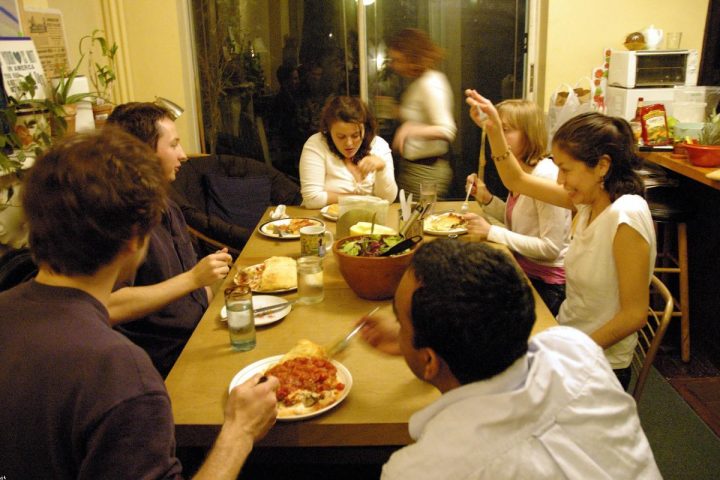

Sustainable family kitchens are often pictured as calm, tidy places where wholesome meals appear without friction. The reality is messier. Families with children generate mess at a remarkable rate, and no amount of good intention makes that stop. The useful goal is not a spotless kitchen but a system that absorbs the mess without exhausting anyone. Six repeatable habits do most of that work, and each one is small enough to keep going on a bad week.
Habit One: The Evening Reset
Last thing before bed, the kitchen gets tidied to a basic standard. Dishwasher running, sink empty, counters cleared. Nothing elaborate, and it rarely takes long when the family pitches in. The point is that the next morning starts from zero rather than from yesterday’s washing-up. A clean start makes the day’s cooking feel possible instead of daunting. Skip it for a few days and most family kitchens spiral, because each morning inherits the backlog of the one before.
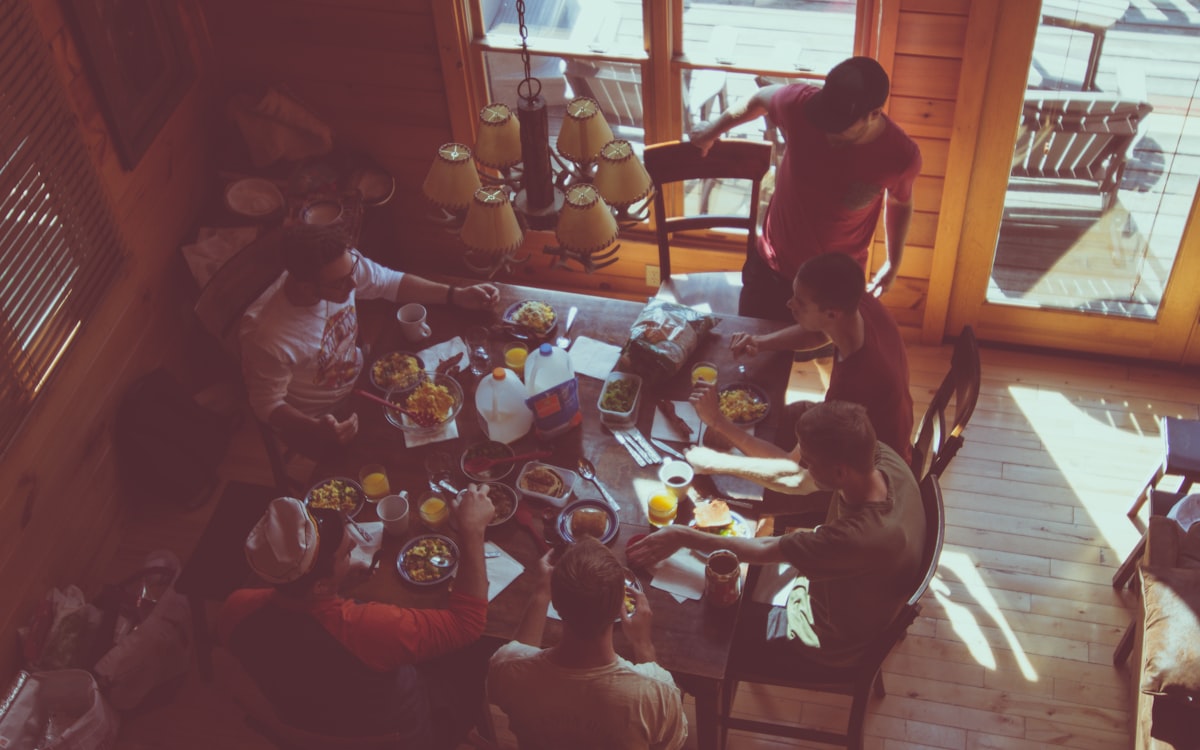
Keep the reset genuinely small so it survives tired nights. A workable version is three moves in a fixed order: scrape and stack anything for the dishwasher, wipe the main counter and the hob, then run the machine. It is also the moment to move perishables back to the fridge, since perishable food should not sit out at room temperature for more than two hours, and only one hour once the room is above 90F.
Habit Two: One-Pot Meals on Tired Nights
Tired evenings are when families drift toward takeaway. The practical fix is a short repertoire of one-pot meals that cook and clean with minimal effort: soups, stews, baked pasta, traybakes. One pan or dish does the work, so the washing-up afterwards is genuinely small, yet the meal still feels like a proper dinner rather than a compromise. A handful of reliable recipes is enough to cover the week’s low-energy nights, and most of them reheat well the next day, which feeds straight into the leftovers habit below.
Aim for a small set of recipes the whole household already accepts, so nobody negotiates and nothing gets scraped into the bin half-eaten. A traybake of chicken, potatoes and whatever vegetables need using takes little skill and leaves one tin to wash. A lentil or bean stew stretches a little meat, or none, across a full pot. Lean the repertoire towards vegetables on purpose: the World Health Organization suggests at least 400 g, or five portions, of fruit and vegetables a day, and one-pot cooking is the easiest place to hit that, because a handful of extra carrots or a tin of tomatoes disappears into a stew without anyone objecting.
Habit Three: The Sunday Anchor Cook
One larger cook on a Sunday afternoon that feeds the family that evening, leaves enough for Monday, and produces components, a pot of grains, roasted vegetables, a base sauce, for two or three other meals. The kitchen takes its hardest hit on the day it has the most capacity to absorb it. Store what you cook properly and it stays useful all week: keep the fridge at or below 4C and the freezer at -18C, and treat cooked leftovers as good for three to four days refrigerated. Anything you won’t reach in that window goes into the freezer while it is still fresh, not after it has started to fade.
Think in components rather than finished dishes, because components recombine while finished dishes only repeat. A pot of grains, a tray of roasted vegetables, a batch of tomato sauce and some cooked pulses can become a traybake on Monday, a grain bowl on Tuesday and a pasta bake on Wednesday without cooking any from scratch. Label each container with its contents and the date it was made, so the three to four day window is a fact on the lid rather than a guess, and portion anything bound for the freezer so you thaw only one meal at a time.
Habit Four: A Permanent “What’s for Dinner” Whiteboard
A small whiteboard in the kitchen holds the week’s loose meal plan. No one has to ask what’s for dinner; no one has to negotiate it at six o’clock when everyone is hungry and short-tempered. The plan is allowed to change, it just exists by default rather than being reinvented every night. That single visible list removes a surprising amount of daily mental load, because the decision has already been made once, calmly, in advance, instead of thirty times in a rush.
The whiteboard also quietly shapes what the family eats. Write the week around a rough balance: a couple of one-pot nights, a fish night, a vegetable-heavy night, one night that uses up leftovers. Planning ahead is also the practical route to the WHO’s other targets. Keeping free sugars under 10 percent of energy intake, and salt under 5 g a day, is mostly about what you buy and cook rather than what you resist at the table, so a plan that leans on whole ingredients does most of that work before anyone sits down.
Habit Five: The Children’s Job Rotation
Every member of the household, children included, has a small kitchen task that rotates week to week: setting the table, loading the dishwasher, sweeping the floor, wiping down surfaces. The tasks stay age-appropriate, but the principle holds at every age. The burden is shared rather than sitting on one adult, the children build genuine competence over time, and the kitchen simply runs with less parental effort. Framed as “this is what we do,” it tends to land better than a reward chart, because it treats the work as ordinary rather than exceptional.
Match the job to the age. A young child can lay the table and put clean cutlery away. An older child can load the dishwasher, wipe counters and take charge of the recycling. A teenager can own a task end to end: planning a meal, shopping for it, cooking it. Rotating the jobs weekly matters as much as sharing them, because it stops any one task becoming a single person’s grievance and teaches everyone the whole kitchen rather than one corner of it.
Habit Six: The Honest Friday Reset
On Friday evening, the fridge gets a proper look. Anything that needs eating over the weekend moves to the front where it will actually be seen. Saturday lunch becomes a planned use-up of whatever is already there. This one habit does more for family food waste than any other, and it matters more than most people assume: worldwide, households are responsible for about 60 percent of all the food that gets wasted, most of it edible food that was simply forgotten at the back of a shelf or thrown out too soon.
UNEP’s Food Waste Index puts household waste at roughly 79 kilograms of food per person each year, and came to about 631 million tonnes in 2022. Across the food system, close to 1 billion meals are thrown away every day. The fridge check works because most of what gets binned was never spoiled, only overlooked. Keep it quick and concrete: pull everything opened or perishable to the front, decide out loud what Saturday’s lunch will clear, and freeze anything you cannot realistically eat in time.
Trust Your Senses Over the Date Label
A large share of household waste comes from misreading date labels. It helps to know that, aside from infant formula, these labels are mostly about quality rather than safety: date labels are not required by federal law and are not safety indicators, and a “Best if Used By” date signals peak quality, not a safety cut-off. Food showing no signs of spoilage is generally fine past it. Judge by look and smell rather than the printed date and you will bin far less. The exception worth respecting is anything left too long in the warm, where caution matters more than any label.
Treat the label as advice and your senses as the decision. Yoghurt that smells clean and looks normal a few days past its date is a different case from meat or fish that smells off, where you should not take the risk regardless of the date. The one label that is a genuine safety instruction is infant formula, the single product the rules do treat as non-negotiable. For everything else, a look and a sniff, plus knowing how long a dish has sat in the fridge, keeps good food out of the bin.
Why Stress Compounds in Family Kitchens
A family kitchen has a lot of moving parts: different schedules, different preferences, uneven energy levels, a shopping budget that shifts week to week. Without any structure, each of those becomes its own small daily negotiation, and the negotiations pile up into a feeling of constant low-grade friction. Systems don’t remove the variables; they hold them inside a framework so no single one has to be solved from scratch every evening. That is the real work these habits are doing, not adding effort, but containing it.
What the Six Habits Share
None of these habits demands much in any single instance, and all of them prevent escalation. The Sunday cook heads off the Wednesday meltdown. The Friday reset heads off the Saturday waste. The evening tidy heads off the morning chaos. Each small, unglamorous action quietly stops a larger problem from forming, which is exactly why they are worth doing even on the days their payoff is invisible. Prevention rarely feels like progress in the moment, but it is where the calm comes from.
Adapting for Your Family’s Stage
The framework flexes with the season of family life. Families with babies need far more convenience and should lean hard on the one-pot meals and the Sunday cook. Families with school-age children can run most of the system as written. Families with teenagers can hand off whole tasks, a teenager can own the Sunday cook or the Friday fridge check outright. Same six habits, different distribution of the load, adjusted as the household grows.
The Common Mistake to Avoid
The usual error is trying to install all six habits in a single week, which reliably collapses under its own weight. Build the system one habit at a time instead. Pick the one that will make the biggest difference for your household, for many families that is either the evening reset or the Friday fridge check, and run it alone for a month, until it stops requiring conscious thought. Then add the next. Give the whole set two or three months and it begins to feel less like a system you are maintaining and more like simply how the kitchen works. The sustainability follows almost as a byproduct: a calmer food rhythm wastes less, and a household that wastes less was the quiet point all along.
Frequently Asked Questions
How do I get my partner on board with these habits?
Start with the habit that benefits them most. The evening reset visibly improves their morning. The whiteboard reduces daily questions. The benefit comes first; the participation follows.
What if my schedule rules out the Sunday anchor cook?
Try a different day. Mid-week works for some families. The principle is one batch cook day per week; the specific day is flexible.
How do I get children to do their kitchen tasks?
Start young, keep tasks age-appropriate, and treat them as normal household contributions rather than chores. The framing of "this is what we do" works better than reward-based systems.
What about families where one parent does most of the cooking?
These habits still apply but the share of work matters. Honestly negotiating distribution helps. The Sunday cook and the children's rotation in particular help spread the load.
How long until this system feels natural?
Around 2-3 months for most families. The first month is conscious effort. By month three, the habits run without thought.