The instinct, when you care about food waste, is to sit a child down and explain it clearly so they understand. The awkward truth is that explanation on its own rarely changes what anyone does. Children learn from what they see, from the routines they take part in, and from small responsibilities handed to them over time. The lecture tends to be the weakest tool in the box. Here is what tends to work instead.
Start with what they can see
Children hold on to concrete things far more easily than abstract ones. “This carrot took weeks to grow” lands better than “food waste contributes to emissions.” A vegetable patch, a trip to a farm or a pick-your-own, the visible effort of cooking a meal, these are the parts of the story a young child can actually picture. Keep the frame physical and local before you reach for anything global. A tomato plant on a windowsill does more teaching than a chart, because the child watches how long it takes to produce anything and then understands, without being told, why it would be a shame to let the fruit go soft in the bowl and get thrown out.
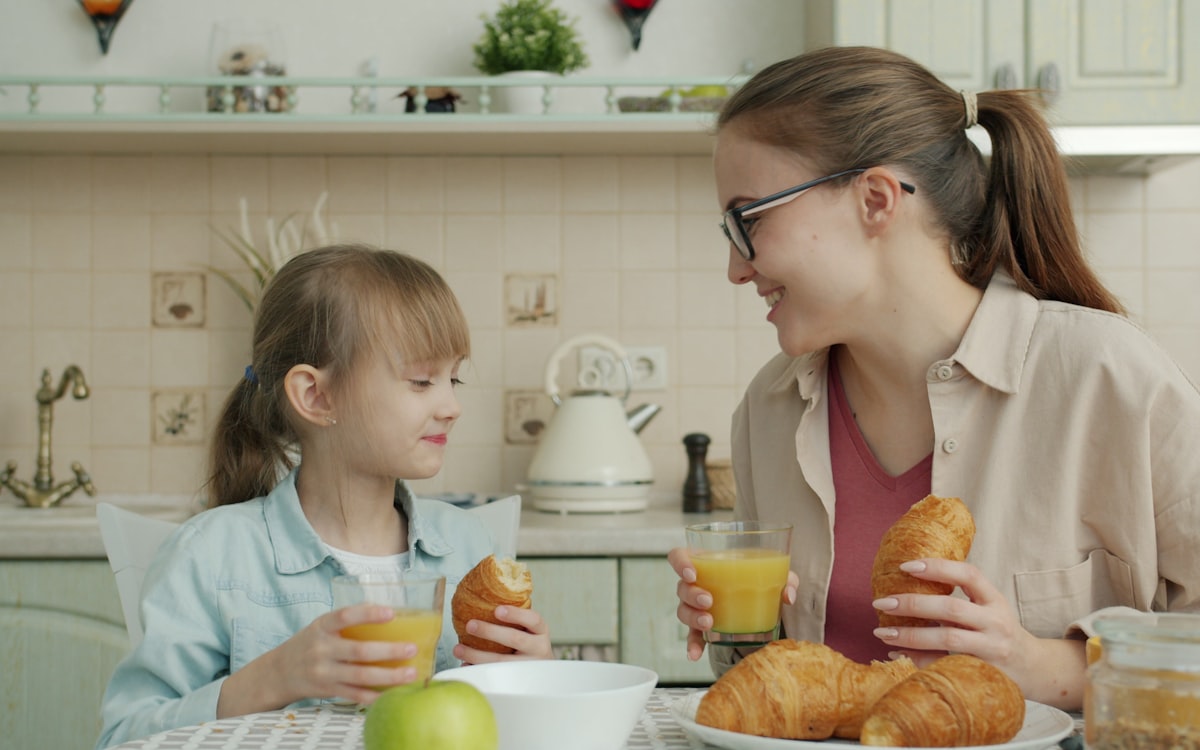
Bring them into the routines
The weekly fridge check. Planning meals around what needs eating first. Scraping peelings into the caddy. These quiet, repeated actions teach more than any set-piece conversation. Make the fridge check a small ritual: once a week, before the shop, pull everything to the front, move the items closest to going over to a spot at eye level, and plan two or three meals around them. Hand the child a clear job in it, spotting which packets have the nearest dates, and they learn to think ahead rather than being told to.
Composting is one of the clearest lessons available. A child who helps empty the caddy, and later sees the finished compost go back onto the garden, absorbs the underlying idea without being told it. Because composting relies on air rather than the airless conditions of a landfill, it largely avoids the methane that rotting food otherwise produces. In a compost heap the decomposition is aerobic, so the methane-producing microbes stay inactive, and the crumbly material left at the end improves soil structure, helps it hold moisture and nutrients, and cuts the need for shop-bought fertiliser. You do not need to deliver any of that as a speech. You just need the child alongside you while it happens: carrying the caddy out and, months later, planting a seed into soil the family’s own scraps helped make.
Use honest, practical language
“Let’s eat this first, it’s nearly past its best.” “That’s the last of the bread, we’ll use it for toast in the morning.” Plain, matter-of-fact framing, without moralising or drama, simply shows a child the household’s normal way of thinking. It is also a good moment to teach something genuinely useful: a date on a packet is usually about quality rather than safety. A “best if used by” date marks when something is at its peak, not the point at which it becomes unsafe, and food showing no signs of spoilage is generally fine past it. It surprises most people to learn that, apart from infant formula, these labels are not required by federal law in the United States and are not safety indicators at all. Teaching an older child to look, smell and judge, rather than bin things on the printed date alone, is a practical skill they will keep for life: yoghurt a day past its date that smells and tastes exactly as it should is not the same thing as bread that has genuinely gone.
Show the connections, not the consequences
“If we don’t eat this, we’ll have to buy more next week.” That kind of link is concrete and immediate, and a child can follow it. Catastrophic environmental framing, the planet, the future, guilt, rarely shapes how a young child behaves. Small, visible connections often do, because they sit within a world the child already understands. The same works for the good outcomes: point at the soup made from Sunday’s leftover chicken and say, plainly, that it cost nothing extra and would otherwise have gone in the bin.
Make it a shared effort
“We’re trying not to waste food this week, can you help me check the fridge?” Children respond to being included and given a bit of ownership. The “we” frame treats them as part of the household team rather than pupils receiving instruction. Notice the wins out loud, too: “We didn’t throw anything away this week.” Children tend to remember being part of a small success far longer than they remember being told what to do, and that quiet reinforcement compounds over the years.
Step away from the battle over the plate
Insisting a child finishes everything on their plate often does more harm than good, and can set up a habit of eating past fullness that follows them into adulthood. Let children read their own hunger honestly. A smaller portion with the offer of seconds works far better than a large plate and the expectation that it must be cleared. The aim is a child who stops when full and takes only what they will eat, not one who empties every plate on principle. If food is regularly left, the answer is usually to serve less to begin with, and to keep the leftover portion for the next day rather than scraping it into the bin, so the child sees that stopping when full and not wasting are not in conflict.
Match the wider context to their age
Scale the framing to the child. For a young one: “Food costs money, so it’s good to use it all.” For an older child: “A lot of people don’t have enough food, so we try to make good use of what we have.” For teenagers you can go further into the environmental and ethical side, and here a few real figures can help, used as awareness rather than a stick to beat them with. It is easy to assume waste is mostly a problem of shops and restaurants, but households are responsible for roughly 60 percent of the food wasted worldwide, some 631 million tonnes in 2022, which works out at around 79 kilograms per person every year and adds up to roughly a billion meals thrown away every day. Knowing that home habits are a large part of the picture, rather than a rounding error, tends to land with an older teenager in a way that abstract doom does not.
A teenager who wants the mechanism can have it. Food that goes to landfill is buried and rots without air, and that airless rotting is what produces methane. Food waste makes up about a quarter of everything sent to landfill in the United States, and landfilled food is responsible for roughly 58 percent of the methane that escapes from municipal landfills. The same banana skin makes methane in the ground but harmless compost in a heap, because one has air and the other does not, and that concrete contrast interests an older child far more than any abstract warning.
Cook together
A child who cooks understands food from the inside. They know how long it took, how much went into it, and that changes their relationship with throwing it away. Cooking together is probably the most reliable long-term lesson in food respect there is, more so than any single conversation about it. Match the job to the age: a small child washes salad, tears herbs or weighs out rice; an older one peels and chops, follows a simple recipe, and takes charge of turning yesterday’s roast into today’s soup. The point where a teenager can improvise a meal from whatever is in the fridge is the point where the habit has really taken: using things up has become a skill they are proud of rather than a chore they were nagged into.
Let the numbers stay concrete
For older children, occasionally looking at what the family actually spends on food, and roughly what ends up in the bin, can be a useful conversation. Not as a source of guilt, but as awareness. For some children the financial dimension is far more real than the environmental one, and there is nothing wrong with meeting them where their attention already is. A teenager who would tune out a lecture about landfill will often sit up at the cost of a weekly shop. Make it a genuine exercise: keep a tally for a week of anything that gets binned, then add up what it cost. An actual figure in pounds does more than any abstract appeal.
Model it before you name it
This is the part that does most of the work. If the adults in a house waste food, no amount of explaining will change what the children do. If the adults quietly do not waste food, the children usually follow without anyone spelling it out. Modelling carries almost the entire load; the words are a small top-up at best. It is worth being honest with yourself about your own habits before worrying about theirs: the forgotten bag of salad, the leftovers pushed aside and quietly binned days later. Children notice all of it.
Handle the slip-ups calmly
Children will waste food sometimes. So will you. The useful response is calm and curious rather than cross: “What stopped this getting eaten? What could we do differently next time?” Curiosity keeps the door open; shame closes it, and a child who feels anxious about food is not learning the steady attentiveness you are actually after. If a child ever seems worried rather than merely careless, ease off the messaging and reassure them that the household just does its best, not perfectly.
The long, quiet shape of it
Children raised around a low-key food-waste consciousness tend to carry it into adulthood, and the reason it sticks is that it lives in their habits rather than their opinions. Habits are durable; opinions come and go. Many children look completely indifferent in the moment and still absorb the pattern, and adolescent disinterest often gives way to adult attentiveness years later. The household plants the seeds, and the grown-up relationship with food does the rest. You do not need to win an argument with your children about any of this. You need to live the practice steadily and keep bringing them into the routines, so that the values are absorbed over years rather than handed over in a single talk. The most committed, environmentally-minded teenagers are usually the ones who grew up in homes where the habits were simply normal, long before anyone gave them a name.
Frequently Asked Questions
How young can children start understanding food waste?
Concrete elements (eating what is on the plate, helping in the kitchen) work from age 3. Broader concepts (where food comes from, why it matters) develop around age 6-7. Environmental framing works best from age 9-10.
What if my child seems indifferent to food waste?
Common. The seeds are still being planted. Many children appear indifferent in the moment but absorb the patterns. Adolescent disinterest often gives way to adult attentiveness.
Should I show my child documentaries about food waste?
Selectively, age-appropriately. Some are well-made and useful. Others can be alarmist or guilt-inducing in counterproductive ways. The household routines matter more than any single piece of media.
How do I handle in-laws or other adults who waste food in front of my child?
Avoid public correction. Discuss with the child later in private if they ask. The household norm reasserts itself when the child returns home.
What if my child develops anxiety about food waste?
Step back from the messaging. Reassure them that the household just does its best, not perfectly. Anxiety is the opposite of the calm consciousness you are trying to build.