Planning a whole year of seasonal meals sounds like a project for someone with far too much time. It does not have to be. The realistic version is four short seasonal rotations of three or four dinners each. Once you have them, the household cooks confidently across the year with very little new decision-making. The season tells you which rotation to reach for; the rotation tells you what to cook this week.
Why four rotations beat a year-long calendar
A year-long meal calendar is impossible to remember and out of date by the time the season actually arrives. Four short rotations are something a household can hold in its head. You are not memorising 365 dinners. You are learning roughly a dozen dishes, grouped by the time of year they suit, and returning to them as the produce comes round again. That is a small enough amount of information to become second nature within a season or two.
The mechanism at work is repetition. A dish you cook a handful of times in a season stops needing a recipe: your hands learn the order of the steps, and the shopping for it becomes automatic. A never-repeating calendar denies you that. Keep each rotation short and return to it, and you trade novelty for fluency, which is what makes weeknight cooking feel light rather than like a nightly puzzle.
Spring: light, bright, green
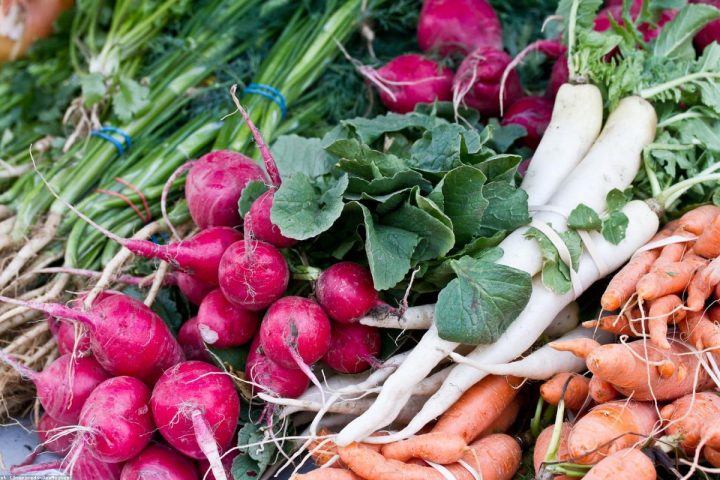
Spring is the awkward shoulder season. Old winter vegetables are tiring, and summer abundance has not arrived. Lean on quick-cooked greens, asparagus, peas, spring onions and new potatoes. A simple frittata, a green pasta with peas and herbs, and a roast chicken with new potatoes and salsa verde will carry the whole season. Three dishes is genuinely enough, because spring produce is delicate and rewards being handled simply rather than cooked to death.
The frittata shows how one technique stretches across a rotation. Soften a chopped spring onion and a handful of peas in a little olive oil, pour over beaten eggs, let the base set on the hob, then finish the top under the grill. The same method takes asparagus tips, leftover new potatoes or a fistful of soft herbs, so a single skill covers several different spring dinners. Salsa verde behaves the same way: a rough blend of herbs, oil, garlic and something sharp that lifts the roast chicken one night and dresses the potatoes the next.
Summer: less cooking, more assembling
Summer cooking should mostly be quick, and it should keep the oven off when the kitchen is already hot. Think tomatoes, peppers, courgettes, beans and herbs. A panzanella-style bread salad, one tray of roasted summer vegetables done early in the day, a quick gazpacho, and a herb-heavy grain bowl give you four dishes that lean on raw or barely-cooked produce. When ingredients are at their peak, assembling beats cooking. This is the season to trust the produce and do less to it.
Assembly meals do carry one summer risk worth naming: food left sitting out in the heat. Salads dressed with oil, cooked grains and anything with meat or dairy are all perishable, and warm weather speeds spoilage. As FoodSafety.gov advises, perishable food should not sit at room temperature for more than two hours, and no more than one hour once the surroundings are above 90F. At a lazy summer lunch that is easy to overshoot, so it helps to bring dishes out in batches and return the rest to the fridge.
Autumn: stews, roots and bigger pots
Autumn produce wants longer cooking. Squash, root vegetables, sturdy leafy greens and mushrooms all reward time and heat. A pot of lentil and root stew, a tray of roasted squash with a grain, a kale and bean soup, and a baked pasta with autumn mushrooms make a rotation that fills the kitchen with better smells and feels heavier in a welcome way. These are also the dishes that scale up easily, which matters as the days shorten and batch cooking starts to earn its place.
Autumn is the natural moment to start cooking in larger quantities. A stew or soup takes roughly the same effort whether you make one night’s worth or three, so the extra cost of a bigger pot is close to nothing while the payoff is several dinners. Roast a whole tray of squash rather than a single portion and the surplus becomes tomorrow’s grain bowl or the filling for a quick pasta. Building the second meal into the first is where a rotation turns into a system that saves time and money.
Winter: storage crops and pantry friends
Winter is when storage vegetables and pantry staples do the heavy lifting. Cabbage, kale, beetroot and potatoes sit alongside dried beans, lentils and oats. A slow-cooked bean stew, a cabbage and noodle dish, a baked potato with a few generous toppings, and a barley soup make a calm, low-cost winter rotation. None of it is glamorous, and that is the point.
The dried goods at the centre of these meals last a long time, so a well-stocked winter cupboard is not a race against the clock. It helps to know that the date printed on a bag of lentils or beans is usually about quality rather than safety. As the USDA notes on food product dating, most date labels are not required by law and a “Best if Used By” date indicates peak quality, not a hard cut-off. Dried pulses that show no signs of spoilage are generally fine to cook well past the printed date, which is exactly why they anchor the winter rotation so reliably. Kept somewhere cool, dry and dark in a sealed container, they hold their quality for a long stretch, which lets a winter cupboard be stocked ahead rather than shopped for weekly.
The cross-season spine
Across all four rotations, a handful of ingredients turn up everywhere: olive oil, garlic, onions, lentils and a good loaf of bread. These are the spine that connects the seasons. The rotations change with the produce; the spine stays constant. Keeping these few things on hand means you are never more than one shop away from any dish in any rotation, and it keeps the weekly list short.
How to build your own rotations
Do not try to design all four at once. For each season, start with one anchor dinner the household already loves and already eats without complaint. Add one new dish you have been meaning to try. Add one quick assembly meal for the nights nobody wants to cook. That is your rotation: one reliable favourite, one experiment, one shortcut. Three dishes per season is a sturdy starting point, and you can let the fourth slot stay empty until a new dish earns it.
A concrete way to begin: take the season you are in and write down the one dinner your household already eats most weeks. That is your anchor. Beside it, note one dish you keep meaning to cook, and one no-effort assembly for tired evenings. Cook that trio on rotation for a few weeks before touching any other season. By the time the season turns, the first rotation runs itself and you can build the next.
Treat these as dish concepts rather than fixed recipes. A “lentil and root stew” can vary week to week with whatever roots are cheapest and still belong to the rotation. That flexibility is what stops the system from feeling like a rulebook.
Cooking once, eating twice
Several of these dishes reward being cooked in a bigger pot than you need for one night. Stews, soups and baked pastas reheat well, which turns one session of cooking into two or three low-effort dinners. It is worth knowing the simple limits so leftovers stay safe and appealing rather than being thrown out. FoodSafety.gov’s cold storage guidance puts cooked leftovers at three to four days in the fridge, so a Sunday pot comfortably covers a couple of weeknights and anything beyond that goes to the freezer.
Two practical points keep those leftovers safe as well as convenient. Cool a big pot quickly rather than leaving it standing on the hob for hours, and store it in a fridge held at 40F (4C) or below. Anything you will not eat within the fridge window belongs in the freezer at 0F (-18C), where a dated portion of stew or soup waits happily for a week you have no time to cook. Planning the second meal when you plan the first is one of the quiet ways a rotation cuts both effort and waste.
The quiet sustainability effect
A household running four small seasonal rotations shops seasonally without any conscious effort. The trolley naturally aligns with what is abundant, the waste shrinks, and the food bill drifts gently downwards across the year. That matters more than it first appears. According to the UN Environment Programme’s Food Waste Index Report 2024, households account for about 60 percent of all food wasted globally and throw away roughly 79 kilograms of food per person each year. The same report estimates that around 1 billion meals are wasted worldwide every day. Cooking to a familiar rotation, and using up what you buy before it turns, is one of the most ordinary ways an individual household can chip away at that figure. None of it requires charts, apps or willpower. It requires four small lists, repeated.
The waste does not simply vanish once it leaves the kitchen. Food sent to landfill breaks down and releases methane, a potent greenhouse gas. The US Environmental Protection Agency estimates that food waste makes up about 24 percent of the material sent to landfill in the country, and that landfilled food waste is responsible for around 58 percent of the fugitive methane escaping municipal landfills. Seen that way, the humble act of finishing the stew before it spoils is tied to something larger than the weekly budget.
When you forget, or it stops working
The rotation is a starting point, not a contract. Skip a week when life gets busy, swap a dish you have grown tired of, or abandon a rotation that never quite clicked. If the family wants more variety, add one new dish per season as an experiment; if it sticks, it joins the rotation, and if not, it quietly leaves. The rotations evolve gently over years rather than being fixed forever. The whole point is having a sensible default to come back to on the evenings when “what should we eat tonight” would otherwise win.
Households that stick with this for a full year tend to report the same two things: cooking feels less stressful, and the food bill has settled a little lower. Very few go back to deciding every dinner from scratch. Once the calm of a good default sets in, it is hard to give up.
Frequently Asked Questions
How many meals per rotation do I actually need?
Three to four is the sweet spot. Less and the household feels bored. More and the system feels overwhelming. Three is the surprisingly robust answer.
What if I move to a different climate?
The rotations are climate-dependent. Build new ones for the new climate. Most regional foods are shaped by what grows there at what time, which is exactly the right input to the rotations.
Do I need to follow recipes strictly?
No. The rotations are dish concepts, not strict recipes. A "lentil and root stew" can vary from week to week and still belong to the rotation.
What if my family wants more variety?
Add one new dish per season as an experiment. If it sticks, it joins the rotation. If not, it leaves. The rotations evolve gently across years.
How does this work for special diets?
Easily. The rotation concept is structural, not dietary. Adapt the dishes to whatever dietary pattern your household follows.