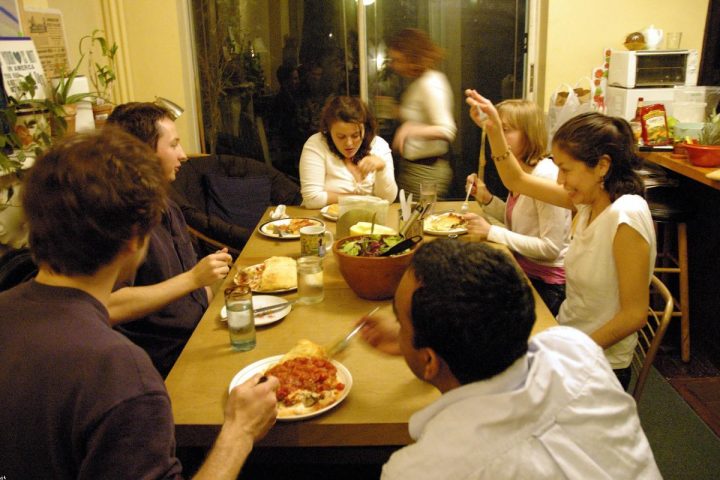
Sustainable family eating on a tight budget is one of the most common requests in food writing, and one of the most poorly served. A great deal of “budget family meal” content quietly assumes a middle-class kitchen: a full spice rack, a decent olive oil, a freezer already stocked. The genuine budget version, done with a little care, can be remarkably cheap without feeling like deprivation. It just needs a plan you can repeat without thinking about it.
Build on cheap, nutrient-dense staples
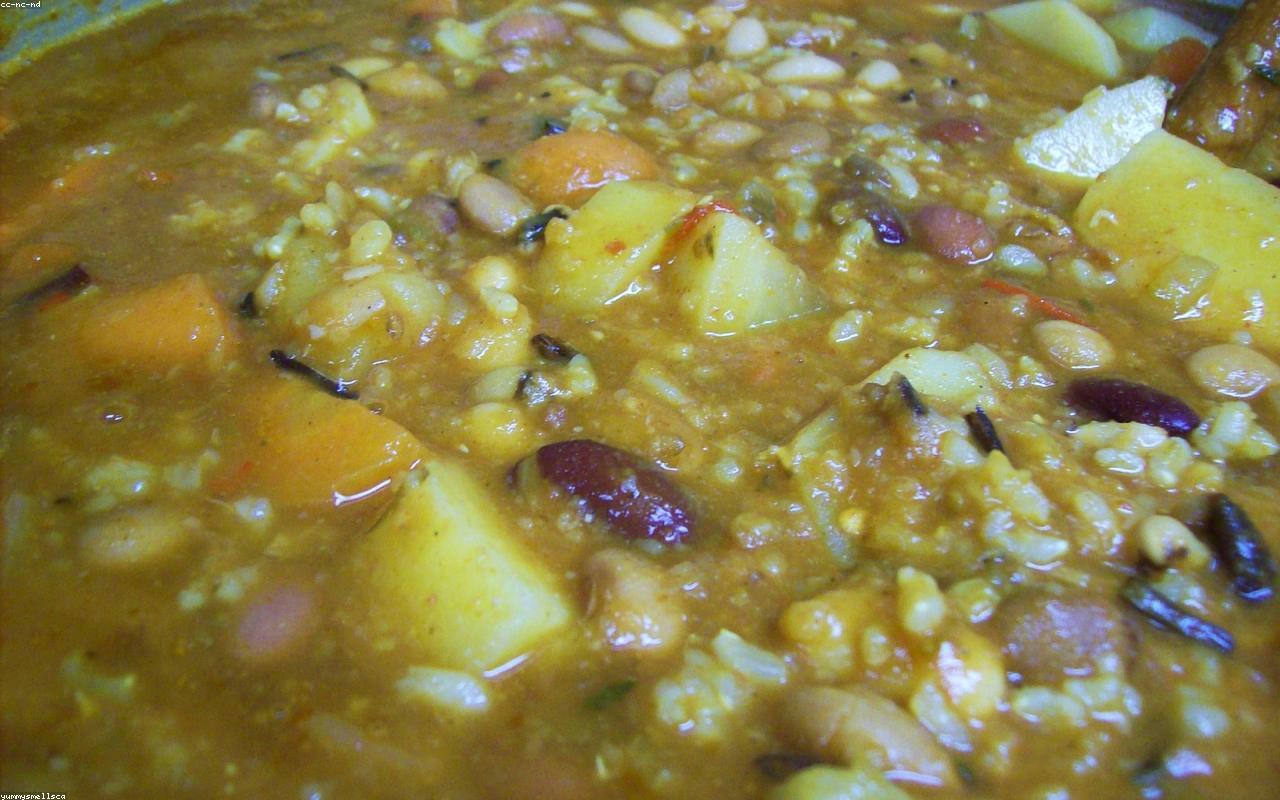
A handful of ingredients do most of the work: dried beans and lentils, oats, brown rice, eggs, frozen vegetables, tinned tomatoes, peanut butter, cabbage and root vegetables. Bought as basics rather than branded versions, these cover most of a family’s nutritional needs for very little. Dried beans and lentils are the cheapest of all, though they ask for planning; most beans need soaking and a long simmer, so it pays to cook a large batch at once. Tinned beans cost a little more but rescue a weeknight when there was no time to soak, so keeping both is sensible.
The practical routine is simple. Tip dried beans into a large bowl the night before, cover them well with cold water and leave them to soak overnight. The next day, drain, cover with fresh water and simmer until soft. One long simmer produces enough for several dinners, which is the whole point: you are buying the cheapest form of protein in the shop and spreading a single round of effort across a week. Lentils skip the soaking entirely and cook in the time it takes to boil rice. Judge value by cost per portion rather than by the price on the shelf, and dried pulses win almost every comparison.
Frozen vegetables deserve particular mention. They are cheap, they keep for months, and they make it realistic to reach the five portions of fruit and vegetables a day that the World Health Organization recommends, at least 400 g in total, without shopping every other day. Frozen peas, spinach, sweetcorn and mixed vegetables go straight from freezer to pan, there is no waste from a bag that wilts before you reach the bottom of it, and the nutritional content holds up well because they are frozen soon after picking.
A five-dinner rotation
Most families do not need a different meal every night. They need a small set of reliable dinners that everyone will actually eat. Five is usually enough to keep boredom away:
- Lentil and tomato stew with rice.
- Pasta with white beans and a simple tomato sauce.
- Rice and beans with fried onions and an egg on top.
- Vegetable curry made with frozen vegetables and chickpeas.
- A big pot of soup with bread.
Each of these costs very little per portion, and rotating them covers a full week from a short shopping list. Treat the vegetables as interchangeable: whatever is cheapest that week, a glut of carrots, a reduced bag of spinach, half a cabbage, goes into the stew, the curry or the soup. The structure stays the same; the contents follow the prices. Once the rhythm is set, the mental load drops as much as the cost, because you already know what Tuesday looks like. A fixed rotation also makes it obvious when a bargain is worth grabbing: a reduced tray of onions slots into three of the five dinners without any rethinking.
Breakfast and lunch that hold up
Breakfast is where boxed cereal quietly drains a budget. Porridge with frozen fruit and a spoon of peanut butter, toast with butter and jam, eggs on toast, or plain yoghurt with fruit all cost a fraction of packaged options and tend to be more filling and nutritionally stronger. A large bag of plain oats makes many mornings of porridge for the price of a single box of branded cereal.
Lunch follows the same logic. Sandwiches, last night’s leftovers, or hard-boiled eggs with some vegetables, brought from home rather than bought, add up to a large difference across a school year. Pre-packaged lunch kits are among the most expensive foods per gram in the shop, and children rarely need them. Building lunch deliberately from the previous night’s cooking, rather than treating it as a separate shopping category, is one of the quietest savings available.
The drink question
Make tap water the default, with tea and coffee for the adults who want them. Juice, soda and bottled drinks are an easy saving with a real health benefit attached. They are a major source of free sugars, which the WHO advises keeping under 10 percent of daily energy intake, and ideally under 5 percent. Cutting them helps the budget and the family’s sugar intake at the same time, and it removes a daily cost that rarely shows up when people tally their spending.
Keeping salt and sugar in check without spending more
One underrated advantage of cooking from staples is control. Ready meals, packaged sauces and most snack foods carry salt and sugar the eater never chose, and the amounts are hard to see. When you build a stew from tinned tomatoes, beans and your own spices, you decide how much salt goes in, which makes it far easier to stay near the WHO guidance of under 5 g of salt a day. The same is true of sugar: home porridge sweetened with fruit sits comfortably inside the free-sugars advice, while a bowl of frosted cereal can use much of a child’s daily allowance before school has started. The plainest, most affordable cooking tends to be the one that keeps salt and sugar lowest, because you are adding them by hand rather than buying them hidden in the price.
Where to spend a little more
A tight budget is not the same as buying the cheapest of everything. A few things earn their keep. Decent olive oil makes plain vegetables taste like a meal. A reasonably stocked spice shelf turns the same beans and rice into a dozen different dinners: cumin and coriander pull a pot towards a curry, smoked paprika and bay send it towards a stew, chilli and lime lift rice and beans into something children ask for again. A couple of good condiments transform an otherwise dull plate. These small outlays return their cost many times over, because they are what stop cheap food feeling like a punishment.
Where budgets quietly leak
The other side of that ledger is worth naming plainly. Specialty children’s foods, most of the snack aisle, premium organic versions of things eaten quickly without their skin, ready meals beyond the occasional emergency, and bottled drinks are where family food money tends to disappear without anyone deciding to spend it. Cutting these first is far less painful than economising on real ingredients, because none of them is doing much nutritional work in the first place.
The waste that no one adds up
There is a second leak that never appears on a receipt: the food that gets bought and then thrown away. It is a larger drain than most families realise. According to the UN Environment Programme, households throw out about 79 kilograms of food per person every year, and households are responsible for 60 percent of all the food wasted worldwide, which came to roughly 631 million tonnes in 2022. Put another way, the report estimates that around 1 billion meals are wasted every day across the globe. Every one of those thrown-out portions was paid for at full price. A budget kitchen that plans its five dinners, cooks in batches and actually eats its leftovers is quietly clawing back money that would otherwise have gone straight into the bin. Wasting less is the rare change that helps the household budget and the wider environmental cost at the same time.
Shop the reductions
End-of-day markdowns on bread, dairy, produce and meat can stretch a family budget considerably, and the food is still good. It helps to know what date labels actually mean. According to the USDA, date labels on most foods are not required by federal law and are not safety indicators; a “Best if Used By” date speaks to quality rather than safety, and food showing no signs of spoilage is generally fine after it. A markdown is usually about expiry timing rather than the food itself, which normally leaves several days to use it or move it to the freezer. Reading a reduced sticker as a timing signal rather than a warning feeds straight back into wasting less: bread near its date becomes toast or breadcrumbs, and softening vegetables go into the soup pot before they turn.
Cook once, eat twice
Batch cooking is the quiet engine of a cheap kitchen. A large pot of beans or a big tray of vegetable curry can be dinner one night and lunch for the next couple of days, for a single round of effort. It helps to store it safely: cooked leftovers keep for three to four days in the refrigerator, and they freeze well beyond that, so cooking in volume rarely goes to waste. Portion the surplus into containers before it cools, label what is in the freezer, and a busy evening later in the week already has its dinner waiting. Across a week, the time saved matters as much as the money.
Storing it well is what protects both the saving and the family. FoodSafety.gov advises keeping the refrigerator at 4C (40F) or below and the freezer at 0F, which is -18C, so that leftovers actually last the three to four days rather than spoiling early. Just as important is the two-hour rule: do not leave cooked or perishable food standing at room temperature for more than two hours, and no more than one hour once the room is above 90F, because that is when a batch cooked in good faith turns into food poisoning instead of Tuesday’s lunch.
The honest trade-off
There is no free version of this. Cheaper food generally asks for more cooking time. A family that genuinely cannot find that time may need to accept a few more convenience purchases, or to batch-cook at the weekend so the weeknights stay easy. Pretending the trade-off does not exist only sets people up to feel they have failed at something that was never free to begin with. The weekend cook-up is often the honest compromise: two or three hours on a Sunday spent making a large pot of stew, a tray of curry and a batch of beans, portioned and frozen, buys back most of the week’s evenings.
What tends to happen
Children raised on simple, real, inexpensive food often settle into healthier long-term eating patterns than those brought up on convenience and premium specialty products. There is usually an adjustment period, mostly social rather than about taste, as children notice the change; most adapt within a few weeks. Families who move to this kind of pattern commonly report spending noticeably less while eating better. The food is simpler, the kitchen is calmer, and the household reclaims real financial space without giving up its health.
Frequently Asked Questions
How much does a family of four really need for food per week?
On a budget pattern, around $80-120 weekly is achievable in most regions. Higher with quality protein additions; lower with more aggressive batch cooking and basics-only.
Will children resist budget meals?
Initially some might. Within a few weeks, most adapt fully. The transition is usually social-emotional (the children noticing the change) more than taste-based.
How do I handle children's school lunches on a budget?
Bring sandwiches with simple fillings, a piece of fruit, and a snack item from home. Avoid pre-packaged "lunch kits" which are expensive per gram.
Is bulk shopping worth it for families?
Often yes, for staples the family genuinely uses. The savings are real but require storage and rotation discipline.
What if my children have specific dietary needs?
The budget pattern adapts. Most special diets can be implemented with cheap staples (gluten-free with rice and oats; vegetarian with beans and eggs; dairy-free with plant alternatives). The principles transfer.