
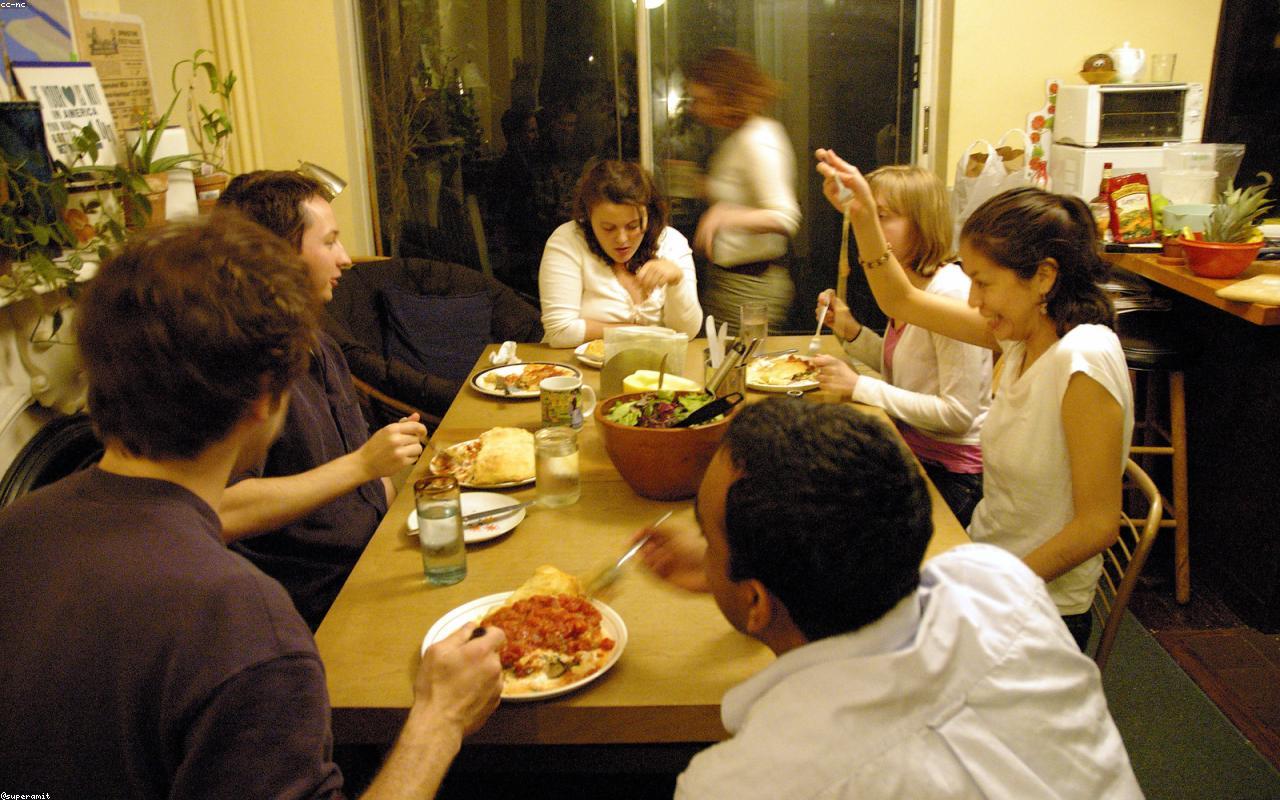
Family food patterns are surprisingly consistent from one household to the next. The same handful of mistakes appear again and again, and most of them are not failures of effort or care. They are small accommodations that hardened into routines: something that made sense on one difficult evening, repeated until it became the way things are done. The reassuring part is that once you can see them clearly, they are usually quick to loosen. A kitchen tends to calm within a few weeks of steady, unforced attention. None of what follows asks for extra hours or fresh willpower. It asks only that you notice the pattern and change one thing at a time.
Mistake one: cooking a different meal for each person
The parent who cooks one dinner for the adults and another for the children burns out fastest. The kitchen turns into a short-order counter, the washing-up doubles, and variety quietly shrinks because the “safe” second meal repeats night after night. It also produces more waste, since two half-finished plates leave more behind than one shared pot.

The fix is a single meal built from optional parts. Cook one base that everyone shares, then keep the divisive elements to the side: the sauce, the stronger vegetables, the cheese, the chilli. Each person assembles their own plate from the same dish. A fajita night works this way almost by design: warm tortillas, a pan of the same chicken or beans for everyone, then bowls of grated cheese, salad, salsa and soured cream that each person adds or skips. Pasta follows the same logic, with the sauce and toppings served separately so the child who wants plain buttered pasta and the adult who wants everything are eating from one pot. Rice bowls, jacket potatoes and build-your-own wraps all bend the same way. Cooking time stays sane, the choosing gives children a sense of control that reduces resistance, and dinner stays a shared event rather than a service window.
Mistake two: treating vegetables as punishment
“Eat your broccoli or there’s no pudding” sounds harmless, but it teaches a lasting lesson: vegetables are the thing you endure to earn the thing you actually want. The framing quietly raises the status of the reward and lowers the status of the vegetable, which is the opposite of what you want over years of meals. The approach that works better is duller and more effective. Vegetables are simply normal food, on the table at most meals, with no reward for eating them and no penalty for leaving them. Pressure tends to entrench refusal; calm, repeated exposure slowly wears it down.
It helps to remember why the habit is worth building at all. The World Health Organization recommends at least 400 g, or five portions, of fruit and vegetables a day, and children reach that far more reliably when vegetables are ordinary and ever-present than when they are a nightly battleground. The same guidance points the other way on the usual reward: it advises keeping free sugars under 10 percent of daily energy intake, and ideally under 5 percent, along with keeping salt under 5 g a day. A pudding held up as the prize for finishing greens tends to be exactly the sweet, salty end of the table that guidance asks you to hold back, so the bribe works against two goals at once. Serve a small amount of vegetables at every meal, put something the child already accepts alongside it, keep the portion small enough that leaving it is not a drama, and let time rather than persuasion do the work. A vegetable refused eight or ten times and then eaten is a normal outcome, not a failure.
Mistake three: buying for a week that never happens
Most shopping lists are written for an imaginary family: home every evening, sitting down together to a full cooked dinner seven nights running. The real week has a late meeting, a club pick-up, an away match, and a night when nobody is hungry at the same moment. The fridge was stocked for the fantasy, so a share of it is scraped into the bin at the weekend, still wrapped.
This matters well beyond the household budget. According to the UN Environment Programme’s Food Waste Index Report 2024, households throw away about 79 kilograms of food per person every year, and together account for 60 percent of all food wasted globally, roughly 631 million tonnes in 2022. Put another way, the world bins something close to 1 billion meals every single day, and households are the largest single source, ahead of shops and restaurants combined. Planning for the week you actually have is one of the few parts of that problem an ordinary family genuinely controls.
A good deal of what gets thrown out was never spoiled. It had simply passed a printed date, and those dates are widely misread. The USDA’s Food Safety and Inspection Service notes that, apart from infant formula, date labels are not required by federal law and are not safety indicators. A “Best if Used By” date signals quality, not safety, and food showing no signs of spoilage is generally fine to eat past it. Learning to trust your eyes and nose over the stamp saves a surprising amount on its own. Beyond that, plan a realistic number of cooked dinners rather than assuming one every night, and deliberately leave a couple of lighter “buffer” nights in reserve for when life intervenes. You will shop less, and throw away less, without trying to be more disciplined.
Mistake four: grazing instead of eating
Some households drift, without ever quite deciding to, from meals into constant snacking. A biscuit here, a handful of crisps there, a plate abandoned and returned to twice. The costs are easy to overlook. The family rarely sits down together, so a small daily point of connection disappears. Half-eaten food is quietly binned. And vegetables fall out of the picture almost entirely, because a snack grabbed on the move is rarely a vegetable.
The correction is gentle but firm. Return to regular meals with snacks at known, predictable times rather than a kitchen that is permanently open. Two settled snack slots, one mid-morning and one mid-afternoon, give a child something to rely on and take the constant negotiation out of the day. Eating at fixed points, even briefly, even standing up on a rushed morning, restores a rhythm the whole day can hang on. It also makes hunger predictable, so meals land when appetites are genuinely ready and less food is pushed away. Food shrinks back into a few defined moments instead of colouring every hour with low-level decisions.
Mistake five: letting the takeaway become the default
When the cooking plan collapses, the easy exit is a delivery order, and easy exits become habits with alarming speed. The bill climbs, the packaging accumulates, and the everyday cooking that keeps a kitchen running gently rusts from disuse. Takeaway has its place; the problem is only when it stops being an occasional treat and becomes the automatic answer to every tired evening.
The remedy is to make your own fallback faster and easier than the app. Keep a genuinely quick meal permanently in stock: eggs on toast, beans on toast, pasta with a bag of frozen vegetables, or last night’s dinner reheated. Leftovers are the strongest option here, and you can lean on them with confidence. FoodSafety.gov advises that cooked leftovers keep well in the fridge for three to four days, so a deliberately doubled batch on Sunday quietly becomes Wednesday’s rescue. That batch only rescues you if it is stored properly, and the same guidance sets the boundaries: keep the fridge at 40F (4C) or below and the freezer at 0F (-18C), and do not leave cooked food at room temperature for more than two hours (one hour if the kitchen is above 90F) before it goes away. Cool it, cover it, get it cold, and it is there when you need it. The only real test is that your fallback should reach the table faster than a driver could.
The sixth mistake: trying to fix all five at once
The most common way these repairs fail is attempting them together. A complete overhaul of how a family eats asks for more spare willpower than any busy household actually has, and it usually collapses quickly, taking your confidence down with it. Pick the single mistake that stung most as you read. Work on only that one until it stops needing conscious thought, then move to the next. A useful sign that a change has taken hold is that you no longer have to decide to do it: the shared-base dinner or the fixed snack time has become simply what you do. Slow, sequential change holds; heroic change does not.
Why these mistakes happen, and what changes
None of these patterns comes from carelessness. Each is a reasonable response to a real pressure: not enough time, too little energy at the end of a long day, a genuinely picky eater, clashing schedules, a tight budget. That is worth naming plainly, because the goal here is not a flawless family diet arranged for a photograph. The goal is a calmer, steadier kitchen that you can actually keep going. The WHO targets, five portions of vegetables, modest sugar, modest salt, are worth holding in mind as a direction of travel rather than a daily exam you either pass or fail.
What follows from a few settled fixes is undramatic and cumulative, which is exactly why it lasts. A little less waste. Fewer delivery orders. Dinners with less friction around them. Vegetables that arrive without a fight. A modest amount of money saved. No single week looks transformed, but the direction holds, and a household that felt frantic in spring often feels ordinary and manageable by autumn. Family food does not have to be perfect to be good. It has to be consistent, calm and reasonably nourishing, and that is built far more by steady attention than by finding extra hours you do not have.
Frequently Asked Questions
How do I get my child to eat vegetables without battles?
Present them calmly at every meal. Do not force, reward or moralise. Pair with foods they like. Repeated exposure over months tends to work better than confrontation.
How often should we eat together as a family?
As often as schedules allow, even briefly. Three to five family dinners a week is meaningful. The connection matters as much as the food.
What if my partner makes the takeaway calls when I want to cook?
Stock easier fallback meals. The decision to order takeaway often comes from inability to face a cooking task. Reducing the cooking burden often shifts the decision naturally.
How do I balance family food rules with social events?
Be flexible. Social events are not the place for strict adherence. The pattern across weeks matters more than any single meal.
Is it bad to feed my child the same thing every day?
Not necessarily. Children often prefer repetition. The variety can come gradually. The pattern of three meals plus snacks matters more than the day-to-day variety.