Most kitchen food safety comes down to two variables you can actually control: temperature and time. Bacteria that make people ill tend to multiply fastest in the warm, moist middle ground between the fridge and a rolling boil. Keep food out of that range, and keep track of how long it has been sitting, and you have dealt with the bulk of the everyday risk. This is a plain reference for the numbers and habits worth committing to memory, kept separate from the broader question of storing food well to cut waste. Here the priority is simply not making anyone sick.
The two-hour rule
The single most useful figure to remember is the two-hour window. Perishable food should not sit at room temperature for more than two hours, and no longer than one hour if the room is warm, above 90F. That covers the food itself but also the moment it changes state: a roast chicken cooling on the side, a bowl of rice waiting to be portioned, cold cuts left out during a long lunch. The FoodSafety.gov cold storage guidance treats that clock as cumulative, which is the part people tend to miss.
Cumulative means the timer does not reset. If a dish spends an hour on the counter after cooking, goes into the fridge, then comes back out for another hour of serving, you have used your full window even though it was never out for two hours in one stretch. This matters most for foods that get handled repeatedly, like a pan of leftovers dipped into across an evening, or a picnic spread that keeps travelling in and out of a cool bag. When you are not sure how much time has accumulated, it is safer to assume the worst and not stretch it further.
How the window plays out in practice
A Sunday lunch makes the arithmetic concrete. Say the roast comes out at one o’clock and rests on the board while you finish the vegetables. It is carved and served, and the platter stays on the table through the meal and the conversation that follows. If it is still sitting out at three, that is your two hours gone, and the leftovers should already be on their way to the fridge rather than lingering while the plates are cleared. The safe move is to portion and chill the surplus while people are still eating the first helping, not after everyone has drifted away from the table.
Warmer conditions shorten the window sharply. At a barbecue where dishes stand in direct sun, or on a summer shopping trip with food in a warm car, the limit drops to one hour above 90F. In those settings, keep cold things genuinely cold in a cool bag with ice packs, put perishable items away first when you get home, and treat anything that has clearly been warm and out too long as spent rather than salvageable.
Fridge and freezer temperatures
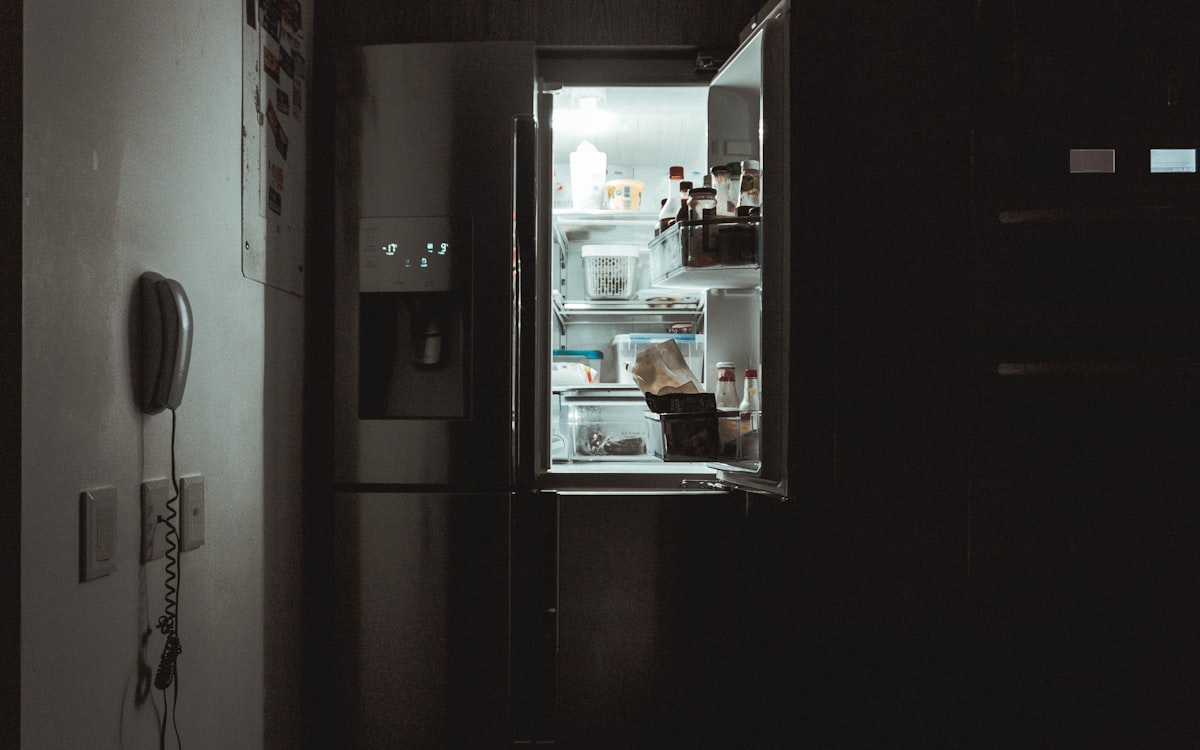
A fridge only protects food if it is genuinely cold. The target is 40F, or 4C, or below for the refrigerator, and 0F, which is -18C, for the freezer. At fridge temperature the growth of many harmful bacteria slows to a crawl; at freezer temperature it effectively stops, though freezing preserves rather than sterilises, so anything unsafe going in will still be unsafe coming out. These figures come from the same cold food storage chart, and they are worth checking against reality rather than trusting the dial.
Built-in thermostats are often vague, marked with numbers that do not correspond to actual degrees. A cheap standalone thermometer left on a middle shelf tells you what is really happening, and the reading can be a surprise, especially in an older or overpacked appliance. A few practical points follow from the targets:
- Keep the fridge reasonably full but not jammed. Air needs to circulate, and a wall of containers blocking the vents leaves warm pockets.
- Treat the door shelves as the warmest spot. They swing through room air every time the fridge opens, so they suit condiments rather than milk or raw meat.
- Let the appliance recover after a big shop or a heatwave. Piling in a lot of warm items at once, or a hot day working against the compressor, can nudge the interior above target for a while.
- Check the seal. A perished door gasket lets cold leak out steadily, and you may only notice through a thermometer.
Reading the real temperature
To get a fair reading, leave the thermometer in a glass of water on a middle shelf overnight rather than dangling it in the air, since air temperature swings the moment the door opens and water holds a steadier value closer to the food’s own temperature. Check it in the morning before anyone has been in and out. Position raw meat, poultry and fish on the lowest shelf, where it is coldest and where any drips cannot fall onto food eaten as it is. If a power cut leaves the fridge off for a stretch, keep the door shut to hold the cold in, and judge the contents afterwards on how warm they became and for how long rather than on how they look.
The freezer figure earns less attention but matters for the same reason. If frozen food is softening at the edges or the ice cream never sets firm, the freezer is probably running warmer than it should, and food is degrading faster than you would expect. A thermometer settles the question, and a freezer that cannot reach 0F is worth servicing before you rely on it to hold a month of batch cooking.
How long leftovers actually keep
Once cooked food is safely chilled, it does not last indefinitely. The working figure for cooked leftovers is three to four days in the fridge, again from the FoodSafety.gov charts. That covers most of what a home kitchen produces: cooked meat and poultry, stews and curries, cooked rice and pasta, soups. After that window the risk climbs, and importantly it climbs whether or not the food smells off. Some of the bacteria and toxins that cause illness leave no odour, taste or visible change, which is why a smell test is a weak safety check on its own.
How you cool leftovers shapes how well those days hold up. Getting food into the fridge promptly, rather than leaving it to reach room temperature first, keeps it out of the warm zone for less time overall. Dividing a large batch into shallow containers helps it cool through quickly instead of staying warm in the middle for hours. A deep pot of stew left to cool on the hob can sit in the danger range far longer than the two-hour rule allows, even with the heat off, so splitting it up is a genuine safety step rather than mere tidiness.
Cooling, labelling and reheating
A simple habit removes the guesswork later: write the date on a strip of tape when the container goes in, so on day four you are not straining to recall whether the curry is from Tuesday or Wednesday. If in doubt about which day it was, count the older of the two. When you reheat, bring the food right up to piping hot all the way through rather than merely warm, stirring partway so the centre does not stay cool while the edges bubble. Soups and sauces should reach a proper simmer. Reheating is not a way to rescue food that has already passed its window; it kills bacteria that have grown, but it does not neutralise every toxin some of them leave behind, so the day count still stands.
Freezing is the honest way to keep leftovers beyond the few-day window. Portioning and freezing before the fridge deadline arrives buys you far longer, and it means a batch cooked with good intentions does not quietly turn into something you have to bin. Freeze in meal-sized amounts so you thaw only what you will eat, and thaw in the fridge rather than on the counter, which keeps the food out of the warm zone as it softens. Once thawed, it re-enters the same three to four day clock and should be treated as fresh leftovers from that point.
What date labels do and do not tell you
Date labels cause a lot of unnecessary worry, and a fair amount of avoidable waste. In the United States, apart from infant formula, these dates are not required by federal law and are not safety indicators, according to the USDA guidance on food product dating. They are largely a manufacturer’s judgement about when a product is at its best. Infant formula is the one genuine exception, carrying a required date that is worth respecting exactly, because its nutrient content, not just its quality, is what the date protects.
A phrase like “Best if Used By” speaks to quality, not safety. Food that shows no signs of spoilage is generally fine to eat past that date, though it may have dulled in flavour or texture, as the same USDA dating guidance explains. The practical approach is to treat the printed date as a prompt to check the food, not a command to throw it out. Look at it, smell it, and consider how it has been stored and how long it has been open. A sealed jar kept cold is a very different case from an opened one that has been in and out of a warm fridge.
There is a real limit to this reasoning, and it is the reason date labels are not a complete safety tool in either direction. Because some contamination is invisible, a product can be genuinely unsafe while still sitting within its printed date, particularly if it has been mishandled, left out too long or kept in a fridge running warm. The label cannot see any of that. The temperature and timing you control at home carry far more weight than the ink on the packet, which is why the two-hour rule and the fridge target deserve more of your attention than the date does.
Pulling it together
None of this requires special equipment beyond a thermometer or any real change to how you cook. Hold the fridge at 40F or below and the freezer at 0F, respect the two-hour window and treat it as cumulative, use cooked leftovers within three to four days or freeze them before that runs out, and read date labels as quality hints rather than safety verdicts. The habits reinforce each other. Prompt chilling protects the leftover window; a cold fridge protects the food inside its date; shallow containers protect against the danger zone. Where you are ever genuinely uncertain how long something has been warm or how long it has been open, the safe answer is the unglamorous one: let it go. A single wasted portion costs far less than a bout of illness.
Frequently Asked Questions
What temperature should my fridge and freezer be?
Keep the refrigerator at 40F (4C) or below and the freezer at 0F (-18C). Built-in dials are often marked with numbers rather than actual degrees, so a cheap standalone thermometer on a middle shelf is the only reliable check. If your reading sits above target, the food inside is less protected than you think.
How long can cooked leftovers stay in the fridge?
Cooked leftovers keep for three to four days refrigerated, according to FoodSafety.gov. That covers most home cooking, including meat, poultry, stews, rice and soups. After that the risk climbs whether or not the food smells off, so freeze anything you will not eat in time before the window runs out.
What exactly is the two-hour rule?
Perishable food should not sit at room temperature for more than two hours in total, and no longer than one hour if the room is above 90F. The clock is cumulative, so time spent out after cooking and time spent out again during serving add up rather than resetting. Once you reach the limit, chill or discard the food rather than stretching it further.
Is food unsafe once it passes the date on the packet?
Not necessarily. Except for infant formula, date labels in the United States are not required by federal law and are not safety indicators. A phrase like Best if Used By speaks to quality, not safety, so food with no signs of spoilage is generally fine past it, though it may taste or feel a little duller.
Does reheating leftovers make them safe again?
Reheating until food is piping hot all the way through kills bacteria that have grown, but it does not undo every toxin some bacteria leave behind. That means reheating is not a way to rescue food that has already passed its three to four day window or been left warm too long. Use it on food that has been chilled properly and is still within its window, stirring so the centre heats fully.